Feeling flat after the holidays isn't a sign that something is wrong with you. It's what happens when weeks of anticipation, late nights, extra spending, broken routines and sparkly evenings suddenly stop, right at the darkest, coldest stretch of the year. Your body and mind were running on a special-occasion setting, and January asks them to switch back overnight.
That dip has a name a lot of people use: the post-holiday blues. It's common, it's usually temporary, and it responds really well to small, gentle changes rather than a big new-year overhaul. It took me a few winters to understand that I didn't need to "fix" January. I needed to make it softer.
This guide is all about post-holiday blues and how to feel better in January without forcing it. You'll find what the blues actually are, the signs to look for, how long they usually last, a clear line for when it's time to talk to a professional, 12 gentle things that help, and a four-week January plan you can follow one small step at a time.
Make yourself a warm drink (a little box of an herbal tea sampler is lovely for this, because choosing a new flavor each evening is its own small treat) and let's start with the why.
What Post-Holiday Blues Actually Are

Post-holiday blues aren't a diagnosis. They're a very human dip in mood and energy that many people feel in the days and weeks after the holiday season ends. Think of it as an emotional hangover from a stretch of time that was full of everything at once.
A few things usually stack up together:
- The anticipation is over. For weeks there was always something to look forward to: a party, a trip, a gift, a cozy evening. Then the calendar goes quiet.
- Your routine broke. Later nights, sleeping in, different meals, less movement. Your body notices, even if you loved every minute.
- Your wallet feels it. Spending often peaks in December, and the bank statement arrives just as the lights come down.
- The days are short. In much of the US, January still has long, dark evenings and gray mornings, which can make anyone feel slower.
- Social whiplash. You go from seeing lots of people to suddenly being back on your own couch, or the opposite: lots of family time can leave you drained and needing quiet.
None of this means you did the holidays "wrong." It just means your mind and body are adjusting back to ordinary life, and ordinary life can feel a little gray after so much shine.
Common Signs of Post-Holiday Blues
The blues can look different from person to person. You might recognize a few of these, not all of them:
- Low energy, even after a full night of sleep.
- A flat, "nothing feels exciting" mood.
- Being more irritable or teary than usual.
- A sense of dread about going back to normal life, work or chores.
- Struggling to get going in the morning.
- Craving more sugar, more naps or more time hiding under a blanket.
- Feeling a little lonely after a busy social season.
- Low motivation for things you usually enjoy.
Here's my small honest admission: I'm prone to anxiety, and for me the blues often show up as a restless, buzzy feeling rather than sadness. Everything feels slightly too much and slightly not enough at the same time. If yours looks like that too, you're not alone.
How Long Do Post-Holiday Blues Last?
For most people, post-holiday blues last from a few days to a couple of weeks. They tend to ease as your sleep, meals and routine settle back into place and as you start having small, normal things to look forward to again.
It's normal for the mood to come in waves. You might feel fine on Monday, low on Wednesday and better again by the weekend. That up-and-down pattern is part of adjusting, not a sign you're going backwards.
A helpful way to think about it: give yourself the first two weeks of January as a soft landing. Expect less from yourself, add small comforts, and watch how you feel over time rather than day by day.
When It's More Than the Blues
This part matters, so I'll keep it simple and clear. If your low mood lasts two weeks or longer, keeps getting heavier instead of lighter, or makes everyday life hard to manage, please talk to a doctor or a therapist. Seasonal depression is real, it's common in the winter months, and it's very treatable with the right support.
Please reach out sooner rather than later if you notice:
- Sadness or emptiness most of the day, nearly every day.
- Losing interest in almost everything you used to enjoy.
- Big changes in sleep or appetite that don't settle.
- Feeling hopeless or worthless.
- Trouble getting through work, school or basic daily tasks.
- Any thoughts of harming yourself.
If you ever have thoughts of harming yourself, please contact a trusted person, your local emergency number or a crisis line right away. This article is for gentle, general support and isn't a substitute for professional care. Asking for help is a strong, kind thing to do for yourself.
12 Gentle Ways To Feel Better After the Holidays
You don't need all twelve. Pick two or three that feel easy this week and let the rest wait. Small and steady works better than big and exhausting, especially in January.
1. Return to Your Routine Gradually

Going from holiday mode to full productivity in one day is a recipe for feeling worse. Ease back in over a week instead.
Try this: move your wake-up time 15 minutes earlier every two days until you're back to your usual time. Bring back one anchor habit at a time: first a regular bedtime, then regular meals, then your usual movement. If you already have a morning routine you love, start with just its first step.
Your home can help with this too. A short, room-by-room tidy makes the house feel like "normal life" again, and my January home reset breaks it into small sessions so it doesn't swallow your whole weekend.
2. Get Morning Daylight Within an Hour of Waking

This is one of the simplest, most helpful habits for dark-month moods. Natural light in the morning helps your body clock know it's daytime, which can support your energy during the day and your sleep at night.
Try this: within an hour of waking, step outside for a 10–20 minute walk, even if it's cloudy. Cloudy daylight is still much brighter than indoor lighting. If a walk isn't possible, drink your tea or coffee next to the brightest window in your home with the curtains fully open.
Dark mornings make it hard to get up at all, and a sunrise-style alarm clock that slowly brightens before your alarm can make waking feel a lot less abrupt. Look for one with a gradual 20–30 minute brightening and a soft sound option.
3. Keep One Cozy Ritual From the Holidays

Part of what makes January feel so bare is that all the little rituals stop at once. Instead of ending everything, keep one or two on purpose.
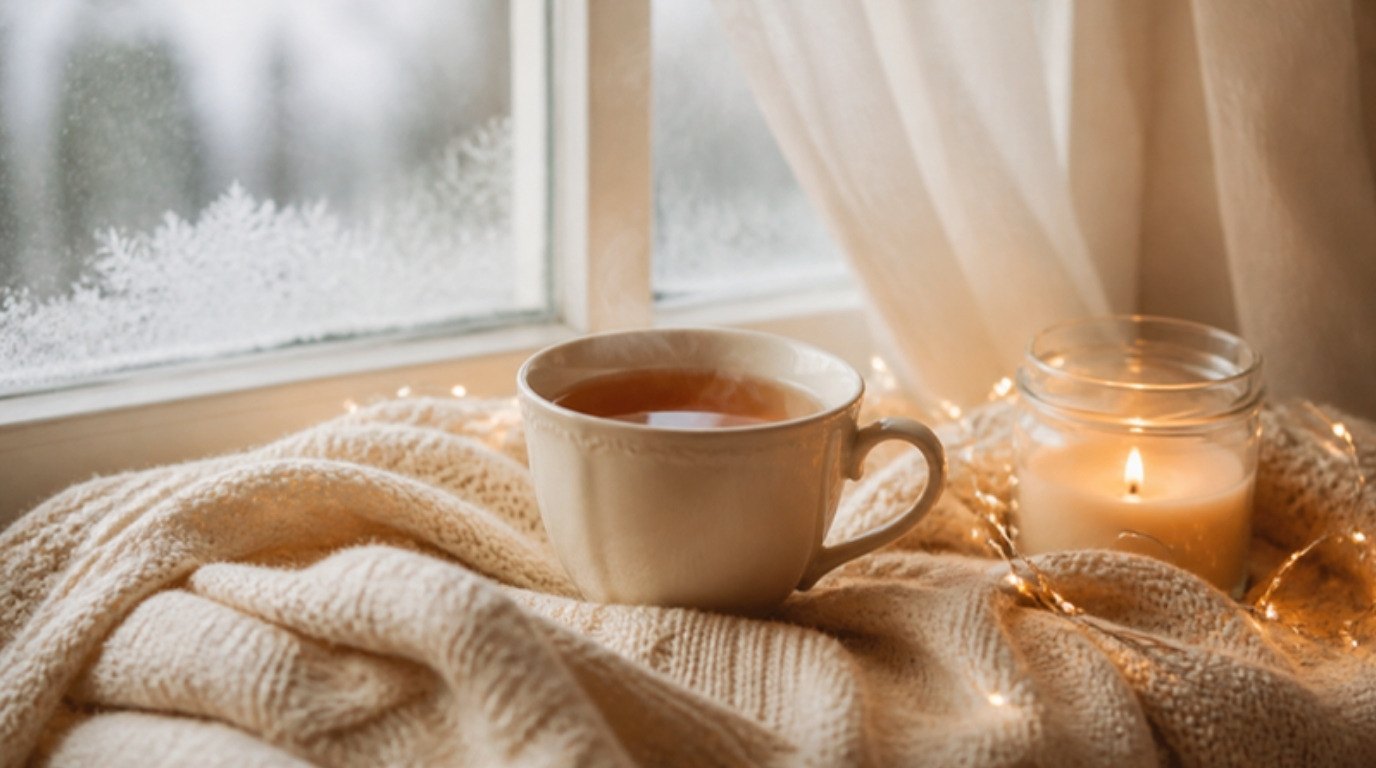
My favorite version is simple: the lights stay. A strand of warm white fairy lights in a glass jar, along a shelf or around a window frame doesn't feel "Christmassy" once the tree is gone. It just feels warm. Pair it with an evening tea, a glass candle and ten quiet minutes, and you've got a ritual that carries the softness of the holidays into ordinary weeks.
A quick, kind safety note: never leave a lit candle unattended, keep it away from curtains and blankets, and blow it out before bed.
If you want more small rituals like this, my list of ways to romanticize winter is full of tiny ideas that make cold evenings feel special.
4. Take the Decor Down Slowly

Stripping the whole house bare in one afternoon can make the end of the season hit harder. There's no rule that says it all has to come down on the same day.
Try this: take the decor down in stages over a week. Day one, the tree. Day two, the mantel and shelves. Day three, the entryway. Leave the neutral pieces up longer: pine cones, candles, a bowl of dried oranges or a eucalyptus bunch work beautifully through winter.
As you pack, wrap ornaments in tissue, label boxes by room, and set aside anything you didn't use this season to donate. Next December you'll thank yourself.
5. Plan Small Things To Look Forward To
Much of the holiday glow comes from anticipation. You can borrow that same feeling for January by scattering small, easy things across the month.
Try this: plan one small "something" for each week of January. Not a big trip, just a little thing: a library visit, a new face mask on Sunday evening, a movie night with a friend, a walk to a café you've never tried, an Old Hollywood film marathon with a blanket.
Writing them down makes them feel real. An undated weekly planner works well here because you can start any day without wasting pages, and you can give each week its own tiny highlight. If you love this idea, my winter self care ideas have plenty of options to fill those slots.
6. Do a Calm Money Check

Money worries are one of the quietest causes of the January dip. Avoiding your bank app usually makes the dread grow, while looking at the numbers calmly tends to shrink it.
Try this: set a timer for 30 minutes on a quiet afternoon. Make tea, open your accounts and write down three things: what you spent over the holidays, what's left to pay, and one small step for this month (for example, pausing one subscription or setting aside a small amount each week). That's it. You're not making a whole budget today, just turning a fog into a short list.
If you want to go one step further, a gentle no-spend January can give your wallet a break without making you feel deprived.
7. Move Your Body Gently
You don't need a strict new workout plan to feel the mood benefits of movement. Gentle, regular movement is enough to make a real difference to energy and stress.
Try this: aim for 20–30 minutes of light movement most days. That might be your morning daylight walk, a slow yoga video, dancing to three songs in the kitchen or stretching on the living room floor before bed. Choose the kind you'd actually look forward to, not the kind you think you "should" do.
A little tip: put your walking shoes and coat by the door the night before. Removing one small decision makes it much easier to go.
8. Reconnect With Friends

After a social whirlwind, many of us go quiet in January. A bit of rest is healthy, but too much isolation can make the blues stick around.
Try this: send one message today to someone you missed over the holidays. Keep it low-pressure: "I've been thinking about you. Want to grab a tea or go for a walk sometime this month?" Then put a date on it. One low-key catch-up a week, in person or on the phone, is a lovely rhythm for January.
If you'd rather stay in, invite a friend over for a no-fuss evening: tea, a blanket, a movie. Nobody needs a perfect house or a fancy plan.
9. Spend Less Time on Your Phone
January feeds are often full of other people's fresh starts, big goals and perfect resolutions. If you're already feeling low, that can be a lot.
Try this: keep your phone out of the bedroom for the first 30 minutes of the day, and set a gentle evening cut-off (for example, 9 pm). Mute any accounts that make you feel behind. Fill the gap with something analog: a book, a puzzle, a few journal lines, a warm bath.
You don't have to quit social media. You just get to choose when it gets your attention.
10. Protect Your Sleep
Late holiday nights can throw your sleep off for weeks, and tired brains feel everything more strongly. Steady sleep is one of the kindest things you can give your mood right now.
Try this: pick a regular bedtime and wake time and keep them within about an hour of each other, even on weekends. Dim the lights an hour before bed, keep the bedroom cool, and build a short wind-down: tea, a few pages of a book, lights out.
Making the bed feel inviting helps too. A soft cream fleece throw folded at the foot of the bed makes those early nights something you look forward to rather than a chore.
11. Write It Out
When the blues feel vague, writing helps make them smaller and clearer. You don't need a long journaling practice; a few lines are enough.
Try this: each evening, after your tea, write down three things: one thing that felt hard today, one small thing that went okay, and one thing you're looking forward to this week. Journaling after tea is one of my favorite little habits, and this three-line version takes about five minutes.
If a blank page feels like too much, a guided gratitude journal with short daily prompts makes it easier to start. Look for one with small writing spaces so it never feels like homework.
12. Lower the Bar for January
The new year comes with a lot of pressure to transform. If you're feeling low, that pressure can make things heavier.
Try this: instead of a list of resolutions, choose one gentle intention for January, like "rest more," "go outside every morning" or "be kind to myself on hard days." You can set bigger goals in February, or whenever you feel ready. There's nothing magic about January 1st.
Give yourself permission to have an ordinary, quiet month. Ordinary is exactly what your mind and body may need after a big season.
Your Four-Week January Plan
Here's a simple layout for the month, one small focus per week. Screenshot it, or copy it into your planner. Each week builds on the last, but you can repeat a week whenever you need to.
| Week | Focus | Small action | Mood check |
|---|---|---|---|
| Week 1 | Soft landing | Move your wake-up time back gradually, get 10–20 minutes of morning daylight, take the tree down | "How did I sleep this week, and when did I feel most like myself?" |
| Week 2 | Steady routine | Regular bedtime, 20–30 minutes of gentle movement most days, do the 30-minute money check | "Is my energy a little better than last week, the same or lower?" |
| Week 3 | Connection | Message one friend, plan one low-key catch-up, set a phone cut-off in the evening | "Who did I feel better after seeing or talking to?" |
| Week 4 | Something to look forward to | Plan one small treat for each week of February, keep your evening ritual, choose one gentle intention | "Has my low mood eased, or has it lasted two weeks or more?" |
That last mood check is important. If, by week three or four, your mood hasn't lifted at all or feels heavier, please book an appointment with your doctor or a therapist. You don't need to wait until it feels unbearable.
For more ideas on the darkest days, my winter blues toolkit has 30 gentle things to reach for when you need a little extra help.
Final Thoughts
Post-holiday blues are a sign that something meaningful just ended, not a sign that you're failing at the new year. Give yourself a soft landing: morning light, steady sleep, a small ritual you love, one friend, one little thing to look forward to each week.
January doesn't have to sparkle. It only has to be gentle enough for you to find your footing again, and you're allowed to take it slowly.