Most of us start a new year by adding things: a new workout, a new morning routine, a new goal on top of the old ones. But a calmer, lighter year often comes from the opposite direction. It comes from deciding, very clearly, what you're going to stop doing.
That's the quiet power of a not-to-do list. Instead of asking yourself to find more energy, it frees up the energy you already have by closing the little leaks that drain it every day. No extra willpower, no shiny new routine to keep up with, just fewer things pulling at you.
In this guide, I'll explain what a not-to-do list is, why it can work better than another list of goals, how to build yours in one gentle week, 20 ideas grouped by area of life, a simple table to make your list stick and how to review it so it stays kind rather than strict. Make a cup of tea, and let's make your year a little lighter.
What Is a Not-To-Do List?

A not-to-do list is a short list of habits, tasks and patterns you deliberately stop, so your time and energy can go to what actually matters to you. It's not a list of bad things you're ashamed of. It's a list of choices you've made in advance.
Think of it as the edges of your day. A to-do list tells you where to go. A not-to-do list tells you where you don't need to wander, so you don't end up at 11 p.m. wondering where the evening went.
A good not-to-do list is:
- Short: three to five items at a time, not twenty.
- Specific: "I don't check email before 9 a.m." instead of "be less online."
- Personal: built from your own energy drains, not someone else's.
- Kind: it allows exceptions and gets reviewed, rather than punishing you.
Why Stopping Can Beat Adding New Goals
Goals are lovely, but they all ask for the same limited resources: time, attention and energy. When your days are already full, adding a new goal is a bit like pouring more water into a glass that's already brimming. Something spills, and usually it's your rest.
A not-to-do list works differently, for a few reasons:
- It creates space before asking you to fill it. Stopping one 30-minute habit gives you 30 minutes back, every day, without any new effort.
- It removes decisions. When you've already decided "I don't say yes on the spot," you don't have to wrestle with it every time someone asks.
- It protects your existing goals. Many goals fail not because we don't care, but because small drains eat the time we'd set aside for them.
- It feels lighter. There's real relief in giving yourself permission to stop instead of pushing harder.
A not-to-do list also pairs nicely with a broader look at your days. If you suspect your hours are slipping away in a dozen small places, my guide on how to stop wasting time has habits that give your day back without turning you into a productivity machine.
If you've ever felt that resolutions were just another way to feel behind, you might also like my take on resolutions vs intentions. A not-to-do list fits beautifully alongside a gentle intention for the year.
How To Build Your Not-To-Do List in One Week
The best list doesn't come from a list of ideas online (even this one). It comes from paying attention to your own days for a little while first. Here's the simple process I'd follow.
Step 1: Notice Your Energy Drains for a Week
For seven days, jot down the moments that leave you tired, irritated, rushed or a little bit sad. Keep it quick: one line, the time of day and how you felt. You might notice "picked up phone in bed, lost 40 minutes, felt wired" or "said yes to an extra task, resented it all afternoon."
An undated weekly planner works well for this because you can start any day and keep it beside your daily plans. If you prefer something more portable, a set of cream sticky notes on your desk or fridge lets you catch drains the moment they happen.
Step 2: Pick Your Top 3–5
At the end of the week, read through your notes and circle the patterns that show up again and again, or the ones that cost you the most. Choose three to five. That's it. A short list you actually follow beats a long one you forget by February.
A helpful question: "If I stopped just one of these, which one would make next week feel noticeably better?" Start there.
Step 3: Phrase Each One Clearly
Vague items are easy to wriggle out of. Clear ones are easy to keep. Use this simple formula:
"I don't [specific action] [when or where]."
- Instead of "Use my phone less," try "I don't take my phone into bed."
- Instead of "Stop overworking," try "I don't answer work messages after 7 p.m."
- Instead of "Spend less," try "I don't buy anything over $30 without waiting 48 hours."
Notice the wording: "I don't" rather than "I can't" or "I shouldn't." It sounds like a choice you've made about who you are, which is exactly what it is. I like writing the final list with pastel pens on the first page of my journal so it feels like something I chose, not a rule handed to me.
20 Not-To-Do List Ideas
Here are 20 ideas to inspire you, grouped by area of life. Please don't take them all. Read through, notice which ones make you think "oh, that's me," and borrow only those.
Time and Work

1. I don't multitask during focus blocks. When I've set aside 45 minutes for one task, that's the only thing open. Switching back and forth feels productive but quietly costs time and leaves you more tired.
2. I don't say yes on the spot. A simple "Let me check and get back to you by tomorrow" gives you room to decide what you actually want. My guide on how to say no politely has plenty of kind scripts for this.
3. I don't check email before 9 a.m. (or before your first important task). Starting the day in your inbox means starting it on everyone else's priorities.
4. I don't eat lunch at my desk. Even 15 minutes away from your work, ideally near a window, helps your afternoon more than you'd expect. If work boundaries feel tricky in general, here are some professional boundaries at work that are easy to say out loud.
Phone
5. I don't take my phone into bed. Charge it across the room or in another room, and keep a book on your nightstand instead. This one change can give back a surprising amount of sleep and calm.
6. I don't keep notifications on for social apps. Turn them off in settings and check those apps when you choose to, not every time they call you.
7. I don't reach for my phone in the first 30 minutes of the day. Let the morning be yours for a little while: open the curtains, stretch, make tea or coffee and breathe before the world arrives.
8. I don't reply to non-urgent messages instantly. Answering everything within minutes trains people to expect it. Batch replies two or three times a day and let the rest wait kindly.
Home
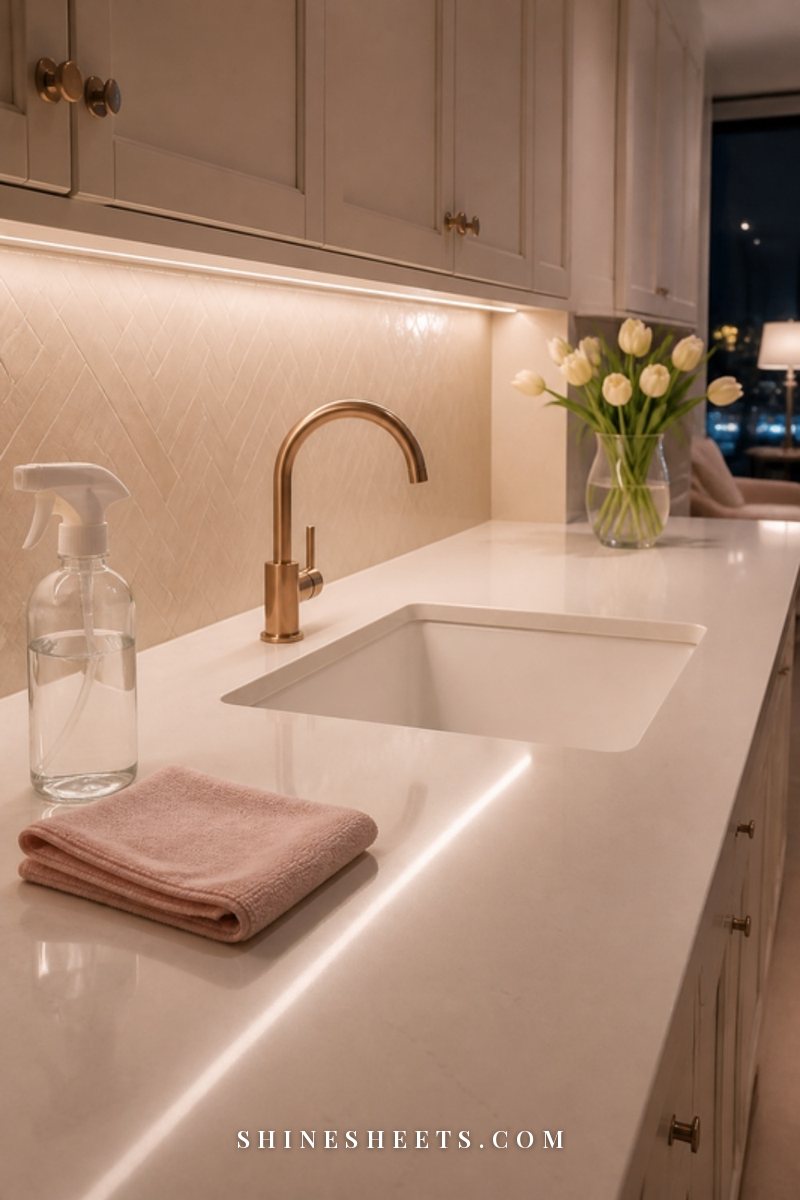
9. I don't leave the kitchen messy overnight. Ten minutes of loading the dishwasher and wiping the counter means you wake up to a calm kitchen instead of yesterday's chaos.
10. I don't put things down; I put them away. Keys go in the bowl, the coat goes on the hook, the mail gets sorted at the door. Most clutter is just a pile of "I'll do it later" moments.
11. I don't buy storage before I declutter. Baskets and boxes are tempting, but they often hide clutter rather than solve it. Clear first, then see what you really need.
Relationships
12. I don't over-explain a no. "I can't make it this time, but thank you for thinking of me" is a complete answer. Long explanations invite negotiation and leave you feeling like you owe something.
13. I don't say "I'm fine" to people I trust when I'm not. You don't have to share everything, but letting safe people see a little of what's real keeps relationships close and honest.
14. I don't jump in to fix when someone just wants to be heard. If you're not sure, ask: "Do you want ideas, or do you want me to just listen?" It's one of the kindest questions you can offer a friend.
Self-Talk

15. I don't compare my start to someone else's middle. The person you're comparing yourself to has years of practice you didn't see. Your beginning is allowed to look like a beginning.
16. I don't punish myself for resting. Rest isn't a reward you earn by finishing everything. It's part of what lets you keep going. I'm prone to anxiety, and I've noticed it gets louder whenever I treat rest as something to feel guilty about. A soft cream knit throw folded on the sofa is a small, visible invitation to actually sit down.
17. I don't speak to myself in a way I'd never speak to a friend. When you catch a harsh thought, try rewriting it the way you'd say it to someone you love. Same honesty, much softer voice.
Money
18. I don't make impulse buys without a 48-hour wait. Put it in the cart or write it down, then come back in two days. If you still want it and it fits your budget, lovely. Often, the urge has quietly passed.
19. I don't shop to fix a mood. When you notice the urge to buy after a hard day, pause and ask what you actually need: rest, comfort, connection or just a glass of water and an early night.
20. I don't avoid looking at my bank balance. A five-minute weekly check-in (same day, same time, maybe with a cup of tea) feels far less scary than the vague worry of not knowing.
The Stop, Cost and Instead Table
Stopping something works best when you know two things: why it matters, and what you'll do in that moment instead. An empty space tends to fill right back up with the old habit, so give it something kinder to fill it with. Here's a table with examples; screenshot it, or copy the three columns into your journal and fill in your own.
| What I'm stopping | What it costs me | What I'll do instead |
|---|---|---|
| Taking my phone into bed | About 40 minutes of sleep and a wired, restless mind | Charge it in the kitchen and read a few pages of a book |
| Saying yes on the spot | Evenings I didn't want to give away, quiet resentment | Say "Let me check and get back to you tomorrow" |
| Checking email before 9 a.m. | My best focus hours go to other people's priorities | Start with my one most important task for 30 minutes |
| Leaving the kitchen messy overnight | A stressful start to the morning | A 10-minute kitchen reset after dinner with music on |
| Over-explaining a no | Feeling guilty and inviting pushback | One kind sentence, then change the subject |
| Comparing my start to someone's middle | Motivation and joy in learning | Write down one small thing I've improved this month |
| Punishing myself for resting | Real rest, so I stay tired | Name it: "This is rest, and it's part of the plan" |
| Impulse buys | Money for things I actually care about | Write it on a wish list and wait 48 hours |
The "instead" column is the secret. If you only fill in one part of this table, make it that one.
What a Not-To-Do List Is Not
Before you write yours, it helps to know what this list isn't meant to be, because it's easy to turn a gentle tool into a strict one without noticing.
- It's not a list of everything wrong with you. If an item makes you feel ashamed rather than relieved, rewrite it or leave it off.
- It's not a rulebook for other people. Your list is about your own actions. "I don't answer work messages after 7 p.m." is yours to keep; "My boss doesn't message me after 7" isn't.
- It's not forever. Some items will become so natural you forget they were ever on the list. That's the goal.
If an item ever starts to feel like a punishment instead of a relief, that's your sign to soften it. The whole point is a lighter life, not a stricter one.
How To Make Your Not-To-Do List Stick
Knowing what to stop is the easy part. Here's how to actually make it part of your days without relying on sheer willpower:
- Keep it visible. Write it on the first page of your planner, on a sticky note by your desk or on the inside of a kitchen cupboard door.
- Change your surroundings. Move the phone charger out of the bedroom. Delete the shopping app. Put the dish soap where you'll see it. Make the old habit slightly harder and the new one slightly easier.
- Start with one. If five feels like a lot, work on one item for two weeks, then add the next.
- Tell one person. Saying "I'm not checking work messages after 7 p.m. anymore" makes it real, and helps people adjust their expectations.
- Expect slips. You'll forget sometimes. That's not failure, it's data. Notice what made it hard and adjust.
If you'd like a deeper look at why habits are so sticky in the first place, my guide on how to break bad habits without relying on willpower pairs perfectly with this list.
Review It Monthly

A not-to-do list isn't carved in stone. It's a living list that should change as your life does. Once a month, set aside 15 minutes (I love doing this with evening tea and a glass candle, then journaling for a few minutes afterward) and ask yourself:
- Which items have become easy? You can keep them or let them graduate off the list.
- Which ones keep slipping, and why? Maybe they need clearer wording or a better "instead."
- Is there a new drain that's crept in this month?
- What did I gain from the things I stopped: time, sleep, calm, money?
A guided goal journal is a lovely pick for this monthly check-in, because it gives you a calm place to see your progress over the whole year in one spot. Lighting a candle in a cream glass jar before you start is a sweet little signal to your brain that this is reflection time, not another task (just blow it out when you close the journal).
Kind Exceptions Are Allowed
Your not-to-do list is there to serve you, not to become one more thing to feel bad about. Some exceptions are completely reasonable: you might check email early on launch day, take your phone to bed when you're waiting for news from family, or leave the dishes after a long, lovely dinner with friends.
The difference is that an exception is a conscious choice, made with care, rather than the old habit sneaking back in on autopilot. If you notice "exceptions" happening every day, that's simply a sign the item needs a fresh look at your next monthly review.
Final Thoughts
You don't need a bigger, busier version of yourself this year. Sometimes the most generous thing you can do for your future self is to stop a few small things that quietly cost you so much.
Pick three, phrase them clearly, give each one a kinder "instead" and review them gently once a month. Bit by bit, you'll find more room in your days for rest, for people you love and for the things that actually make your life feel like yours.