Layered necklaces look effortless when they follow a few quiet rules: different lengths, enough space between them, and one piece that's clearly the star. Get those three right and even inexpensive chains look intentional and expensive. Get them wrong and you end up with a tangled knot sitting in one spot at the base of your throat.
Ring stacks work the same way. It isn't about how many rings you own, it's about rhythm: thin next to bold, gaps where the eye can rest, and an odd number that feels balanced without looking matched.
This guide covers exactly how to layer necklaces and stack rings: the seven layering rules, a necklace length guide, a neckline table so you know which lengths flatter which tops, easy ring stack formulas, bracelets in brief, and how to keep everything from tangling. If you're starting from zero, a pre-layered gold necklace set is an easy way to learn what spacing looks right before you build your own combinations.
7 Necklace Layering Rules That Always Work
You don't need to follow every rule every day. Think of these as the guardrails that make your layers look chosen rather than accidental.
1. Start With Two or Three Lengths
Two necklaces is the easiest layer; three is the classic; four is a statement that works best with very fine chains. Start with two and only add a third once the first pair looks right. If you're unsure, the safest beginner combination is a 16-inch and an 18-inch chain.
2. Leave About Two Inches Between Each Layer
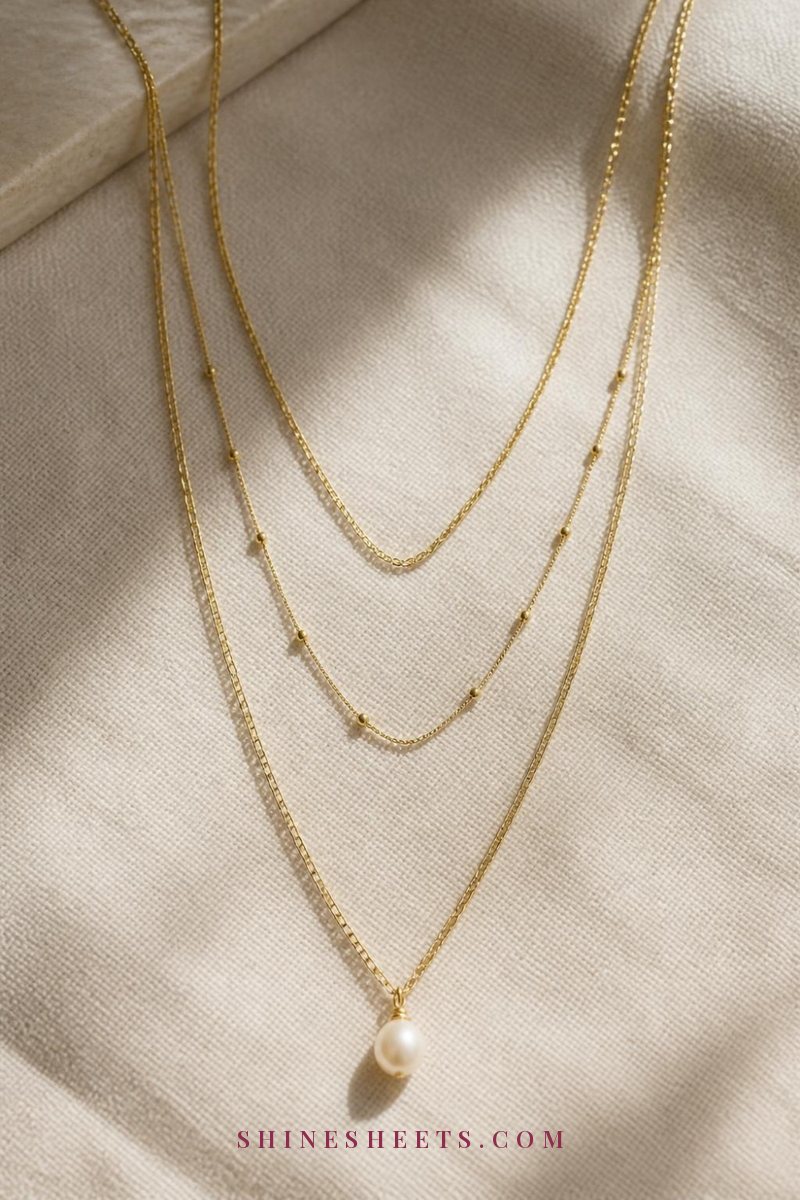
This is the rule that makes the biggest difference. Chains that are only one inch apart blur together and tangle; chains about two inches apart read as separate, deliberate pieces. A practical trio is 16, 18 and 20 inches. With pendants, measure to the bottom of the pendant, not the chain, because the pendant drops it lower.
3. Mix Chain Textures
Two identical fine cable chains look like a mistake. Mix one delicate chain with one with more texture: a fine cable chain with a flat snake chain, a satellite chain (the one with tiny beads) with a paperclip chain, or a simple chain with a strand of small pearls. Keep the textures in the same weight family so nothing overpowers the rest.
4. Choose One Focal Pendant
Every layered look needs one star: a coin, an initial, a pearl drop, a small locket. Put it on the middle or the longest chain and keep the others plain. Two pendants competing for attention is the most common reason a layered look feels busy.
5. Put the Heaviest Piece at the Bottom
Weight wants to sink, so let it. Lighter, finer chains sit closer to the neck, and the thicker chain or larger pendant goes lowest. This is also your best anti-tangle trick, because a heavier bottom layer keeps everything above it in place.
6. Mix Metals With a Bridge Piece
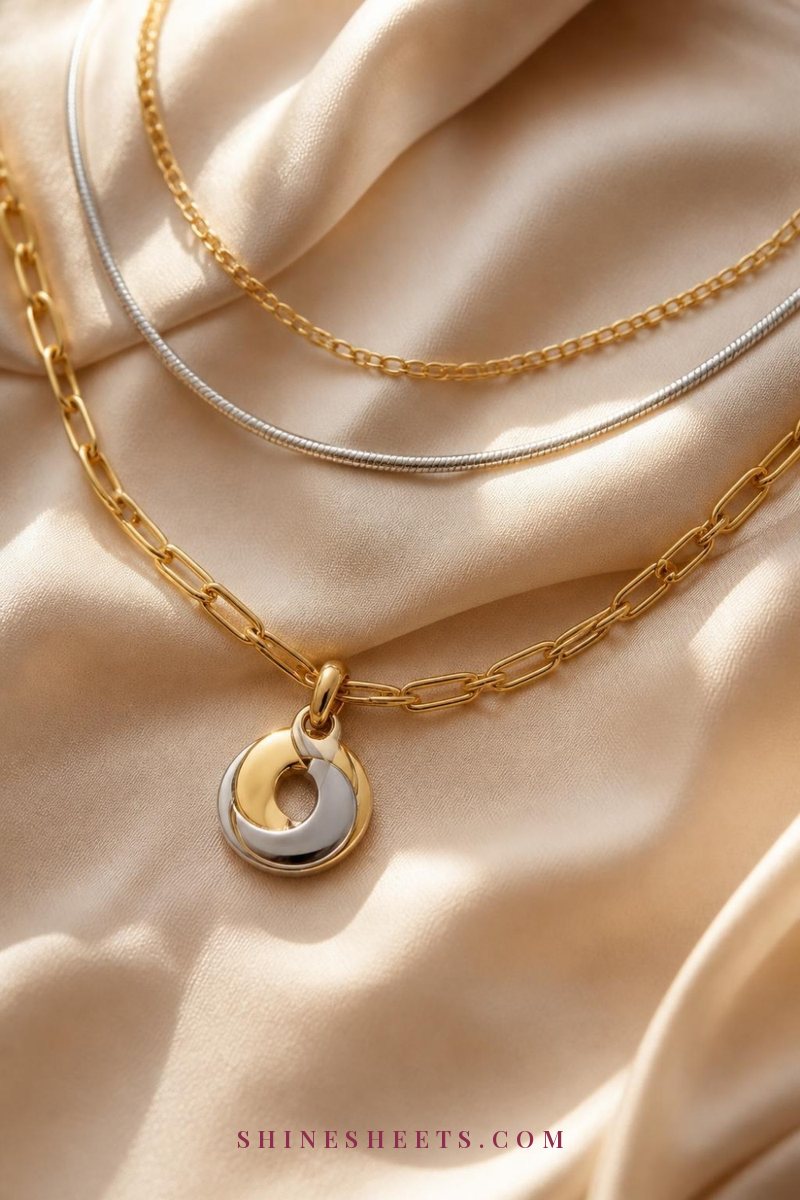
Mixing gold and silver is completely allowed, and it looks most polished with a "bridge": one piece that contains both metals, like a two-tone pendant or a chain with mixed links. Without a bridge, aim for a clear ratio, such as two gold pieces and one silver, rather than a 50/50 split. Rose gold sits softly between the two and works as a bridge too.
7. Match the Mood, Not the Set
Your layers don't have to come from the same collection, but they should feel like the same occasion. Pearls and fine chains say soft and classic, chunkier chains say casual and modern, and charms say playful. For a timeless, quiet-luxury feel that pairs well with old money outfits, stay with fine gold and one pearl or coin pendant.
Necklace Lengths, Explained
Jewelry lengths have names, and knowing them makes shopping so much easier. These are the standard measurements, and where they usually fall on an average neck:
- Collar (12–14 inches): sits snugly around the middle of the neck.
- Choker (14–16 inches): rests at the base of the neck. A great top layer.
- Princess (17–19 inches): falls just below the collarbone. The most versatile length and the one most pendants come on.
- Matinee (20–24 inches): lands at the top of the bust. A perfect bottom layer for a trio.
- Opera (28–36 inches): falls at or below the bust. Lovely as a single long pearl strand or doubled.
- Rope (37 inches and longer): can be wrapped twice or knotted.
To check what a length does on you, take a piece of string, tie it at different lengths and look at where it falls with the tops you wear most. It takes five minutes and saves a lot of returns.
Neckline Guide: Which Necklace Lengths To Layer
The neckline of your top decides where layers look best. The idea is simple: necklaces should either echo the shape of the neckline or sit clearly inside or above it, never collide with the edge of the fabric. Screenshot this table for the mornings you're standing at your jewelry dish.
| Neckline | Lengths that work | Why it works | Skip |
|---|---|---|---|
| Crew neck | One chain at 16" over the top, or 20–30" layers on the fabric | Either sits above the neckline or clearly on the top | 18" chains that land right on the seam |
| V-neck | 16" + 18" + 20" with a pendant | Layers echo the V and lengthen the neck | Chokers alone, which cut the line |
| Scoop neck | 16" + 18" | Fills the open space with soft curves | Very long chains that disappear into the fabric |
| Square neck | 14" + 16" | Short layers frame the straight line | Pendants that hang over the edge |
| Off-shoulder or strapless | 14" + 16", or a single choker | Keeps focus on collarbones and shoulders | Long matinee layers |
| Button-up shirt, open collar | 16" + 18" fine chains | Peek out of the collar for an easy, French feel | Chunky chains that fight the collar |
| Turtleneck or high neck | One long 28–32" chain or pendant over the knit | Adds a vertical line over the fabric | Short layers that get lost |
A button-up with two fine chains peeking out of the open collar is one of the simplest ways to look put together, and it's a cornerstone of French girl style for a reason.
3 Easy Layered Necklace Formulas
If you'd rather not think, use one of these. Each one works with almost everything in a classic wardrobe.
- The Everyday Duo: 16-inch fine cable chain + 18-inch chain with a small pearl or coin pendant. Quiet, polished, office-friendly.
- The Classic Trio: 16-inch satellite chain + 18-inch fine chain with a tiny pendant + 20-inch paperclip chain. The most balanced layered look for V-necks and scoop necks.
- The Soft Statement: 14-inch pearl choker + 18-inch fine gold chain + 22-inch chain with a medallion. Feminine with a little drama, lovely for evenings.
If you're building a capsule wardrobe, one Everyday Duo in your main metal covers most of your outfits. Add pieces slowly from there.
How To Layer Necklaces for Different Occasions
The same three chains can feel completely different depending on where you're going. A few small adjustments keep your layers right for the moment:
- Work and meetings: two fine chains, close to the neck, nothing that swings or clinks when you lean over a desk. Small pearl or tiny coin pendants look polished and calm.
- Weekends and errands: this is where texture plays. A paperclip chain with a fine chain and a small charm feels relaxed with a tee, a knit or a denim shirt.
- Dinner and date nights: go a little lower and a little shinier. A longer chain with a medallion, or a pearl choker with one fine gold chain, catches candlelight beautifully.
- Weddings and formal events: fewer layers, finer pieces. One elegant pendant or a single strand of pearls usually looks more refined than a full trio with a dressy outfit.
- Travel days: one short chain you never take off. Layers tangle in bags and under seatbelts, so save them for when you arrive.
How To Build a Small Jewelry Wardrobe
You don't need a full drawer to layer well. These five pieces in one main metal create dozens of combinations, and you can add one at a time:
- A 16-inch fine cable chain. Your quiet base layer for almost every look.
- An 18-inch chain with a small pendant. A pearl, coin, initial or tiny locket becomes your signature.
- A 20-inch textured chain. Paperclip, satellite or snake for contrast.
- Three thin stacking bands. The building blocks of every ring stack.
- One bolder ring. A signet, a dome ring or a ring with a single stone to anchor your stack.
Choosing your main metal is easier than it seems. Hold a gold and a silver piece against your wrist in daylight and notice which one makes your skin look brighter and more even. Many people find warm skin tones glow with gold and cool skin tones look crisp with silver, but your clothes matter too. If your wardrobe color palette is full of cream, camel and beige, gold often feels more harmonious; if it's mostly gray, navy and black, silver can look cleaner. And if you love both, choose one main metal and use the bridge trick from rule six.
When you buy a new piece, ask one question first: does this work with at least two things I already own? If the answer is yes, it will earn its place.
How To Stack Rings
A ring stack should look collected over time, even if you bought it all at once. These guidelines keep it elegant instead of crowded.
Stick to Odd Numbers
Three, five or seven rings across one hand feels balanced in a way that four or six often doesn't. Our eyes read odd groups as more natural. Start with three on one hand and nothing, or one simple ring, on the other.
Pair Thin Bands With One Bold Ring
The easiest way to make a stack look intentional is contrast: two or three thin bands around one wider or more decorative ring. A dainty stacking rings set gives you a handful of thin bands to play with, so you can try different combinations before deciding what you want to invest in.
Choose Your Fingers on Purpose
Your index and middle fingers handle bolder rings well, your ring finger carries thin bands and anything sentimental, and your pinky is the place for one small signet or a thin band. Midi rings (worn above the knuckle) add a pretty extra level, but one or two is plenty.
Leave a Finger Bare
A bare finger gives the eye a rest and makes the rings around it look more special. On a stack of five, try leaving the middle finger empty and splitting the rings across the other fingers.
Ring Stack Formulas
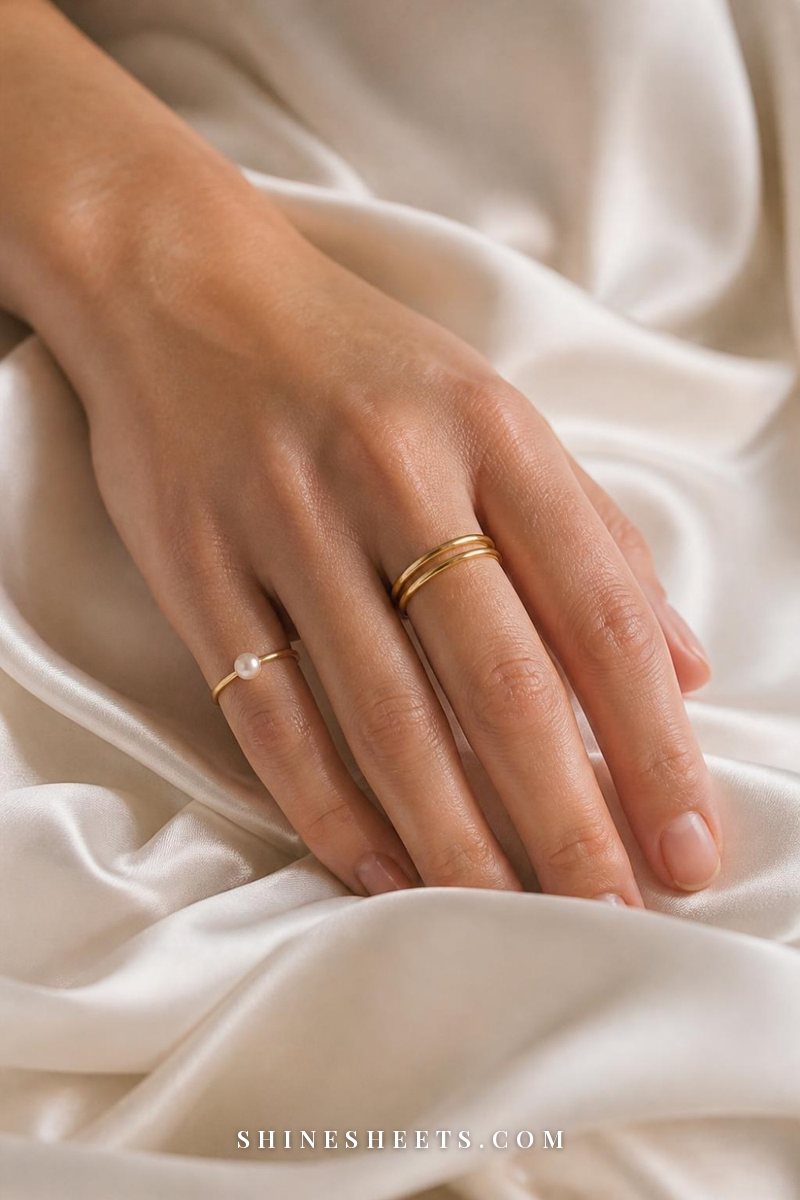
| Stack | Rings | Where they go | Best for |
|---|---|---|---|
| Minimal Three | 2 thin bands + 1 small stone or pearl ring | Two bands on the ring finger, stone ring on the index | Every day, work, typing-heavy days |
| Balanced Five | 3 thin bands + 1 bold band + 1 signet | Bold on index, two thin on ring finger, one thin midi on middle, signet on pinky | Weekends, dinners, photos |
| Statement Seven | 4 thin bands + 2 textured rings + 1 cocktail ring | Spread over both hands, cocktail ring alone on one finger | Evenings and special occasions |
A small note on comfort: fingers swell in heat and after exercise, so a stack that slides on easily in the morning can feel tight by afternoon. If you're between sizes, size up for stacking rings, and take them off before workouts.
Bracelets, Briefly
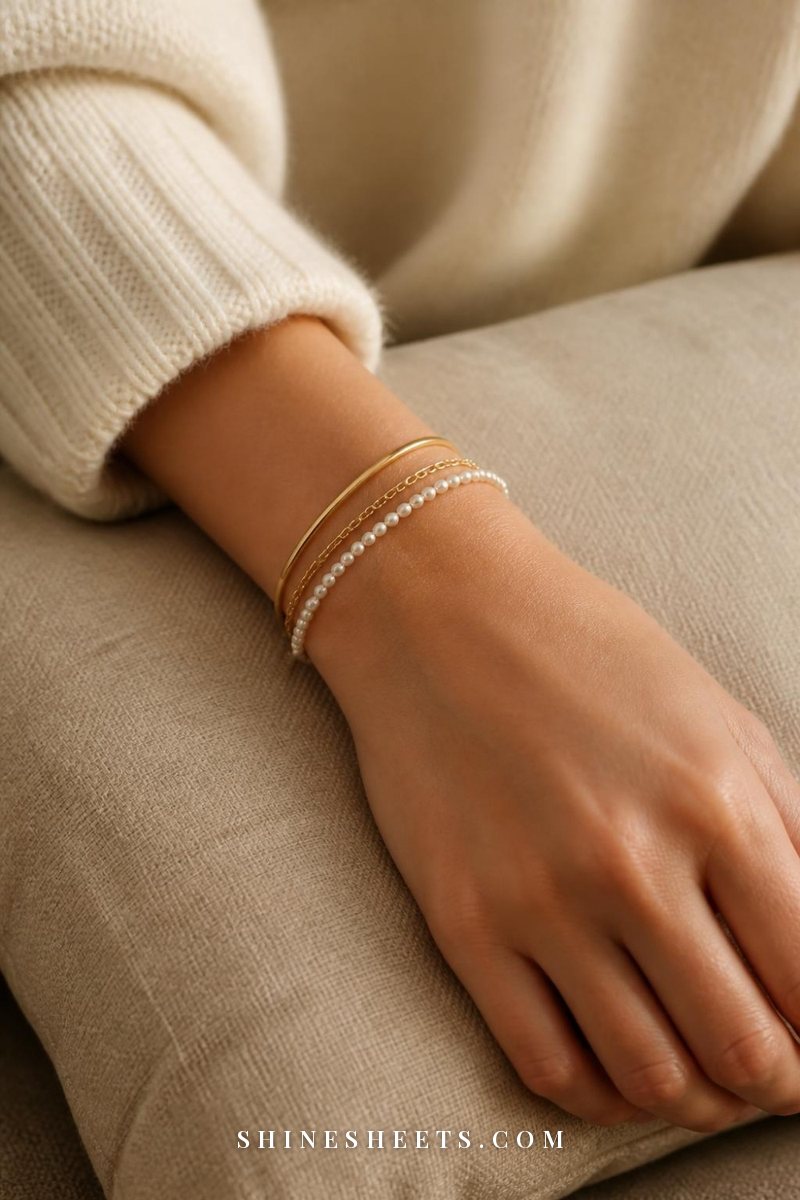
The same principles apply to your wrist. Mix one bangle or cuff with one or two fine chain bracelets, and keep the total to about three on one wrist. If you wear a watch, let it be your bold piece and add only one or two fine bracelets next to it. Keep bracelets and a ring stack on the same hand only if the rings are minimal; otherwise, split them so each hand has one focus.
A slim gold bangle set is an easy foundation here, because bangles stack neatly and can be worn alone or together.
Common Layering Mistakes
Most jewelry looks that feel slightly off come down to one of these, and each has an easy fix:
- Everything is the same length. Fix it by swapping one chain for a longer one, or use an extender to add two inches.
- Too many stars. A big pendant, statement earrings and a chunky ring stack all at once compete. Choose one area to shine and keep the rest simple.
- Scale mismatch. A very thick chain next to a hair-fine one can look like two different outfits. Keep weights within the same family.
- Ignoring the neckline. A chain that lands exactly on the edge of a top looks accidental. Shorten or lengthen it by two inches.
- Layering pieces you don't love. If you keep taking one chain off by lunchtime, it doesn't belong in your rotation.
How To Stop Layered Necklaces From Tangling
Tangling is the number one reason people give up on layering. These fixes really help:
- Use a layering clasp. A necklace detangler clasp holds two or three chains on one clasp with separate rings, so they stay in order all day.
- Respect the two-inch rule. Chains that are too close in length tangle much more.
- Put weight at the bottom. A pendant or heavier chain at the lowest point keeps the layers above it from twisting.
- Mix chain types. Two identical fine chains twist around each other; a fine chain and a flat snake chain slide past each other.
- Put them on in order. Start with the longest chain and finish with the shortest, then give them a gentle shake to settle.
- To untangle a knot, lay it flat, add a tiny drop of baby oil and gently work it apart with two pins, then wipe the chain clean.
Jewelry Care and Storage
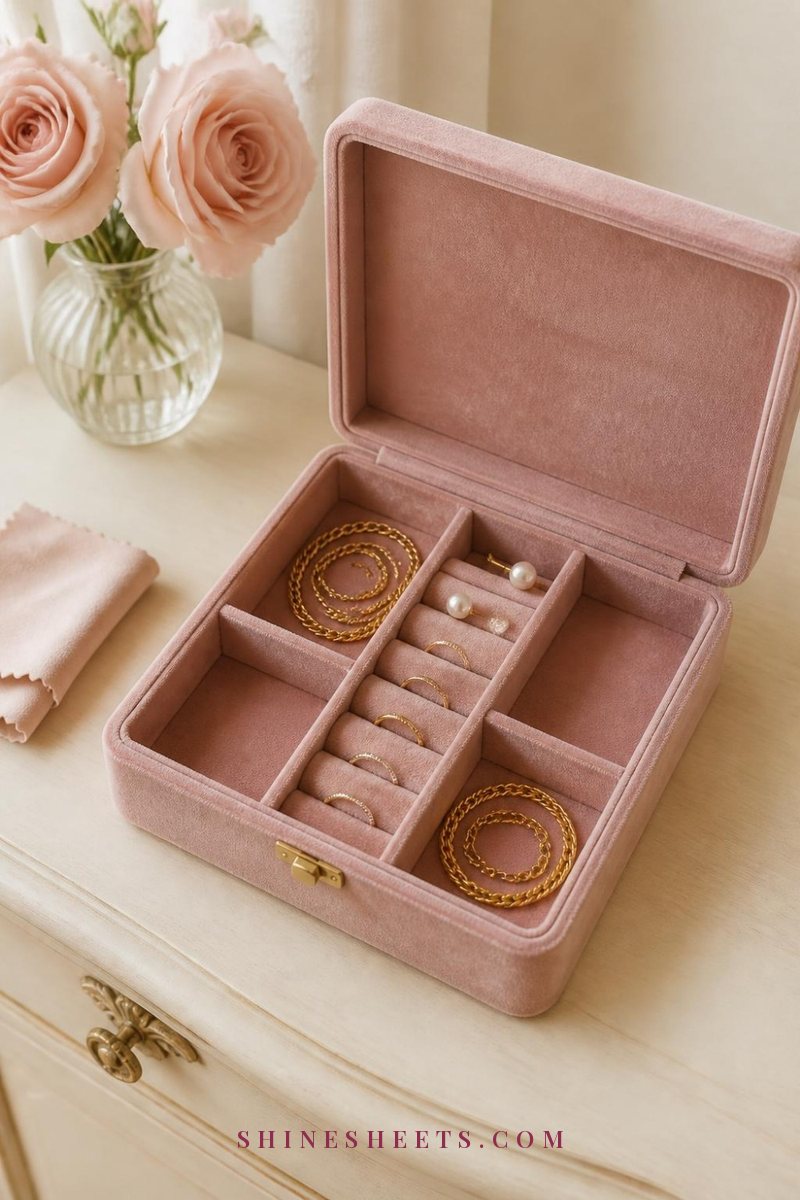
Fine jewelry lasts years with a few easy habits, and plated pieces last much longer than you'd expect when you treat them gently.
- Last on, first off. Put jewelry on after perfume, lotion and hairspray, and take it off before showering, swimming, cleaning and working out.
- Wipe after wearing. A soft jewelry polishing cloth removes skin oils and keeps the shine. Do this once a week for pieces you wear daily.
- Store chains separately. Hang them, or keep each one in its own compartment or small pouch. A velvet jewelry box with individual slots keeps layers from becoming one big knot.
- Close every clasp before storing a chain. It's a tiny step that prevents most tangles.
- Keep plated jewelry dry. Water, sweat and chlorine wear down plating fastest.
A gentle safety note: if a piece leaves your skin itchy, red or slightly green, you might be reacting to nickel or another base metal. Take it off, let your skin calm down and look for pieces labeled nickel-free, solid gold, or sterling silver. If irritation doesn't settle, a dermatologist can help.
And if you'd like the bigger picture of how jewelry fits into looking polished, my guide on how to dress classy pairs nicely with everything here.
Final Thoughts
Layering isn't about owning more jewelry; it's about wearing what you have with intention. Two chains two inches apart, one pendant as the star, a ring stack in an odd number with a finger left bare, and you'll look quietly finished in under a minute.
Start with the Everyday Duo and a Minimal Three stack, wear them for a week, and let your own style guide what comes next. The prettiest jewelry collections are built slowly, one piece you truly love at a time.