Dressing for your body shape was never meant to be a list of things you're "not allowed" to wear. At its best, it's just a little understanding of your own proportions, so you can pick cuts that feel easy, comfortable and like you – instead of fighting with clothes that were never designed for your frame.
Most style advice gets this backwards. It tells you to hide, minimize and disguise. I'd much rather you learn where a waistband sits best on you, which necklines make your shoulders look relaxed and which trouser shape makes walking out the door feel effortless. That's not a rulebook. That's a shortcut.
This guide covers how to dress for your body shape in a kind, flexible way: how to read your own proportions in about ten minutes, the five common body shapes with cuts worth trying, a simple cheat sheet table you can screenshot, eight universal tricks that work for almost everyone and why fit will always matter more than the number on a label.
One small promise before we start: nothing here is about changing your body. It's only about choosing clothes that work with it.
Body Shapes Are Guidelines, Not Rules
Here's the honest truth about body shape categories: almost nobody fits one perfectly. You might be a pear with broad-ish shoulders, an hourglass with a short torso, or a rectangle whose shape changes a little through the month. Bodies are not geometry homework.
Think of the five shapes below as starting points. They give you a vocabulary ("my hips are wider than my shoulders", "my waist is quite straight") and a few ideas to test in the fitting room. If a "wrong" cut makes you feel wonderful, wear it. Feeling good in your clothes shows in how you stand, move and smile, and no proportion trick can compete with that.
It also helps to separate two goals that often get mixed up:
- Balance: creating a visual line that feels harmonious from shoulders to hem.
- Highlight: drawing the eye to a part of you that you genuinely like – your collarbones, your waist, your legs, your arms.
You don't have to do both in every outfit. Some days you'll just want to be comfortable, and that's a completely valid style goal too. If body talk tends to stir up harsh thoughts, my guide on how to be kinder to yourself is a gentle companion to read alongside this one.
How To Find Your Proportions in 10 Minutes
You don't need a professional fitting to understand your shape. You need a soft measuring tape, a notebook and ten quiet minutes. Wear fitted basics (leggings and a close tank top work well) so you can see your actual outline rather than the outline of a baggy sweater.
Write the numbers down, then look at the relationships between them rather than the numbers themselves. The numbers are just tools – nobody needs to see them but you.
Shoulders vs Hips
Measure around the widest part of your shoulders, then around the fullest part of your hips (usually across the seat). Are they within about an inch or two of each other, or is one clearly wider? This single comparison tells you most of what you need to know about balance.
A quick visual check also works: stand facing a wall, place your hands on the outer edges of your shoulders, then slide them down to your hips. Did your hands move outward, inward or stay roughly in line?
Your Waist Definition
Measure the narrowest part of your torso, usually just above your belly button. Then compare it to your bust and hips. If your waist is around 9–10 inches smaller than both, you have a clearly defined waist. If it's closer to them, your waist is straighter – which simply means you'll often create definition with seams, belts and structure rather than relying on it naturally.
Torso vs Legs
This one surprises people because it changes everything about trousers and hemlines. Stand straight and look at where your hip bone sits. A simple method: bend your arm at the elbow with your arm against your side. If your elbow sits noticeably above your natural waist, you may have a shorter torso and longer legs. If it sits at or below, your torso may be longer.
- Shorter torso, longer legs: mid-rise trousers and slightly cropped or half-tucked tops give your middle some breathing room.
- Longer torso, shorter legs: high-waisted bottoms and matching shoes or hems create a longer leg line.
- Balanced: you can play freely with both.
What You Want To Highlight
Finish with the fun question: what do you actually like? Write down two or three features. Maybe your collarbones, your calves, your waist, your shoulders or your back. These become your "spotlight" areas – the places necklines, hems and details can point toward. This step matters more than any measurement, because style should start from what you enjoy, not what you're worried about.
The 5 Common Body Shapes and the Cuts That Flatter Them
Read all five, even if one seems obvious. Many people are a blend, and you'll often find helpful ideas in the shape next to yours.
1. Hourglass
What it looks like: shoulders and hips roughly equal, with a clearly defined waist.
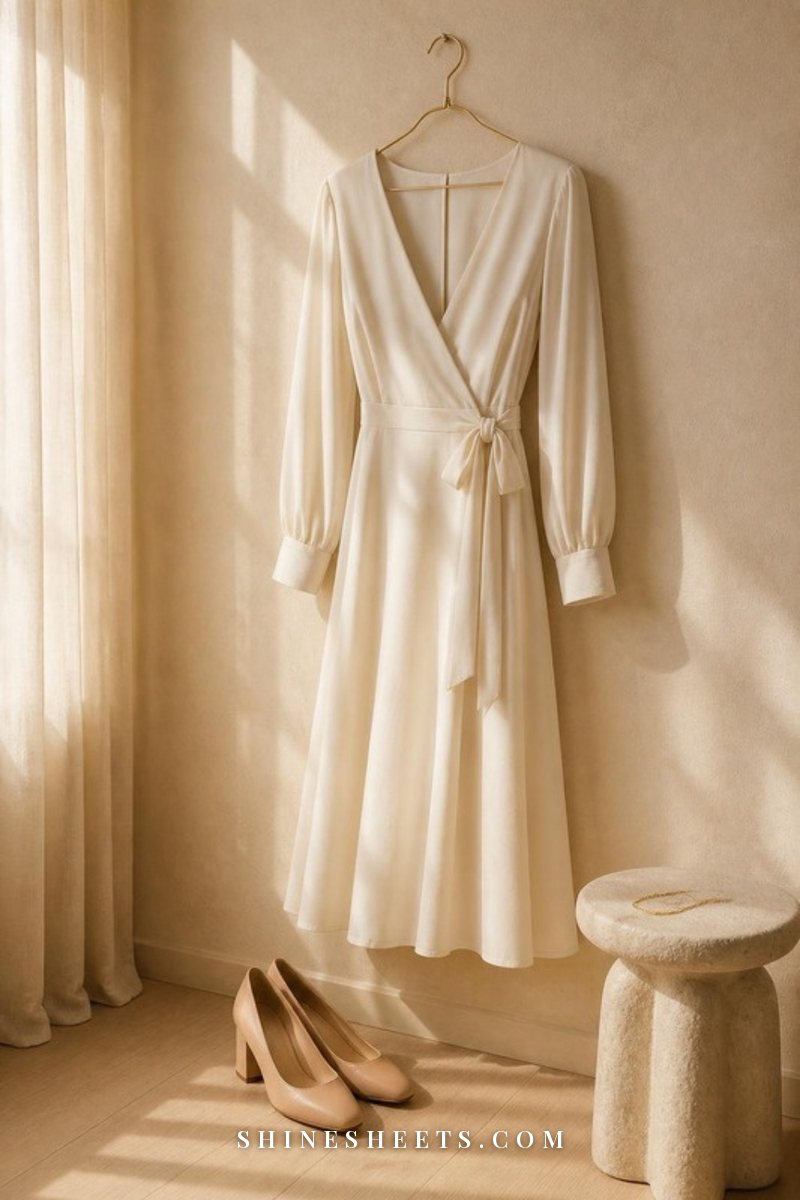
What to try: anything that follows your natural waistline. A soft wrap dress in a neutral tone is the classic example, because the tie sits exactly where your shape curves in. Fitted knits, high-waisted pencil skirts, belted coats and V-necks or sweetheart necklines all work beautifully.
What to balance: very boxy, shapeless pieces can make an hourglass frame look wider than it is, because the fabric hangs from the widest points. If you love oversized shirts (they're so comfortable), tuck the front in or add a belt to bring the waist back.
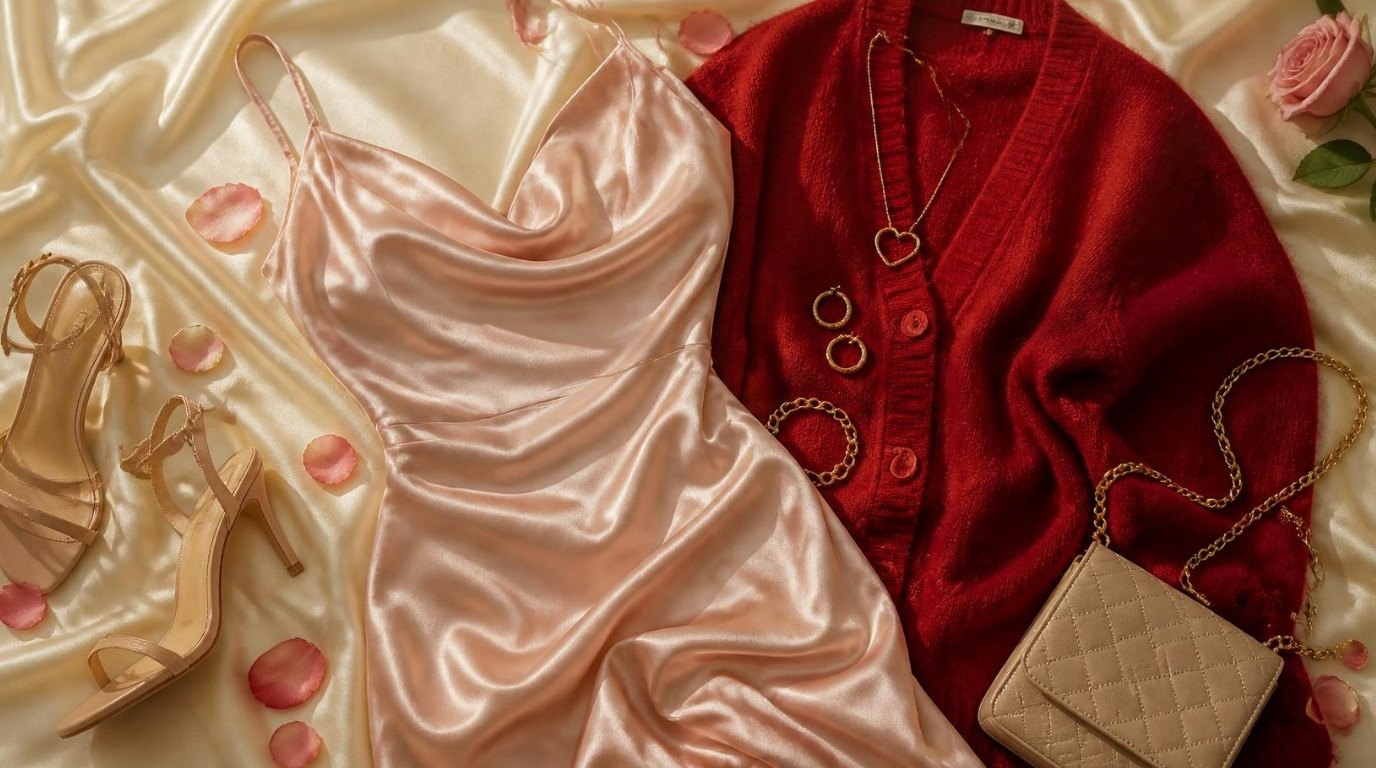
Easy outfit: wrap dress, nude block heels or loafers, a small gold necklace.
2. Pear (Triangle)
What it looks like: hips wider than shoulders, often with a defined waist and fuller thighs.
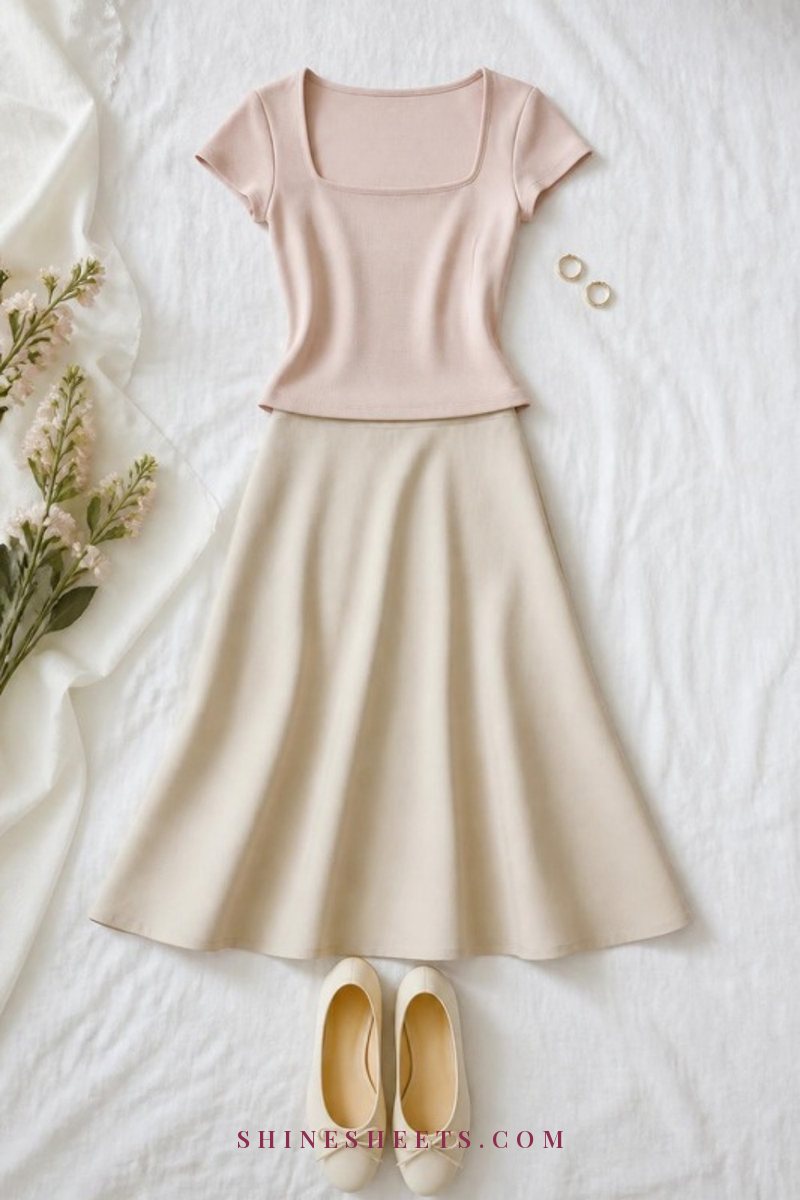
What to try: bring a little interest to the top half and let the bottom half flow. Square, boat and off-the-shoulder necklines, puff or structured sleeves and lighter colors on top all widen the shoulder line gently. Below, an A-line midi skirt skims the hips and ends at the slimmest part of the calf, which is one of the most flattering hem points for almost anyone.
What to balance: heavy details exactly at the hips – big pockets, hip-level belts, very tight skinny jeans paired with a clingy top – tend to put all the visual weight in one place. Straight, bootcut or wide-leg trousers create a smoother line.
Easy outfit: fitted square-neck top, A-line midi skirt, ballet flats or pointed mules.
3. Apple (Round)
What it looks like: fuller through the bust and middle, often with slimmer legs and arms and a less defined waist.
What to try: long vertical lines and necklines that open up the chest. A soft V-neck knit draws the eye up and creates a lengthening line, especially in a fabric that drapes rather than clings. Empire waists, open cardigans, longline blazers worn unbuttoned and straight-leg trousers that show off your legs all work well. Dresses with a bit of movement from the bust down are wonderfully comfortable.
What to balance: stiff, clingy fabrics around the middle, and very tight waistbands that cut in. Choose a slightly higher or mid-rise with some stretch, and look for tops that skim instead of grip.
Easy outfit: V-neck knit, straight-leg trousers, a long pendant necklace and loafers.
4. Rectangle (Straight)
What it looks like: shoulders, waist and hips fairly similar in width, with a straighter silhouette.
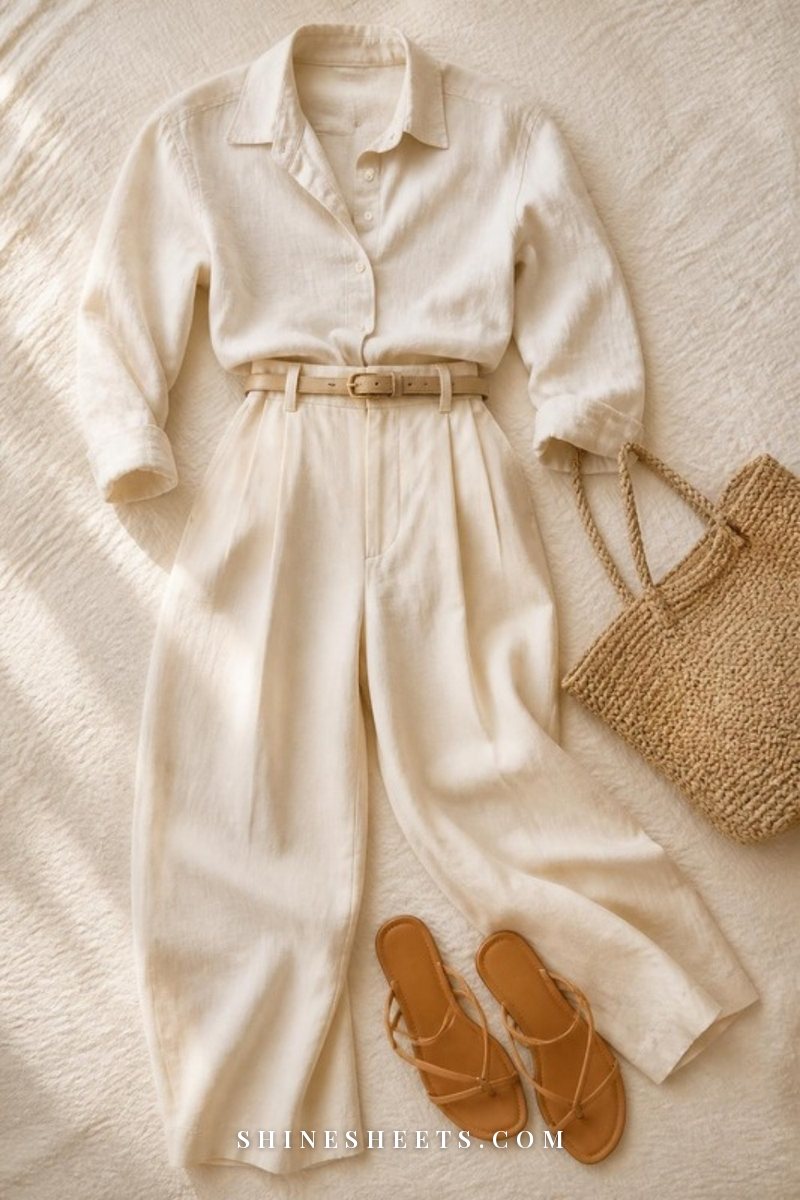
What to try: either create curves or lean into the clean line – both look great. To add definition, a slim belt with a gold buckle over a shirt dress, coat or loose knit instantly suggests a waist. Peplum tops, wrap styles, ruching, paperbag-waist trousers and full skirts add shape. If you prefer minimal, straight-cut suiting, slip dresses and boyfriend blazers sit beautifully on a rectangle frame.
What to balance: outfits that are straight from top to bottom in heavy fabric can feel a little flat. Add one shape-making detail: a belt, a tuck, a seam or a contrast in texture.
Easy outfit: linen shirt half-tucked into wide-leg trousers, slim belt, sandals.
5. Inverted Triangle
What it looks like: shoulders or bust wider than hips, often with slim hips and legs.
What to try: keep the top simple and add volume or interest below. V-necks, scoop necks, raglan sleeves and soft unstructured fabrics on top quiet the shoulder line. Then have fun on the bottom: full skirts, pleats, patterns, lighter colors and high-waisted wide-leg trousers that add width and movement at the hips.
What to balance: shoulder pads, puff sleeves, boat necks and heavy embellishment near the shoulders add width where you already have it. That doesn't make them forbidden – just aware choices.
Easy outfit: plain V-neck tee, flowy pleated midi skirt or wide-leg trousers, strappy sandals.
Body Shape Cheat Sheet: Try, Balance, Wear
This is the quick version of everything above. Screenshot it for your next shopping trip or closet clean-out.
| Shape | Try | Balance with | Easy outfit |
|---|---|---|---|
| Hourglass | Wrap dresses, fitted knits, belted coats, V-necks | A defined waist in every look, even oversized pieces | Wrap dress + block heels + small gold necklace |
| Pear | Square or boat necks, structured sleeves, A-line skirts | Lighter colors and detail on top, simple bottoms | Square-neck top + A-line midi skirt + ballet flats |
| Apple | V-necks, empire waists, open cardigans, straight legs | Vertical lines, draping fabrics, comfortable waistbands | V-neck knit + straight-leg trousers + long pendant |
| Rectangle | Belts, peplums, wrap styles, full skirts, sharp suiting | One shape-making detail: belt, tuck or seam | Half-tucked linen shirt + wide-leg trousers + belt |
| Inverted triangle | V-necks, raglan sleeves, full skirts, wide-leg trousers | Simple tops, volume and pattern below the waist | Plain V-neck tee + pleated midi skirt + sandals |
If you're building a small, hard-working closet at the same time, pair this table with my step-by-step guide to a capsule wardrobe. Choosing your core pieces by shape and color at once saves so much money.
8 Universal Tricks That Work for Every Body Shape
These are the habits I come back to again and again, because they help almost everyone, whatever the cheat sheet says.
1. Tailor the Pieces You Wear Most
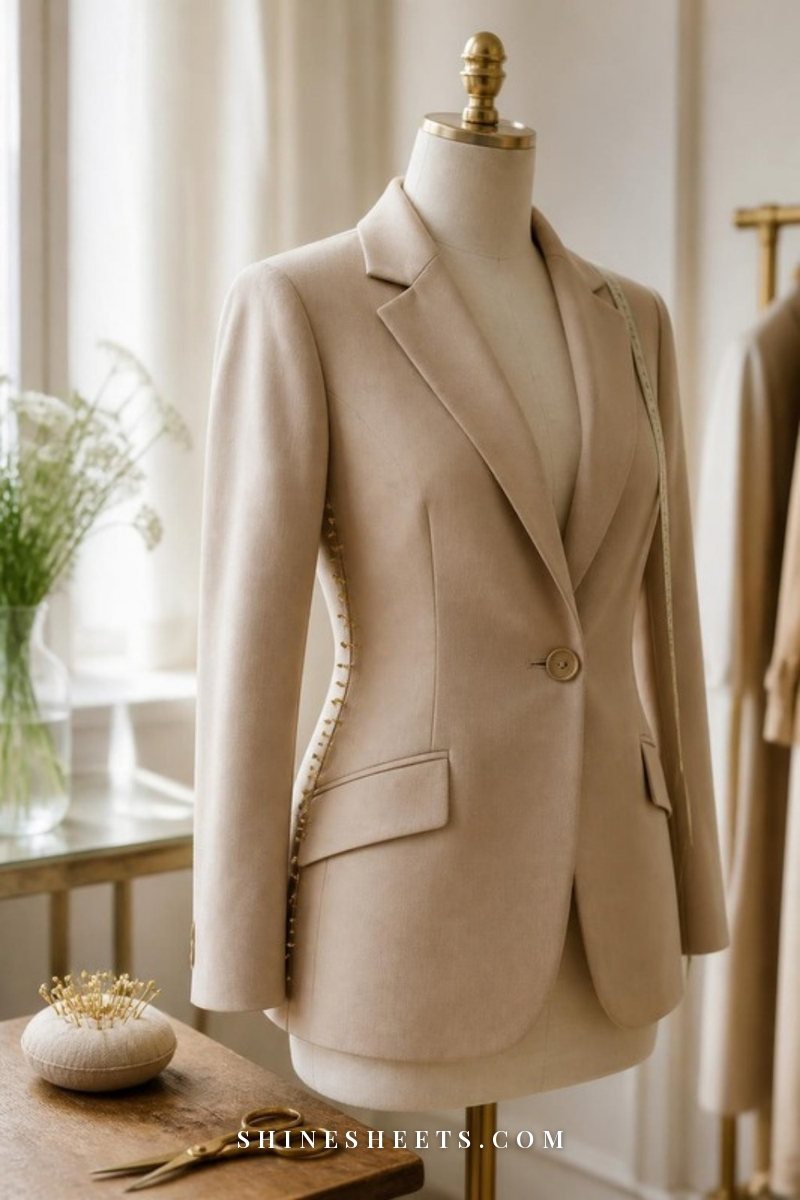
Off-the-rack clothes are cut for one imaginary body. A tailor fixes the gap between that body and yours. The most worthwhile changes are usually simple and affordable: hemming trousers to the right length for your shoes, taking in a waistband that gapes at the back, shortening sleeves, or nipping in a jacket at the waist.
A classic tailored blazer is the perfect example. Taking it in slightly at the waist can turn a decent jacket into the one that looks made for you. Start with one or two pieces you wear every week.
2. Choose the Right Trouser Rise
The rise – the distance from the crotch seam to the waistband – changes how your whole outfit sits. High rise lengthens the legs and smooths the tummy for many people. Mid-rise suits shorter torsos and anyone who finds high waists dig in when sitting. Low rise works best with a long torso and a straighter shape. Sit down in the fitting room. If it pinches when you sit, it's not the right rise for you, however good it looks standing up.
3. Use V-Necks To Lengthen
A V-neck creates a vertical line that makes the neck look longer and the upper body look a little more open. It's flattering on apples, hourglasses and inverted triangles especially, and on pears it works nicely in a wider, shallower V. If you love crew necks, try adding a long necklace to get a similar effect (my guide to layering necklaces has simple combinations).
4. Try Monochrome or Tonal Outfits
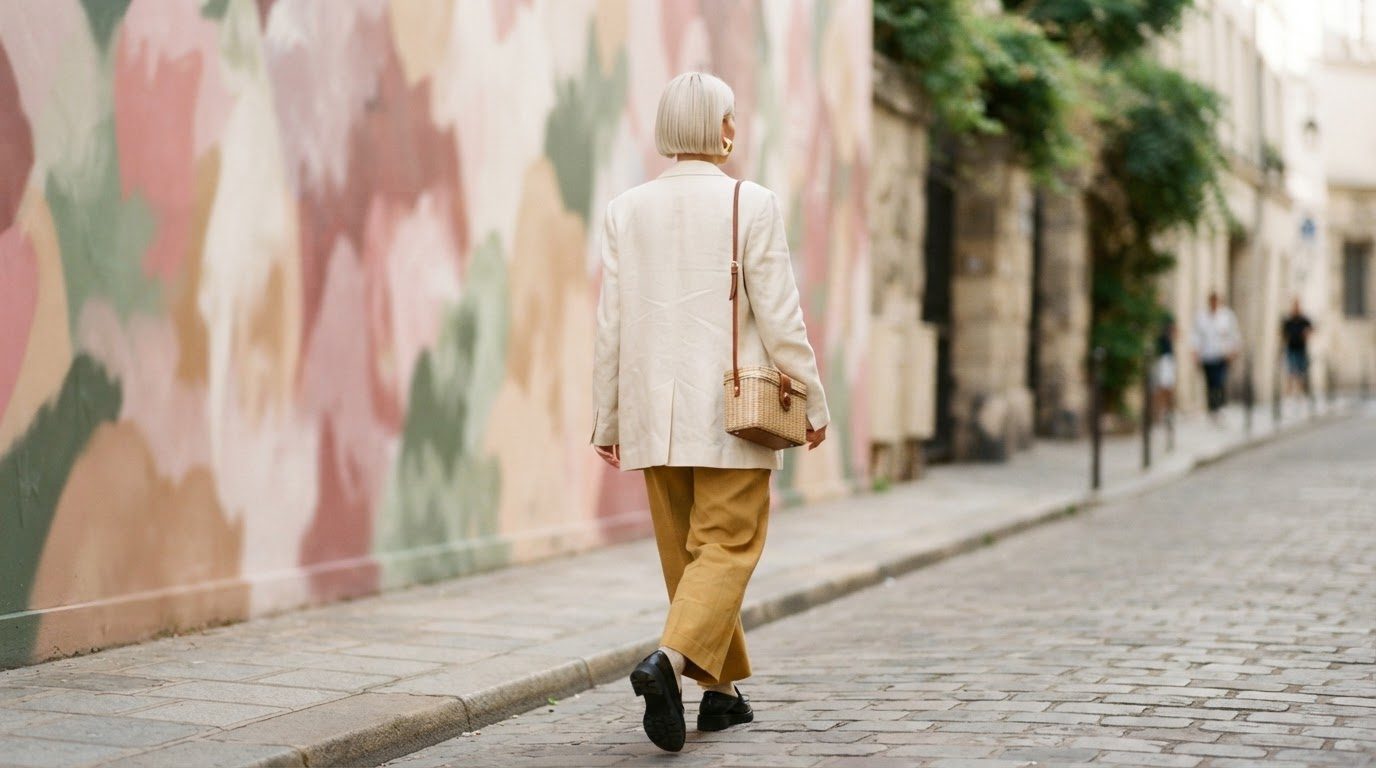
Wearing one color, or close shades of it, from top to bottom creates an unbroken line that looks long, calm and quietly expensive. Cream on cream, beige with camel, soft gray with charcoal. It's also the easiest way to look put-together with minimal effort. Not sure which shades suit you? My guide to finding your wardrobe color palette helps you narrow it down.
5. Mind Where Your Hemlines Land
The eye stops where a hem stops. The most flattering points are usually the narrowest parts of you: just above the knee, mid-calf where the leg starts to slim, or the ankle. Hems that end at the widest part of the calf or thigh can feel heavier. This is why the right midi length is worth searching for.
6. Match the Fabric to the Shape
Structured fabrics (cotton twill, wool, denim) hold their own shape and are great for adding definition. Draping fabrics (jersey, silk, viscose, fine knits) follow your body and flow away from it. If you want more shape, choose structure. If you want ease and movement, choose drape. Very thin, clingy fabrics are the trickiest on almost everyone, simply because they show every seam underneath.
7. Play With the Half-Tuck
Tucking just the front of a top creates a waist without the full commitment of tucking everything in. It suits shorter torsos, rectangles who want a hint of shape and anyone wearing an oversized knit. Takes three seconds, changes the whole silhouette.
8. Wear Shoes That Continue the Line
Shoes in a similar tone to your trousers or your skin extend the leg line. Pointed toes do the same. Chunky ankle straps cut the line at the ankle, which looks great on longer legs and less so if you'd like more length. None of this matters more than comfort, though. A shoe you can walk in will always look better than one you're wincing in.
Why Fit Matters More Than Size
Size labels are wildly inconsistent. You can be three different sizes in three different shops in the same afternoon, and none of those numbers says anything about you. They're a manufacturing guess, not a verdict.
What actually makes clothes look good is fit. Here's a quick fit check you can do in any fitting room:
- Shoulders: the shoulder seam sits at the edge of your shoulder bone, not halfway down your arm or pulling inward.
- Buttons: shirt and blazer buttons lie flat with no pulling or little gaps between them.
- Waistband: you can slip two fingers inside comfortably, and it doesn't gape at the back.
- Seat: no horizontal pulling lines across the hips or seat, and no excess bagging.
- Length: trousers touch the top of your shoe or end cleanly at the ankle. Sleeves end at the wrist bone.
- Movement: you can sit, reach forward and raise your arms without anything riding up or digging in.
If something passes all six, it fits, whatever the label says. Cut the size tag out if seeing it bothers you. I mean that – nobody needs to know but you.
Fit is also why polished outfits often look effortless: it's rarely the price, it's the way the pieces sit. My guides on how to dress classy on a budget and work outfits for women both build on this idea if you'd like more outfit inspiration.
A Few Gentle Reminders
Before you go through your closet with a new eye, a few things I'd love you to keep in mind:
- Your shape can change, and that's normal. Seasons, hormones, stress, strength training and life all shift proportions. Re-measure whenever your clothes start feeling different, without judgment.
- Dress the body you have today. Clothes that fit now will make you feel better than clothes waiting for a "someday" version of you.
- Comfort counts as style. If a cut is technically flattering but you spend the day adjusting it, it's not working for you.
- Break the rules on purpose. Once you know why a guideline exists, you can ignore it with confidence. A pear in skinny jeans with a big shirt can look fantastic.
- Start small. Try one new cut this month, not a whole new wardrobe. A single wrap dress or a pair of well-fitting trousers can teach you a lot.
Final Thoughts
Learning how to dress for your body shape is really about getting to know yourself a little better: your lines, your favorite features, the cuts that make you stand taller without thinking about it. The shapes and tables are just helpers. You're the one deciding what feels right.
Keep what's useful, let go of anything that makes you feel smaller, and remember that the most flattering thing you can wear is something you feel completely at ease in. Your body doesn't need fixing. It just deserves clothes that fit it well.