
You know the moment. The table is full, someone is passing the potatoes, the candles are lit, and then a well-meaning relative leans in and asks, loud enough for everyone to hear: "So… still single?" Your face goes hot. Your brain goes blank. And three hours later, in the shower, you finally think of the perfect thing to say.
For years I froze every single time. As someone prone to anxiety, I'd either over-explain (and feel exposed) or laugh it off (and feel quietly resentful all evening). What finally helped wasn't becoming braver overnight. It was having the words ready before I walked in the door.
So here are holiday boundary scripts for the 10 most common awkward questions, each in three tones: light (deflect with warmth), firm (kind but clear) and exit (end the topic and move on). There's a script table you can screenshot, a short breakdown of every question, and tips for what to do when someone keeps pushing.
You don't owe anyone an explanation of your life over dessert. But it really helps to have a sentence ready.
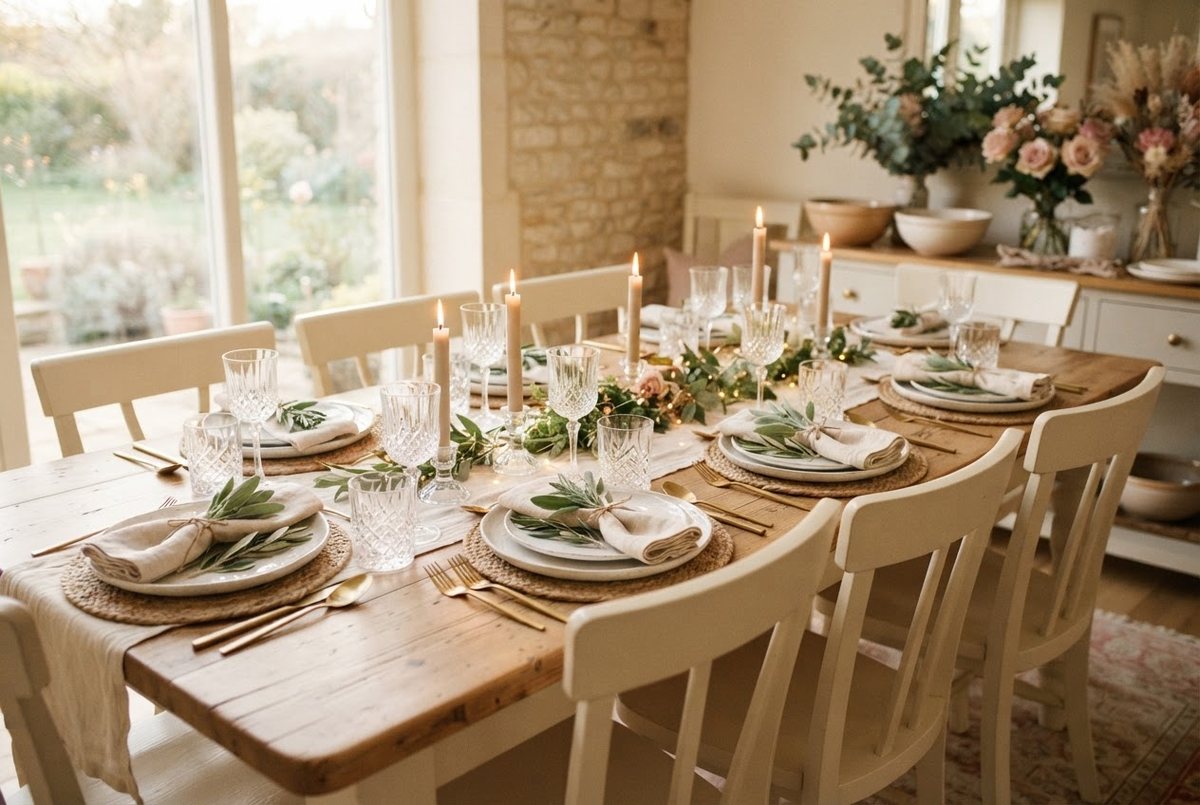
Why Holiday Questions Hit So Hard
Most relatives aren't trying to hurt you. Often they're curious, a bit nervous themselves, or just reaching for the same conversation topics they've used for years. But the holidays add pressure from every side: you're tired, there's an audience, there may be old family roles you slip back into the moment you walk through the door, and maybe a glass of wine is loosening everyone's filter.
That's why a question you'd shrug off from a colleague can feel like a spotlight at the dinner table. It's not about the question itself. It's the setting, the history and the feeling that you're being measured.
A script doesn't change the people around you. It changes how much the question can knock you off balance. When your answer is already written, your nervous system has one less thing to scramble for. That's the whole trick.
A small habit I love: write your three favorite scripts on the first page of a small pocket notebook and read them on the way there. A pick for this is anything slim enough for a coat pocket or clutch; look for a soft cover and lined pages.
The 3 Tones: Light, Firm and Exit
Every script below comes in three versions. You don't have to choose one tone for the whole day. Start light, move to firm if needed, and use exit when you're done.
- Light: a warm, slightly playful deflection. It answers without really answering and keeps the mood easy. Best for first-time askers and people who mean well.
- Firm: calm, clear and kind. It names the boundary without drama. Best for the second ask, or for topics that genuinely hurt.
- Exit: a short closing line plus a change of subject or a change of location. Best when someone keeps pushing or you can feel your patience running out.
The magic formula behind almost every firm script is simple: acknowledge + boundary + redirect. "I know you care (acknowledge). I'm not discussing that today (boundary). Tell me about your trip (redirect)." Once you see it, you can build your own for any question.
Holiday Boundary Scripts: 10 Questions × 3 Tones
Here's the full cheat sheet. Screenshot it, save it to your phone or copy your favorites into your notes app before the gathering.
| Awkward question | Light | Firm | Exit |
|---|---|---|---|
| 1. "So, are you seeing anyone?" | "Just me and my very demanding houseplants this year!" | "I'm happy with where things are, and I'd rather keep my love life private." | "Nothing to report! Who's ready for dessert?" |
| 2. "When are you getting married?" | "You'll be the first to know when there's cake involved." | "That's not something I'm planning around right now, and I'm at peace with it." | "No news there. How's the new kitchen coming along?" |
| 3. "When are you having kids?" | "Right now I'm focused on keeping my sourdough starter alive." | "That's a really personal topic, and I'm not going to discuss it today." | "I'm going to pass on that one. Who needs a refill?" |
| 4. "Have you gained weight?" / "Are you really eating that?" | "I'm just enjoying the holidays, same as everyone!" | "Please don't remark on my body or my plate. I'd love to just enjoy the meal." | "Let's not talk about bodies today. This stuffing is amazing, by the way." |
| 5. "How much do they pay you?" | "Enough to keep me in candles and tea!" | "I keep money stuff private, but I'm doing okay, thank you." | "I'd rather not get into numbers. Anyway, how was your year?" |
| 6. "So what are you doing with your life?" | "Oh, a little bit of everything. Ask me again next year!" | "I'm happy with my path, even if it looks different from what you expected." | "Still figuring things out, and that's okay. Can I help in the kitchen?" |
| 7. "Why don't you visit more often?" | "I know, I'm terrible! But I'm here now, so let's make it count." | "I visit as often as I can manage. I'd love for us to enjoy the time we do have." | "Let's not spend today on that. Show me those photos you mentioned?" |
| 8. "What do you think about [politics]?" | "Oh no, I'm officially off-duty from the news today." | "I'd rather not talk politics at the table. I want today to feel easy for everyone." | "I'm going to sit this one out. I'll go check on the pie." |
| 9. "Why aren't you drinking?" | "I'm on the sparkling water fan club this year." | "I'm not drinking tonight, and I'm really happy with that." | "I'm good, thanks! So, what's everyone's favorite holiday movie?" |
| 10. "Why are you so sensitive? It was just a joke." | "Maybe! Let's find a better joke, then." | "It didn't feel like a joke to me. Please don't say things like that." | "I'm going to step away for a minute. I'll be back." |
Not every line will sound like you, and that's fine. Change the words until they feel natural in your mouth. A script you can say calmly beats a clever one you can't.
The 10 Questions, Unpacked
Here's a little more context on each one: why it tends to sting, and a tip for delivering your answer.
1. "So, are you seeing anyone?"
Often it's just small talk, but it can land on a sore spot, especially after a breakup or a lonely year. You don't have to share details either way. Tip: answer with a smile and immediately ask them a question back. People love talking about themselves, and the spotlight moves.
2. "When are you getting married?"
This one assumes marriage is the default next step, which may or may not be true for you. Tip: keep your tone relaxed. If you sound defensive, it invites follow-up questions. A calm "I'm at peace with it" closes the door gently.
3. "When are you having kids?"
This question can be genuinely painful, and the asker usually has no idea what's behind your answer. Whatever your situation, you are allowed to keep it private. Tip: the firm version is perfectly polite. You don't need to soften it with a reason.
4. "Have you gained weight?" / "Are you really eating that?"
Remarks about bodies and food can stay with you long after the meal. This is one where it's absolutely okay to skip the light tone and go straight to firm. Tip: if someone keeps remarking on your plate, move to a different seat or a different room. You don't have to sit through it.
5. "How much do they pay you?"
Some families talk about money openly; others don't. Either way, you get to decide what you share. Tip: "I keep money stuff private" is a complete answer. If they press, repeat it word for word. Repetition is a surprisingly strong boundary.
6. "So what are you doing with your life?"
This is the one that can bring up all your quiet worries about being "behind." Remember: there's no universal timeline, and the person asking may have had very different options at your stage of life. Tip: before the gathering, write down three things from this year you're proud of. If you want to share something, share one of those.
7. "Why don't you visit more often?"
There's often real feeling underneath this one: they miss you. That doesn't mean the guilt is yours to carry. Tip: respond to the feeling, not the accusation. "I miss you too" can soften the whole conversation.
8. "What do you think about [politics]?"
Political talk at the table rarely changes anyone's mind and often changes the mood. Tip: if a debate starts, you don't have to referee it. Offer the firm line once, then physically leave: kitchen, porch, a quick walk.
9. "Why aren't you drinking?"
Your reasons are yours: health, driving, early morning, or simply not wanting to. You never need to justify it. Tip: keep a drink in your hand (sparkling water with a slice of lime, a tea, a mocktail). Fewer people ask when your glass is already full. I like bringing my own tea in an insulated tea tumbler; a pick for this is one with a built-in infuser and a lid that doesn't leak in your bag.
10. "Why are you so sensitive? It was just a joke."
This one flips the problem back onto you, which is why it feels so unfair. Being hurt by an unkind remark is not a character flaw. Tip: you don't need to win the argument. Say your firm line once, calmly, then step away. Your boundary is still valid even if they don't agree with it.

Delivery Tips: How To Say It So It Sticks
The same words can sound playful, cold or wobbly depending on how you say them. A few things that help:
- Slow down. Anxious answers come out fast. Take one breath before you speak and say the line a little slower than feels natural.
- Keep it short. The more you explain, the more there is to argue with. One or two sentences is plenty.
- Use a warm face, neutral voice. A soft smile and a calm, even tone tells people you're not upset, just clear.
- Don't add "sorry." "Sorry, I just don't really want to talk about that, if that's okay?" invites negotiation. "I'd rather not talk about that" doesn't.
- Redirect with a real question. Have two or three questions ready about the other person's life: their trip, their garden, their favorite holiday memory.
- Practice out loud once. In the car or the shower. Hearing your own voice say it makes it much easier to say for real.
If being assertive feels unnatural in general, my guide to positive ways to become more assertive breaks it down into small, practice-able steps.
Build Your Own Script in 30 Seconds
Your family will almost certainly come up with a question that isn't on this list. ("Why did you cut your hair?" "Did you see what your cousin posted?" "Are you still renting?") When that happens, fall back on the formula:
- Acknowledge: "I know you're curious," "I can tell you care," or simply "Ha, good question."
- Boundary: "I'd rather not get into that," "That's private for me," or "I'm happy with how things are."
- Redirect: a real question about them, a task ("Can I help with the dishes?") or a shared memory ("Remember the year the oven broke?").
Put together, it sounds like this: "Ha, good question. I'm happy with how things are. Hey, remember the year the oven broke?" Three short pieces, no explanation, no apology. It feels strange the first time and surprisingly freeing by the third.
And if you notice you're harder on yourself than on anyone at the table, my guide on how to be your own best friend is a gentle place to start being on your own side.
When Someone Keeps Pushing
Sometimes a light answer isn't enough. Here's a simple escalation ladder so you always know your next step:
- Light deflection. Smile, joke, redirect.
- Firm boundary. "I'm not going to talk about that today."
- Broken record. Repeat the exact same firm sentence, calmly, without adding anything new.
- Exit. "I'm going to grab some air," then actually leave the room for 5–10 minutes.
- Leave early if you need to. You're allowed to thank the host, say you're tired and go home. That's not dramatic. That's looking after yourself.
For the people who get under your skin every single year, my tips on how to deal with annoying people and stay calm work beautifully at family gatherings too.
Before and After the Gathering
Boundaries are easier when you're not running on empty. A little preparation and a little recovery make a big difference.
Before you go
- Pick your top three scripts. Think about which questions you'll most likely hear and choose your favorite answer for each.
- Decide your exit time. Knowing you'll leave at 8pm makes 6pm much easier to handle.
- Plan a reset spot. The porch, the bathroom, a short walk around the block. Somewhere you can breathe for five minutes.
- Bring a small calm-down kit. A lip balm, a hair tie, a few tea bags and a lavender roll-on for your wrists. A pick here is a gentle, pre-diluted blend in a glass bottle; skip it if strong scents bother you.
- Have a buddy. If a sibling, cousin or friend will be there, agree on a signal that means "please come rescue me."
After you get home
- Decompress before you analyze. Change into something soft, make an evening tea and give yourself 20 minutes before replaying any conversation.
- Journal it out. Write down what was said, how you felt and one thing you handled well. I do this after my tea, and it stops the conversation looping in my head at 2am.
- Rest your nervous system. Lie down under a soft weighted blanket, put on a calm playlist through wireless earbuds, and let your body catch up. For a blanket, look for a weight you find comfortable and a washable cover; for earbuds, a comfortable fit matters more than extra features.
- Be proud of the small wins. Even if you only used one script, that's one more boundary than last year.
If the whole season feels heavy, my ways to actually enjoy your holidays and this calming mindfulness script for anxiety can help on the harder days.
A Gentle Note
These scripts are for everyday awkwardness: nosy, clumsy or uncomfortable questions. If being around certain family members leaves you feeling unsafe, belittled or anxious for days afterward, it's okay to limit contact, keep visits short or skip a gathering altogether. A counselor or therapist can help you work out what boundaries feel right for your situation. Your peace counts too.
Final Thoughts
You can love your family and still not want to discuss your love life, your body or your bank account over the potatoes. Boundaries aren't walls. They're the little railings that let you stay in the room and actually enjoy it.
Pick your three scripts, practice them once out loud and walk in knowing you already have the words. You're allowed to keep parts of your life just for you.