Small talk feels awkward mostly because we expect too much from it. It isn't supposed to be deep, clever or memorable. It's a bridge: a few easy, friendly sentences that tell another person "I'm open, you're safe with me," so a real conversation has somewhere to begin.
Once you see it that way, the pressure drops. You don't need a sparkling personality or a stack of fascinating stories. You need a simple structure, a few go-to openers, and some kind ways to keep things moving or wrap them up when you're ready.
This guide covers exactly how to make small talk without feeling awkward: a four-step structure, easy openers for work, parties, neighbors and waiting rooms, 25 conversation starters, a "stuck moment → what to say" script table, body language basics, graceful exits, and gentle advice for introverts and anxious people. I'm prone to anxiety myself, so everything here is designed to be doable on a nervous day.
Why Small Talk Matters

It's easy to dismiss small talk as shallow. But almost every friendship, work connection and lovely neighbor relationship you have probably started with a sentence about the weather, the coffee or the long line.
Small talk does a few quiet, important jobs:
- It builds safety. Light, low-risk topics let two people check that the other is friendly before sharing anything personal.
- It finds common ground. A passing mention of a hobby, a neighborhood or a favorite café can lead to a real connection.
- It makes everyday life warmer. A friendly minute with the barista or a coworker can lift both of your days.
- It opens doors. Many opportunities, from new friends to job leads, start with someone remembering a pleasant chat.
Think of small talk as the warm-up, not the main event. You're not trying to impress anyone. You're simply opening a door and seeing if the other person wants to walk through it.
A Simple Structure: Notice, Ask, Share, Follow Up
When your mind goes blank, a simple structure is your best friend. This four-step loop works almost anywhere:
- Notice. Point out something you both share in the moment: the place, the event, the weather, the music. "This room has the best light."
- Ask. Follow with an easy, open question. "Have you been to one of these before?"
- Share. Offer a small detail about yourself so it doesn't feel like an interview. "It's my first time, I only heard about it last week."
- Follow up. Pick up on something they said and ask a little more. "Oh, you organized last year's? What was that like?"
Then the loop simply repeats. Notice something new, ask, share, follow up. You'll be surprised how naturally a conversation grows from it, and how little you need to plan ahead.
Easy Openers by Setting
The best opener is usually about the place you're both in. Here are some ready-made lines for common situations. Adjust the words so they sound like you.
At Work

- "How's your week shaping up so far?"
- "Are you working on anything fun at the moment?"
- "I keep meaning to ask, how did you end up on this team?"
- "Any good lunch spots around here I should know about?"
At work, it helps to keep things friendly and light, and avoid gossip or complaints about colleagues. If you're building connections at work, my guide to making friends at work picks up where small talk leaves off.
At a Party

- "How do you know the host?"
- "I love this playlist. Do you know who picked it?"
- "Have you tried the punch yet? I'm deciding whether to be brave."
- "What's been the best part of your week?"
"How do you know the host?" is the classic for a reason: it almost always leads to a story.
With Neighbors
- "Your flowers always look lovely. Do you do all of that yourself?"
- "How long have you lived on this street?"
- "Do you know a good place around here for coffee?"
- "Did you hear about the street fair this weekend?"
In Waiting Rooms and Lines
- "Is this the line for the pharmacy, or am I in the wrong place?"
- "They're running a bit behind today, aren't they?"
- "That's a great bag. Where's it from?"
In waiting rooms, read the room. If someone has earbuds in or seems stressed, a warm smile is enough.
At Events and Workshops
- "What brought you to this one?"
- "Which talk are you most looking forward to?"
- "Have you done a class like this before?"
- "What did you think of that last session?"
25 Easy Conversation Starters

Keep a handful of these in your back pocket. They're light enough for strangers but open enough to lead somewhere. If you like having prompts on hand, a small deck of conversation starter cards is a fun way to practice at home with friends.
- "What's keeping you busy these days?"
- "Have you been anywhere nice lately?"
- "What are you looking forward to this month?"
- "Are you reading or watching anything good?"
- "How did you get into what you do?"
- "What's the best thing that happened to you this week?"
- "Do you have any plans for the weekend?"
- "Are you from around here originally?"
- "What's your favorite spot in this neighborhood?"
- "Have you tried that new café on the corner?"
- "What do you like to do when you're not working?"
- "Is this your first time at one of these?"
- "What's something you've learned recently?"
- "Do you have a favorite season? I'm firmly a fall person."
- "Any podcast recommendations? I need a new one."
- "What's the best trip you've ever taken?"
- "How do you usually spend a slow Sunday?"
- "Are you working on any fun projects at the moment?"
- "What was the highlight of your summer?"
- "Do you have any pets?"
- "What's a small thing that always makes your day better?"
- "Have you picked up any new hobbies lately?"
- "What's the best meal you've had recently?"
- "If you could take a day off tomorrow, what would you do?"
- "What's something you're excited about right now?"
Notice that most of them are open questions (they can't be answered with a simple yes or no). That's the secret to keeping the other person talking comfortably.
How To Keep the Conversation Going
Starting is one thing. Keeping it going without a long silence is where most of us get nervous. A few habits make it much easier:
- Use "tell me more." It's the simplest follow-up in the world. "Oh, you took up pottery? Tell me more." People love explaining something they enjoy.
- Follow the energy. Listen for the part of their answer that made their voice lift ("We just got back from Lisbon!") and ask about that.
- Share small details. Instead of "Yeah, I like reading," try "I've been reading a lot of mysteries before bed lately." Details give the other person something to grab onto.
- Use their name. Saying someone's name once or twice makes a chat feel warmer. If names slip away from you, my guide on how to remember names has easy tricks.
- Listen more than you plan. If you're busy rehearsing your next line, you'll miss the hooks they're handing you. Being a good listener does most of the work for you.
A small honest admission: for a long time I believed I had to have something interesting to say. It turns out that being genuinely interested is far more powerful than being interesting.
Stuck Moment → What To Say
Even confident people hit awkward moments. Here's a script table for the moments that usually make us freeze. Screenshot it before your next event.
| Stuck moment | What to say | Why it works |
|---|---|---|
| You don't know how to start | "Hi, I'm Amber. I don't think we've met yet." | Simple, warm and needs no clever line |
| They give one-word answers | "What's been the best part of your week so far?" | An open question invites a longer answer |
| You forgot their name | "I'm so sorry, tell me your name once more? I want to get it right." | Honest and flattering at the same time |
| Your mind goes blank | "So, how do you know everyone here?" or go back to the setting | The place always gives you a fresh topic |
| A long pause | "I just realized I never asked what you do for fun." | Turns silence into a natural new thread |
| The topic gets too heavy | "That sounds like a lot. On a lighter note, are you doing anything nice this weekend?" | Kind acknowledgment plus a gentle shift |
| You want to join a group | "Mind if I join you? This looked like the fun corner." | Light humor and a clear, polite ask |
| You need to leave | "It was so nice talking with you. I'm going to grab a drink, enjoy the rest of the night." | Warm, clear and needs no excuse |
Body Language Basics

Before you say a word, your body is already talking. The good news: open, friendly body language is mostly about relaxing, not performing.
- Smile softly with your eyes. A real, relaxed smile is the friendliest opener there is.
- Uncross your arms. Hold a drink, rest your hands at your sides or keep them loosely together.
- Turn toward them. Point your shoulders and feet toward the person you're talking to.
- Make easy eye contact. Look at them most of the time while they speak, and glance away naturally while you think. Staring isn't the goal.
- Nod and react. Small "mm-hm"s, a laugh, raised eyebrows. These show you're with them.
- Put your phone away. Even a phone face-down on the table can make people feel like they have less of your attention.
If you tend to feel stiff, take one slow exhale and drop your shoulders before you walk up to someone. It changes how you come across more than you'd think.
How To End a Conversation Gracefully

Many people stay in conversations far longer than they want to because they don't know how to leave without seeming rude. A kind exit is a gift to both of you. Try one of these:
- "It was so lovely to meet you. I'm going to go say hi to a few more people."
- "I don't want to keep you, but I really enjoyed this."
- "I'm off to find the host, but let's catch up again later."
- "I'd love to hear how the move goes. Good luck with everything."
- "I should head home, but this was the highlight of my evening."
End with a smile, their name if you remember it, and then actually leave. A clear exit feels kinder than drifting away mid-sentence. If you'd like to stay in touch, jot their name and one detail in a small pocket notebook afterward, so next time you can ask, "How did the move go?"
What To Do When It Goes Quiet
Silence feels much longer to you than it does to the other person. A pause of a few seconds is completely normal, and often it's just the other person thinking.
When a quiet moment stretches, try one of these gentle moves:
- Go back to something earlier. "You mentioned you just started a new class. How's that going?"
- Use the setting. Notice something around you, such as the music, the food or the view.
- Share a small update. "I've been trying to read more lately, and I just started a great book."
- Let it end. Not every conversation needs to last. Sometimes a natural pause is the perfect moment to say, "It was nice chatting with you."
The kindest reminder here: a quiet moment isn't a failure. It's just a breath in the conversation.
Topics To Keep Light and Ones To Save for Later
Good small talk stays in the comfortable middle: interesting enough to be fun, light enough that nobody feels put on the spot. Here's a simple guide to what usually works with people you've just met:
- Safe and easy: the event or place, weekend plans, travel, books, shows, music, pets, food spots, seasons, hobbies and small wins.
- Fine with care: work (ask what they enjoy about it rather than what they earn or where they rank), family (follow their lead) and where they grew up.
- Save for later: money, health details, politics, religion, relationship status, weight and appearance, and anything that sounds like a judgment.
If someone brings up a heavier topic themselves, you don't need to shut it down. Listen kindly, reflect it back ("That sounds like a big change"), and let them decide how far to go. If you often walk away from conversations replaying every word, my guide on how to stop feeling socially awkward around people can help you quiet that inner critic.
One more gentle rule: compliments are lovely when they're about choices (a bag, a book, a great recommendation), not bodies. "I love your earrings" feels warm. Remarks about weight or age rarely do, even when they're meant kindly.
Small Talk for Introverts and Anxious People

If you're an introvert or prone to social anxiety, small talk can feel draining before it even begins. You're not doing it wrong. Your nervous system just needs a little more care around it.
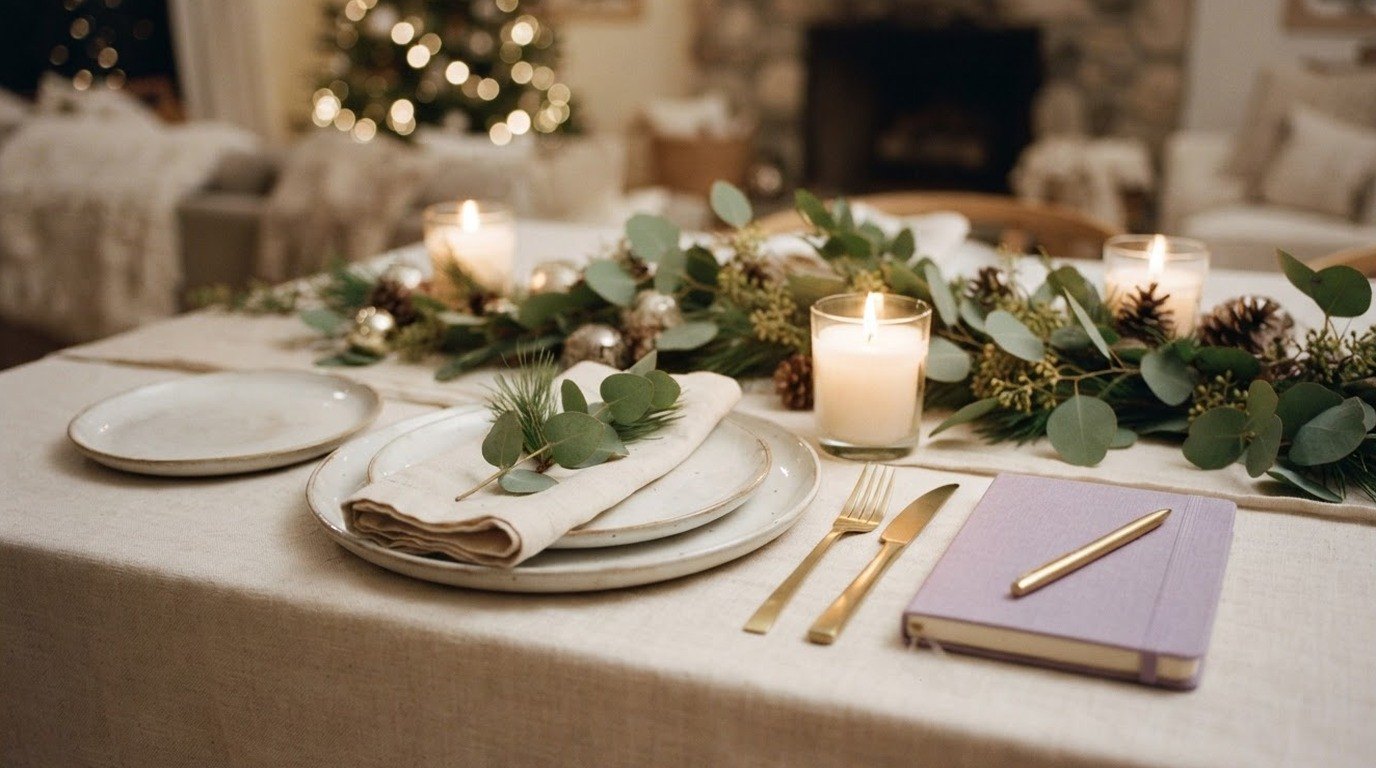
- Prepare three questions. Before an event, write three easy questions in your phone notes or a linen journal with a slim gold pen tucked inside. Knowing you have them lowers the pressure.
- Arrive early. It's easier to chat with one or two people as they arrive than to break into big groups later.
- Look for the other quiet person. They'll often be relieved you said hello.
- Give yourself a job. Helping the host, refilling drinks or taking photos gives you natural reasons to talk.
- Set a time limit. "I'll stay for an hour, talk to three people, then decide." You're allowed to leave.
- Plan recovery time. A quiet evening afterward helps you recharge. My guide to your social battery explains why this matters so much.
Also, notice when you do well. After an event, write down one conversation that went nicely. Over time, you build proof that you can do this.
Practice in Low-Stakes Places
Like any skill, small talk gets easier with practice, and the best place to practice is where nothing is riding on it. Try one tiny conversation a day for two weeks:
- The barista: "What's your favorite drink on the menu?"
- The cashier: "Has it been a busy day?"
- A neighbor in the elevator: "Is it still raining out there?"
- Someone at the gym or class: "Have you been coming here long?"
- The florist or bookshop owner: "What's been selling well lately?"
Each one takes less than a minute, and every pleasant exchange teaches your body that talking to strangers is safe. When you want to say thank you to someone who made you feel welcome, a small gift candle with a short note is a sweet gesture for a host or a new neighbor.
And if a little chat goes nowhere, that's fine too. Some people are busy, tired or shy. It isn't a verdict on you.
Final Thoughts
Small talk isn't a test you pass or fail. It's a small, kind offering: a smile, a simple question and a little bit of you. Most people are just as relieved as you are when someone else goes first.
Start with one conversation, keep your four steps in mind, and let it be imperfect. Every friendly minute you share makes the next one feel a little more natural.