A friend once called me two days before Christmas, half laughing and half panicking. "I'm meeting his whole family on the 24th," she said. "His mom, his dad, two sisters, a grandmother and someone called Uncle Rob. What do I bring? What do I wear? What if I say something weird about the gravy?"
If that's you right now, take a breath. Meeting his family is a big moment, and meeting them at Christmas adds traditions, presents and a full house to the mix. But here's the comforting truth: his family is probably just as curious and a little nervous about you. They want this to go well too. You don't have to be perfect. You just have to be warm, prepared and a little bit curious about them.
So this guide covers everything I'd tell a friend: the questions to ask him before you go, a host-gift checklist, what to wear for each part of the holiday, a conversation topics vs. topics to avoid table, house-guest manners if you're staying over, and simple scripts for the awkward moments. By the end, you'll walk in feeling like you've already been there once.
Before You Go: 7 Questions To Ask Him
Your partner is your best source of insider information, so interview him a few days ahead. Ten minutes of questions now saves you hours of guessing. If he's a "they'll love you, don't worry" type, gently push for specifics.
- Who will be there, and what are their names? Write them down, including partners and kids. Bonus points for a nickname or one detail per person ("Aunt Linda, retired teacher, loves her garden").
- What are the family traditions? Church service, matching pajamas, a long walk after lunch, opening presents on Christmas Eve, a fiercely competitive board game? Knowing in advance means nothing catches you off guard.
- Is there anything I should avoid talking about? Every family has a sore topic: a divorce, a job loss, a political split, a cousin who isn't speaking to anyone. You don't need the details, just the "steer clear" list.
- Do we exchange gifts, and with whom? Is it a gift for everyone, a Secret Santa, or just something for the hosts? This one question saves a lot of embarrassment.
- What's the dress code for each day? Dressy Christmas Eve dinner? Pajamas all morning? Snowy dog walk?
- Where are we sleeping, and how long are we staying? Separate rooms, a guest room, a hotel nearby? Knowing the plan helps you pack and set your expectations.
- Can we agree on a signal? A little phrase or squeeze of the hand that means "I need five minutes" or "please rescue me from this conversation." Every couple should have one.
If you'd like more ideas for getting to know him (and his family stories) before the big day, my list of questions to ask your boyfriend has a whole section on childhood and family that works beautifully here.
What To Bring: The Host-Gift Checklist
The host gift is your first impression in physical form, so it should feel thoughtful but not over the top. A gift that's too lavish can feel like you're trying too hard (or make others feel awkward about theirs). Aim for roughly $20 to $50 for the hosts, and keep it something they can enjoy without any effort on the day.
Use this checklist before you leave:
- ☐ One main gift for the hosts (usually his parents, or whoever's home it is). Ideas: a glass jar candle in a soft winter scent, a loose leaf tea gift box, a pretty serving piece, or a local treat from your own town with a story behind it.
- ☐ A card with a handwritten note, signed from both of you or just you. Two or three sentences: thank them for having you and say you're looking forward to the visit.
- ☐ Something for the table, only if you asked first. "Can I bring anything?" is a lovely question; arriving with an unannounced dish can step on the host's plans.
- ☐ Small gifts for anyone you're exchanging with, if he told you that's the tradition. Keep them similar in value so no one feels singled out.
- ☐ Something for the kids, if there are little ones. A book or a small craft kit, checked with their parents first.
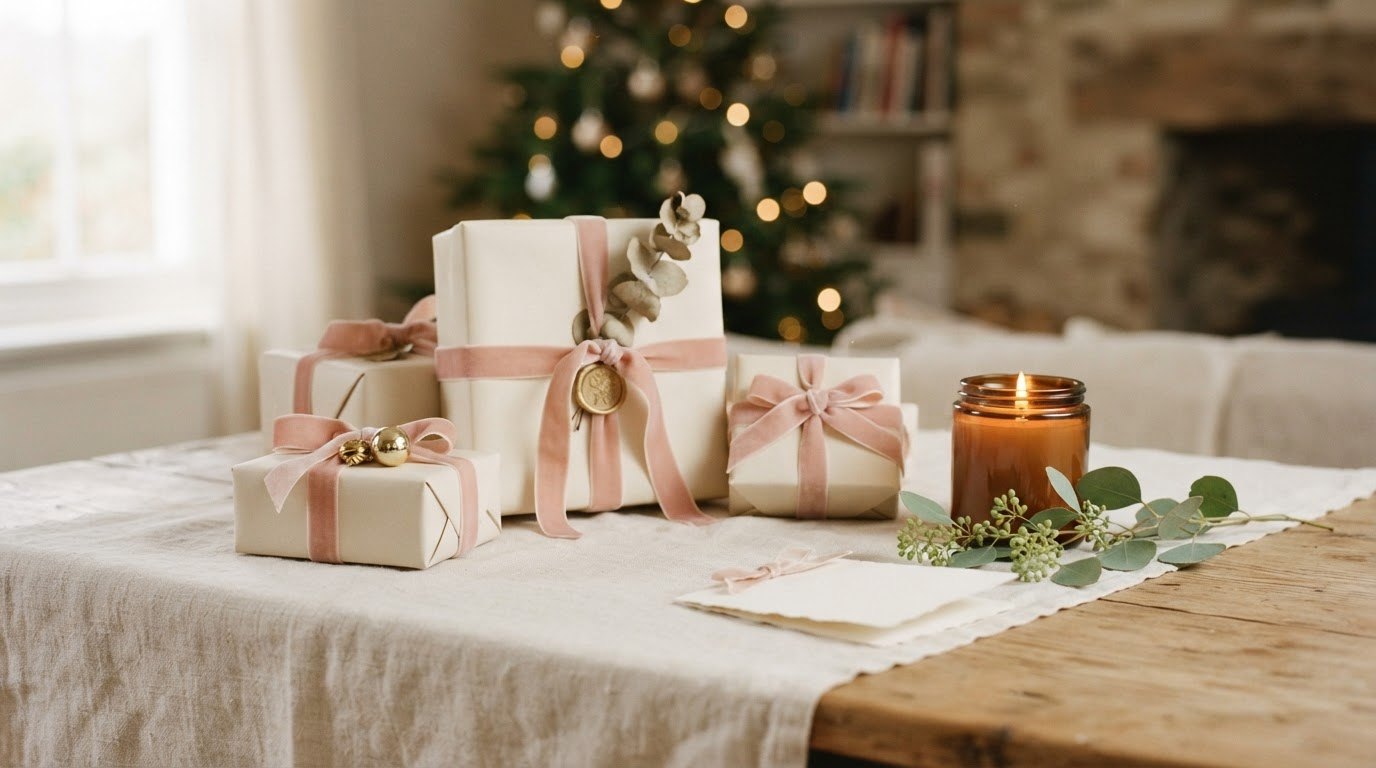
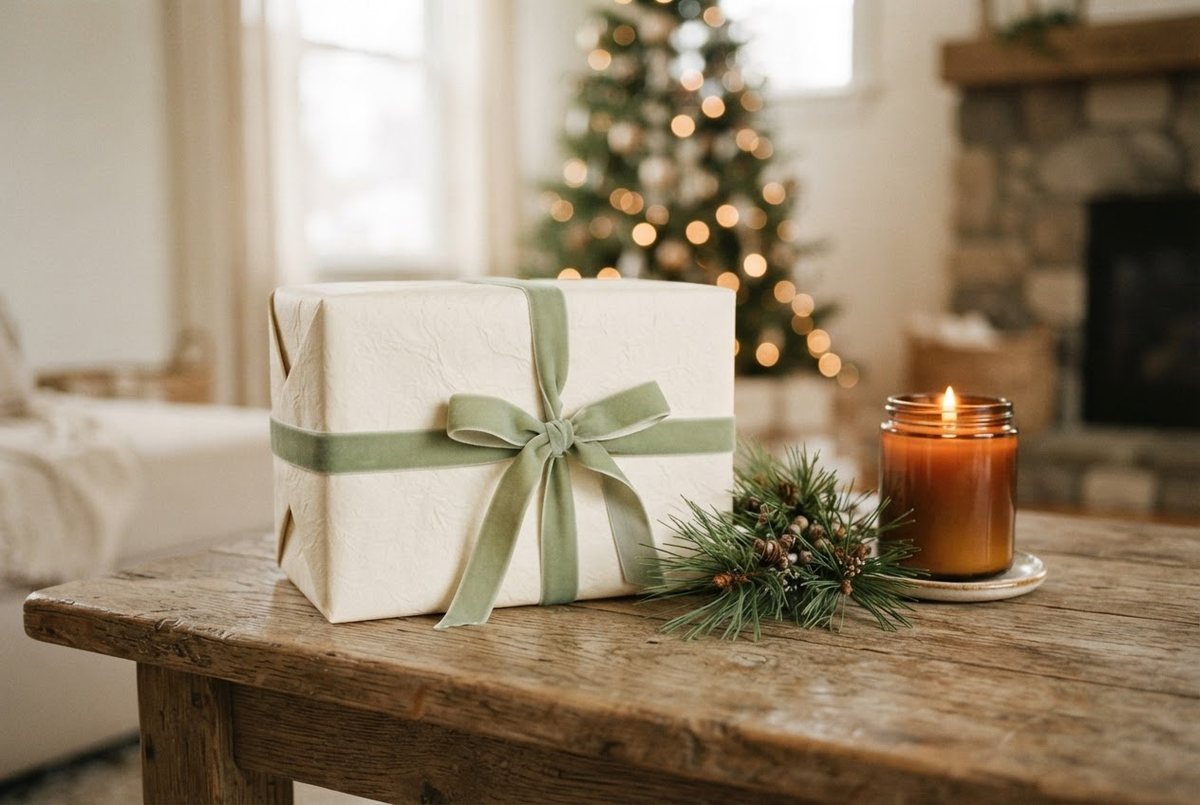
- ☐ Gift wrap and a tag on everything, with your name clearly written. Nobody should have to guess who brought the candle. Simple kraft or cream paper finished with a sage velvet ribbon looks elegant under any tree.
- ☐ A spare small gift tucked in your bag, just in case an unexpected relative turns up with something for you. A box of chocolates or a pair of soft socks works.
- ☐ Thank-you cards for afterward (more on that below).
Skip: anything too personal (perfume, clothing in a size you're guessing), anything that makes a statement about the home (decor you chose for their walls), alcohol unless you know they drink, and anything that needs refrigerating or assembling on arrival.
For his mom specifically, if you'd like to bring her a little something of her own, my guide to Christmas gifts for mom has plenty of thoughtful ideas sorted by budget. And if you're crafty, a homemade gift from my DIY Christmas gifts list feels personal without being too much.
Your Week-Before Timeline
A little planning spread over a few days keeps the nerves from piling up the night before. Here's a gentle countdown:
- 7 days before: ask him the seven questions above and write the names in your phone notes. Read them over once a day; by Christmas they'll feel familiar.
- 5 days before: buy and wrap the host gift, any exchange gifts and your spare small gift. Write the card while you're calm, not in the car.
- 3 days before: plan your outfits for each part of the visit and try them on. Check that everything is clean, pressed and comfortable to sit in.
- 2 days before: pack, including chargers, slippers, a small bag of toiletries and the thank-you cards for afterward.
- The night before: do something calming. A warm shower, a cup of evening tea and an early night do more for a good first impression than any outfit.
- On the way: go over the names one last time together, agree on your signal and decide roughly when you'll leave or turn in for the night.
Having a plan doesn't make you rigid. It just frees up your attention for the part that matters: the people.
What To Wear: Outfits for Every Part of Christmas
The general rule for meeting family: polished, comfortable and a little modest. You want to look like you made an effort, without looking like you're headed to a nightclub or a job interview. Soft colors and good fabrics do most of the work.
Christmas Eve or Christmas Dinner
This is the dressiest moment, so lean into it. A cream knit sweater dress with tights and ankle boots is my favorite approach: it looks elegant in photos, it's warm, and you can sit on the floor to play with a niece without worrying. Velvet, a silky blouse with tailored trousers or a midi skirt also work. Keep jewelry simple, and choose a neckline you won't need to adjust all evening.
Christmas Morning
Ask whether the family does pajamas. If they do, bring a pair you'd be happy to be photographed in, because there will be photos. A blush satin pajama set or a soft matching lounge set looks put-together without trying too hard. Add cozy socks and a cardigan or robe. If they don't do pajamas, go for soft knitwear and nice jeans, and come down already dressed.
Church or a Holiday Service
If you're joining for a service, dress a little more conservatively: covered shoulders, a knee-length or longer skirt, and a warm coat. Follow the family's lead on standing and sitting, and don't feel you need to participate in anything that doesn't feel right for you. Simply being there respectfully is enough.
The Walk, the Sledding Hill or the Outdoor Market
Layers, real boots and a good coat. Bring a hat and gloves even if he says you won't need them. You don't want to be shivering in the family photo. For more cold-weather outfit formulas, my winter outfit ideas have you covered.
Packing tip: bring one more outfit than you think you need, and something comfortable for the evenings on the sofa. Families often linger in the living room for hours, and you'll want to be relaxed enough to stay.
What To Talk About: Topics vs. Topics To Avoid
This is the part most people worry about, so here's a simple table to keep in your back pocket. The left column will carry you through almost any conversation. The right column is best left for a later visit, or never.
| Talk about | Why it works | Avoid | Why to skip it |
|---|---|---|---|
| Family traditions ("What did Christmas look like when he was little?") | People love sharing them, and you'll hear sweet stories about him | Politics | Even agreement can turn into a long, heated hour |
| Their home ("This tree is beautiful, are these ornaments old?") | Specific compliments make hosts feel seen | Religion debates | Respect their customs; save beliefs for one-on-one talks later |
| Their hobbies and work | Easy follow-up questions, and you learn who they are | Money and salaries | Including what things cost and what anyone earns |
| Travel and favorite places | Happy memories, endless material | His exes | Even jokingly; let the family bring it up, then change the subject |
| Books, movies and shows | Low-stakes and fun across generations | Your relationship problems | Keep private disagreements private |
| Pets | The family dog is your best ally | Wedding or baby timelines | Deflect kindly; these are for the two of you to answer |
| The meal ("How do you make this? It's wonderful.") | The cook will be delighted | Diets and bodies | Including your own; it makes people self-conscious |
| Your own life, briefly | They want to know you too | Long complaints | About your job, your family or the drive there |
| How you two met | Everyone's favorite story | Old family drama | Even if they bring it up, listen and don't take sides |
A little formula that helps me in any new group: ask, listen, add one detail, ask again. "What's your favorite Christmas tradition?" → listen → "I've always loved a long walk on Christmas morning" → "Do you still do yours every year?" It keeps the focus on them and makes you look wonderfully easy to talk to.
Conversation Starters for Each Family Member
Different people open up to different questions. A few easy openers to have ready:
- His mom: "He told me you're the reason Christmas is so special in this house. What's your favorite part of getting ready for it?"
- His dad: "I hear you're the one to ask about [fishing / the garden / old cars]. How did you get into it?"
- His siblings: "Okay, I need one embarrassing childhood story. Just one." (Said with a smile, this is the fastest icebreaker there is.)
- Grandparents: "What was Christmas like when you were young?" Then truly listen. These are often the best stories in the house.
- The kids: "What's on your list this year?" or simply get down on the floor and admire whatever toy they're holding.
- The quiet relative in the corner: sit next to them with a cup of tea and ask about their year. Quiet people often turn out to be the warmest.

House-Guest Manners if You're Staying Over
Staying in someone's home is a different level of meeting the family. A few habits make you the guest they'll be happy to have back:
- Make the bed every morning and keep your suitcase zipped and tucked away. A tidy guest room says a lot.
- Be quick in a shared bathroom, especially in the morning, and wipe the sink after you. Keep your toiletries in a bag rather than spread across the counter.
- Follow the house rhythm. If they're up at 7 a.m., try to appear by 8. If they're night owls, stay up a little longer than you normally would.
- Help without being asked: clear plates, dry dishes, take out the recycling. If you're told to sit down, offer once more, then sit.
- Don't disappear for hours. A short rest is fine, but don't spend the afternoon on your phone in the guest room.
- Keep affection low-key. Holding hands is lovely; anything more can wait until you're home.
- Bring your own essentials (chargers, any medication, pajamas, slippers) so you don't have to ask for things.
Awkward Moments and What To Say
Something slightly awkward will probably happen. That's normal in every family. Here's how to handle the classics gracefully:
- Someone mentions his ex: smile and keep it light: "Sounds like he's had some adventures! I'm just happy to be here this year." Then change the subject to something in the room.
- "So, when are you two getting married?" "Ha! We're just enjoying this right now. What was your wedding like?" Turning the question back to them works almost every time.
- A political or heated remark: "I haven't thought about that enough to have a strong opinion. Can I help bring anything out?" Changing location is the best way to change the topic.
- You don't eat something being served: take a small portion of what you can eat and say, "Everything looks amazing, thank you." No explanations needed at the table. If it's an allergy, tell your partner to mention it to the host in advance.
- You get a gift you didn't expect (and didn't bring one): thank them sincerely, and give the spare gift from your bag. If you don't have one, send a thank-you note with a small something afterward.
- You feel overwhelmed: use your signal, step outside "to get some air," offer to walk the dog, or take a slow two minutes in the bathroom. Nobody will notice, and you'll come back calmer.
For more ready-made responses to nosy questions, my holiday boundary scripts are a lifesaver. They work just as well at your own family's table.
A Word for the Anxious Guest
As someone prone to anxiety, I know how a big, busy family visit can feel like a performance you're being graded on. Here's what I'd gently remind you: they aren't scoring you. Most people remember how you made them feel, not whether you used the right fork. A warm smile, real curiosity and a sincere thank-you matter so much more than saying everything perfectly.
Plan small moments for yourself during the visit, like a short walk, a cup of tea before bed or ten minutes writing in your journal. Go easy on coffee if it tends to make you jittery (it does that to me some days). And remember that you only have to get through one conversation at a time.
After the Visit: Say Thank You
Within two or three days of getting home, send his parents (or the hosts) a handwritten thank-you note. Keep a few ivory thank-you cards in your bag so you can write it on the drive or train home while everything is fresh. Make it specific:
"Thank you so much for welcoming me into your home for Christmas. I loved hearing the stories about the old ornaments, and that Christmas morning walk was a highlight of my year. I hope to see you again soon."
Three sentences, one stamp, and you've made a lasting impression. If you'd like to keep building those relationships over time, these tips for stronger family relationships apply just as beautifully to the family you're getting to know.
Final Thoughts
Meeting his family at Christmas can feel like the biggest exam of the year, but it really comes down to a few small things: a thoughtful host gift, an outfit you feel comfortable in, a handful of good questions and a genuine thank-you. Everything else is just people getting to know each other over tea and wrapping paper.
Ask him your seven questions, pack your checklist and walk in as yourself. That's exactly who they're hoping to meet.