Being afraid of being alone doesn't mean something is wrong with you. It usually means that, somewhere along the way, quiet time started to feel unsafe instead of restful, and your mind learned to fill every gap before the uncomfortable feelings could arrive. That's a very human response, and the good news is that it can be gently unlearned.
The fear rarely announces itself directly. It shows up as a full calendar, a phone that's always in your hand, a TV that's on even when nobody is watching, or a relationship you stay in a little longer than you should because the alternative feels too empty. None of that makes you needy. It makes you someone who hasn't yet had the chance to discover that solitude can be safe.
In this guide to the fear of being alone, I'll walk you through what it can feel like, the difference between being alone and feeling lonely, where the fear often comes from, seven signs it might be shaping your choices, a table of common fear thoughts with kinder reframes, and a slow, step-by-step way to feel okay on your own.
This isn't about forcing yourself into long, silent weekends. It's about small, safe moments that add up. Wrap yourself in a cream knit throw blanket if you have one nearby, and let's go slowly.
What the Fear of Being Alone Can Feel Like

The fear of being alone looks different for everyone, and it often hides behind habits that seem perfectly normal. Some of the most common ways it shows up:
- Dreading empty evenings. A free night without plans brings a heavy, slightly panicky feeling instead of relief.
- Filling every hour. You book back-to-back plans, say yes to everything and feel uneasy when the weekend has a gap.
- Constant background noise. The TV, a podcast or music is always on, even when you're not really listening.
- Texting to feel steady. You message friends or a partner over and over, and feel anxious when replies are slow.
- Staying where it doesn't feel right. You remain in a relationship, friendship or living situation that isn't good for you, mainly because being alone feels scarier.
- Avoiding solo things. Eating out, going to a movie or traveling alone feels impossible, or even embarrassing.
Physically, it can feel like restlessness, a tight chest, a racing mind at bedtime or a sudden urge to grab your phone the moment the room goes quiet. If you recognize yourself in a few of these, please don't add judgment on top. Noticing is the first, and kindest, step.
Being Alone vs Feeling Lonely
These two get mixed up all the time, and separating them can take a lot of pressure off.
Being alone is a situation: there's nobody else in the room. Feeling lonely is an emotion: a sense of being disconnected, unseen or without support. You can be alone and feel completely content (a quiet bath, a good book, a slow Sunday morning). And you can be surrounded by people and feel deeply lonely, which I wrote about in my piece on feeling lonely in a crowd.
When you fear being alone, what you're usually afraid of is the loneliness you expect to arrive with the empty room: the thoughts, the sadness, the feeling that nobody would notice if you disappeared for a day. Those feelings are real and worth caring for. But they're not guaranteed to show up every time you're on your own. Part of this work is discovering that alone time can feel peaceful, and that when it doesn't, you have ways to look after yourself.
A little reframe I like: "Alone is where I am. Lonely is something I might feel. I can be with both."
Where the Fear of Being Alone Comes From
There's rarely one single cause. More often, a few gentle roots grow together. You don't need to figure out exactly which ones apply to you, but recognizing them can make the fear feel less mysterious and less like a personal failing.
- Early experiences. If you spent a lot of time alone as a child without much comfort, or if being left alone felt frightening, your nervous system may have learned that solitude means danger.
- Anxious attachment. Some of us are wired to feel safest when closeness is constant. Distance, even a few hours of it, can feel like a threat to the relationship. My guide to anxious attachment explains this pattern with a lot of compassion.
- A loud inner critic. When you're alone, there's nobody to interrupt the voice that says you're not enough. Company becomes a way to drown it out.
- Never having practiced solitude. If you went from a busy family home to roommates to a relationship, you may simply never have had the chance to learn what you're like on your own.
- A recent loss or move. A breakup, a bereavement, a new city or friends moving away can make alone time feel suddenly enormous and raw.
As someone prone to anxiety (mostly well managed now), I find it helpful to remember that the fear is trying to protect me. It's an old alarm doing its job a little too loudly. That doesn't mean it gets to make every decision.
7 Signs the Fear of Being Alone Is Shaping Your Choices
Wanting company is healthy. It becomes worth a closer look when the fear starts making decisions for you. These seven signs are common:
- You choose plans based on avoiding an empty evening, not on whether you actually want to go.
- You stay in a relationship that doesn't feel right, mainly because being single feels unbearable.
- You jump quickly from one relationship to the next, with very little time on your own in between.
- You put up with treatment you wouldn't accept if you felt okay on your own.
- You feel panicky when someone doesn't reply, and send several messages to calm the feeling.
- You don't know what you enjoy when nobody else is choosing the activity.
- You turn down opportunities (a solo trip, a class, a move) because you'd have to do them alone.
If several of these ring true, it doesn't mean your relationships aren't real or that the people in your life are doing anything wrong. It simply means the fear has had a lot of say, and you deserve more say yourself.
Fear Thoughts and Kinder Reframes
The fear of being alone speaks in very convincing sentences. Writing them down next to a kinder reframe and one tiny action can loosen their grip. Here are some common ones (screenshot this table and add your own):
| Fear thought | What is behind it | Kinder reframe | Small step |
|---|---|---|---|
| "If I'm alone tonight, I'll feel awful." | Expecting loneliness to arrive with the quiet | "I might feel a bit low, and I know how to look after myself if I do." | Plan one comforting thing for the evening in advance |
| "Nobody would notice if I disappeared." | The inner critic and a need to feel seen | "My feelings are loud right now. They are not the full truth." | Send one friend a short, warm message |
| "Being single means I've failed." | Old beliefs about worth and relationships | "My worth isn't measured by who's next to me." | Write down three things you like about your own company |
| "I can't do things on my own." | Never having had a chance to practice | "I haven't done much alone yet. I can start small." | Have a coffee somewhere alone for 20 minutes |
| "If they don't reply, something is wrong." | Anxious attachment and fear of being left | "People get busy. A slow reply isn't a rejection." | Put the phone in another room for 30 minutes |
| "The silence is unbearable." | A nervous system used to constant stimulation | "Silence feels strange because it's new, not because it's dangerous." | Sit with soft music on low for 10 minutes, then turn it off |
| "I'll be alone forever." | Catastrophizing during a hard moment | "This is one evening, not the rest of my life." | Look at your plans for the week ahead |
You don't have to believe the reframe completely at first. Saying it gently, even with a little doubt, still gives your mind a different path to walk down.
How To Soften the Fear of Being Alone, Step by Step
The fear of being alone softens the way most fears do: slowly, with small, safe experiences that teach your nervous system something new. These steps build on each other, but you can move through them at your own pace and come back to any of them whenever you need.
Notice the Thoughts That Arrive in Silence

Before you change anything, get curious. The next time you're alone and feel the urge to fill the quiet, pause for one minute and ask: what thought just showed up?
It might be "I should be doing something," "everyone else is out having fun," or "I'm so boring." Just name it, without arguing. You can even say it out loud in a soft voice: "Ah, there's the 'everyone's out without me' thought again."
Do this three or four times over a week. You'll likely notice the same few thoughts on repeat. That's useful, because a repeated thought is a predictable one, and a predictable thought is much easier to meet with a kinder reply (the table above is a good place to start).
Start With Short, Planned Solo Time
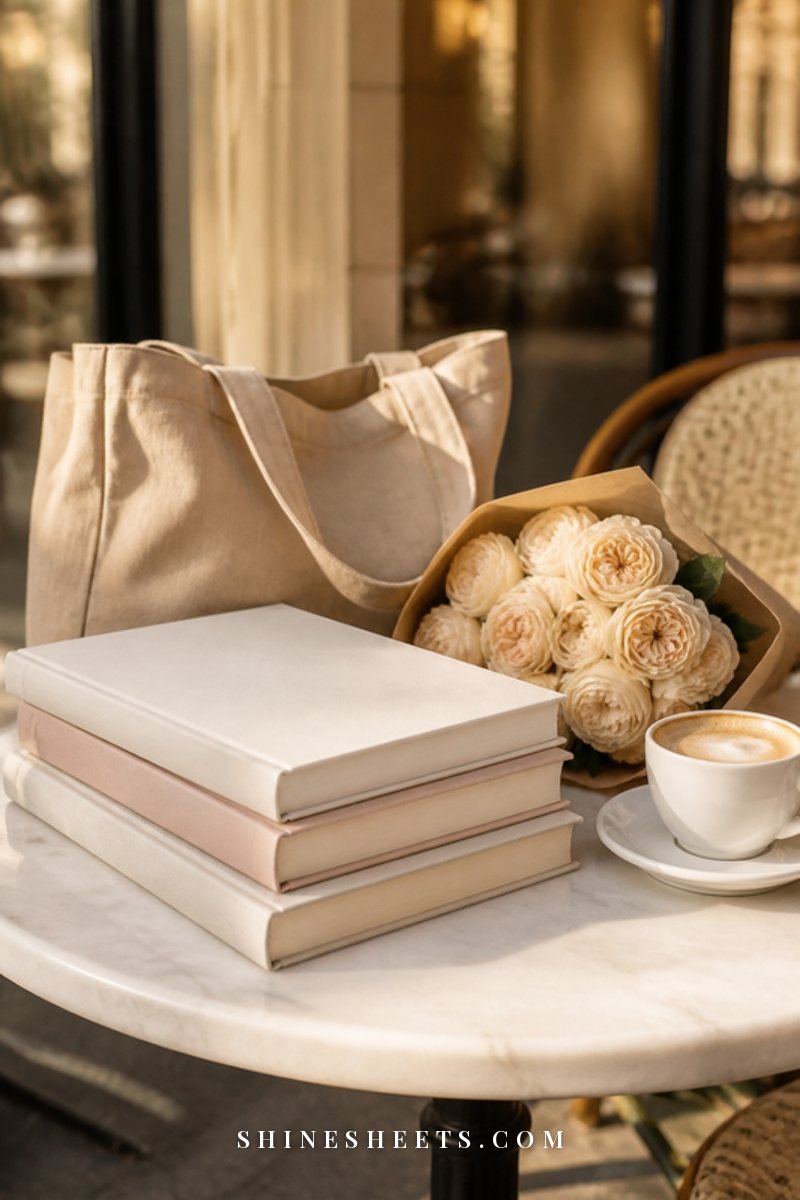
Unplanned alone time can feel like falling into empty space. Planned alone time feels like something you chose. Start small and build up slowly. Here's a gentle four-week rhythm:
- Week 1: 15 minutes alone, twice, at home. Phone in another room. Make tea, sit by a window, notice how it feels.
- Week 2: 30 minutes alone, twice. Add a simple activity you enjoy: reading, a bath, stretching, tidying a drawer.
- Week 3: One short solo outing, like a coffee, a walk in a park or a browse in a bookshop, for 30 to 45 minutes.
- Week 4: One longer solo block of one to two hours, at home or out, planned ahead with something to look forward to.
If a step feels like too much, repeat the week before. There's no prize for rushing. My guide on how to be happy alone has lots of lovely solo activity ideas if you need inspiration for what to do with the time.
Create Comfort Rituals for Evenings

Evenings are often when the fear feels strongest, so give them a gentle shape. A ritual is just a small sequence you repeat, and repetition tells your body "this is safe, I know what comes next."
A simple evening ritual might be:
- Light a candle (in a glass jar, away from anything flammable, and blow it out before bed).
- Make a cup of tea. A herbal tea sampler is a pick if you like having a little choice each night, and pouring it into a soft sage ceramic mug you love makes it feel like a moment rather than a habit.
- Put on soft lights and one calming playlist, then let it end.
- Spend 20 to 30 minutes on something absorbing but gentle: a novel, a puzzle, a skincare routine, sketching.
- Write two lines about your evening before bed.
Fiction is wonderful for this, because it gives your mind company without demanding anything. A soft-cover novel set on the coffee table is an easy invitation to pick one up instead of your phone.
Build a Small Support Network
Being alone doesn't have to mean being unsupported. In fact, feeling okay on your own is much easier when you know you have people to reach for. This isn't about needing a huge circle. Two or three steady connections are plenty.
- Name your people. Write down two or three people you could message on a hard evening. Seeing their names helps.
- Spread the support. If all your emotional needs rest on one person (often a partner), gently widen the circle with a friend, a sibling or a group.
- Create a standing connection. A weekly call, a monthly walk, a regular class. Predictable contact calms the fear of being forgotten.
- Join something small. A book club, a library event, a craft class or a volunteering shift gives you gentle company without pressure.
And remember that one of your support people can be you. My article on how to be your own best friend is full of small habits for being kinder company to yourself.
Meet Hard Moments With Self-Compassion
Some evenings will still feel hard, especially at the start. That's not a sign you're failing, it's a sign you're doing something new. On those nights, try speaking to yourself the way you'd speak to a friend who called you feeling low.
A little script you can use: "This feels hard right now, and that makes sense. A lot of people feel this way when things go quiet. I'm safe, and I can take care of myself tonight."
Then do one soothing, physical thing: a warm shower, a blanket around your shoulders, a hand on your chest while you breathe out slowly. If self-kindness feels awkward, my guide to self-compassion basics explains why it works and how to practice it without feeling silly.
Journal What You Discover You Like
One of the quiet gifts of alone time is getting to know yourself. When nobody else is choosing the music, the meal or the plan, you start to notice your own preferences, and that knowledge makes solitude feel less empty and more like time with someone interesting.
After each solo block, write down:
- What I did
- One moment that felt good, even briefly
- One thing I discovered I like (or don't like)
- How I'd rate my comfort, from "very uneasy" to "quite peaceful"
A guided reflection journal is a nice pick if a blank page feels intimidating, because the prompts do some of the work for you. Over a few weeks, reading back through your entries can be surprisingly moving. You'll see the fear getting a little quieter, and your own voice getting a little clearer.
When To Talk to a Therapist
Gentle self-help can make a real difference, but sometimes the fear of being alone runs deeper than a notebook and a cup of tea can reach. Please consider talking to a therapist or your doctor if:
- being alone brings on panic, racing heart or feelings you can't settle
- the fear keeps you in a relationship or situation that feels unhealthy or unsafe
- you feel low, empty or hopeless most days
- it's getting in the way of work, sleep or daily life
A good therapist can help you understand where the fear comes from and give you tools tailored to you. Reaching out isn't a sign you've failed at handling it yourself. It's one of the bravest, kindest things you can do. And if a relationship ever feels unsafe, please reach out for help from someone you trust or a local support service.
Final Thoughts
The fear of being alone usually comes from a part of you that learned, at some point, that quiet wasn't safe. You don't have to fight that part. You can simply show it, one small evening at a time, that things are different now.
Start with fifteen minutes, a cup of tea and a kind word to yourself. Over time, the empty room starts to feel less like something to escape and more like a soft place to land, and you get to meet the person who's been there all along.