
If you've ever said "it's fine, really" while your whole body was saying the opposite, you already know something about the fawn response. It's the quiet reflex to please, soothe and agree when something feels tense, not because you've decided to be kind, but because some part of you feels safer when everyone else is happy.
That part of you isn't weak or fake. It learned, at some point, that keeping the peace was the smartest way to stay okay. The work isn't to get rid of your warmth. It's to slowly create enough safety inside yourself that pleasing becomes a choice instead of an automatic rescue.
This guide to the fawn response explains what it is, how it differs from genuine kindness (with a comparison table), 10 common signs, where it can come from, how it shows up at work, in friendships and in relationships, 8 gentle steps to move beyond it, what to expect when you start changing and when a therapist can help. Go slowly. There's no rush here.
What Is the Fawn Response?

The fawn response is a stress response in which a person tries to stay safe by pleasing or appeasing others. When something feels threatening, whether that's conflict, disapproval, someone's bad mood or the fear of being left out, the instinct is to become agreeable, helpful and accommodating as fast as possible.
The term is often described in the work of therapist Pete Walker, who wrote about it alongside the better-known stress responses. It's not an official diagnosis. It's a helpful way of naming a pattern that many people recognize in themselves the moment they hear about it.
Fight, Flight, Freeze and Fawn
You've probably heard of fight, flight and freeze. Each one is the nervous system's attempt to protect you:
- Fight: pushing back, arguing, getting defensive.
- Flight: leaving, avoiding, keeping busy so you don't have to feel it.
- Freeze: going blank, shutting down, not being able to speak or move.
- Fawn: pleasing, agreeing, apologizing, smoothing things over.
None of these is "bad." They're all survival strategies. Fawning simply tends to get mistaken for niceness, so it can go unnoticed for years, sometimes even by the person doing it. If you'd like to understand what's happening in your body during these moments, my guide to nervous system regulation is a gentle place to start.
Fawning vs Kindness

Here's the tricky part: fawning and kindness can look exactly the same from the outside. You make someone a cup of tea, you say yes to a favor, you agree with their opinion. The difference lives on the inside, in why you're doing it and how it feels afterward.
| Fawn reflex | Chosen kindness | |
|---|---|---|
| Where it starts | Fear, tension or a sense of danger | Care, generosity or genuine interest |
| Speed | Instant, almost automatic | You had a moment to decide |
| Your body | Tight chest, held breath, raised shoulders | Relaxed, open, warm |
| Could you have said no? | It didn't feel like an option | Yes, and you chose yes |
| Your own needs | Pushed aside or forgotten | Still in the picture |
| Afterward | Drained, resentful or anxious | Content, even if tired |
| Goal | Make the tension stop | Make someone's day better |
Screenshot this and look at it after a moment that left you feeling off. You'll often find the answer in the "your body" and "afterward" rows. And remember, it's not either-or. Many of us do both, sometimes in the same afternoon.
10 Signs of the Fawn Response

You don't need to recognize all of these. Even two or three can tell you something useful about how your nervous system tries to protect you.
1. You Agree Before You've Thought About It
The "yes" or "sure, sounds great" is out of your mouth before your brain has even checked whether you want to. Only later do you notice you didn't.
2. You Struggle To Know What You Actually Want
Someone asks where you'd like to eat or what you'd prefer to do, and your mind goes blank. You're so used to tuning into other people's preferences that your own feel faint.
3. You Apologize Constantly
For asking a question, for taking up space, for someone bumping into you. "Sorry" has become a little shield you hold up all day. My guide on how to stop over-apologizing has gentle swaps for this one.
4. Other People's Moods Feel Like Your Job
If someone's quiet or irritated, you immediately wonder what you did and start trying to fix it, even when it has nothing to do with you.
5. Conflict Feels Physically Unbearable
Even a small disagreement makes your heart race or your stomach drop. Agreeing, smoothing it over or changing the subject feels like the only way to make that feeling stop.
6. You Mirror People
You subtly change your opinions, tastes, humor or even your voice depending on who you're with. It's not dishonesty. It's an old habit of blending in to stay safe.
7. You Over-Give, Then Feel Empty
You're the one who remembers birthdays, offers help and stays late. Underneath, you're exhausted and quietly wondering why no one does the same for you.
8. You Hide Your Feelings To Keep the Peace
Hurt, anger or disappointment get swallowed. "It's fine" is easier than risking someone being upset with you.
9. Saying No Feels Dangerous
It's not just awkward. It feels risky, as if a no might cost you the relationship, your job or your place in the group.
10. You Feel Responsible for Keeping Everyone Comfortable
At gatherings, in meetings, in families: you're scanning the room, filling silences, making sure no one feels left out. Everyone else gets to relax. You don't.
If these sound familiar, you might also see yourself in my guide on how to stop people pleasing. People pleasing is often what fawning looks like as a daily habit.
Where the Fawn Response Can Come From

Every person's story is different, and you don't need to dig through yours to start feeling better. In general, fawning tends to develop when pleasing others once helped someone feel safer or more accepted. That might have been in a home where moods were unpredictable, a family where being "easy" was praised, a school where fitting in mattered a lot, or a relationship or workplace where disagreement had consequences.
What matters most is this: if you fawn, it's because at some point it worked. It kept things calmer. It helped you get through. That deserves respect, not shame. The goal now is simply to let your nervous system know that you're in a different place, with more choices than you had back then.
If you'd like to understand these patterns more deeply, a best-selling book on people pleasing and codependency can be a gentle companion. Read it slowly, with breaks, and put it down whenever it feels like too much.
How Fawning Shows Up in Everyday Life
Fawning rarely looks dramatic. It hides in ordinary moments, which is why noticing it is such a big part of changing it.
At Work

- Taking on extra projects because saying no feels impossible.
- Agreeing in meetings, then quietly disagreeing later.
- Over-explaining small decisions or mistakes.
- Feeling panicky when a manager sends a short message.
- Rarely asking for a raise, time off or help.
In Friendships
- Always being the listener, rarely the one who's listened to.
- Going along with plans you don't enjoy.
- Feeling anxious if a friend takes a while to reply.
- Laughing at jokes that hurt, so you don't seem "sensitive."
In Relationships
- Adapting your life entirely to your partner's schedule and preferences.
- Avoiding hard conversations even when something matters to you.
- Feeling responsible for your partner's every mood.
- Losing track of your own friends, hobbies and opinions over time.
Seeing these patterns written down can sting a little. Please be gentle with yourself here. Noticing is not failing. It's the beginning.
8 Gentle Steps To Move Beyond the Fawn Response

These steps work best slowly and in order, but you can return to any of them whenever you need. A guided self-love journal is a lovely place to track what you notice along the way.
1. Notice the Body Cue
Fawning starts in the body before it shows up in words. Next time someone asks you for something or seems upset, check in: Is your chest tight? Are your shoulders up near your ears? Are you holding your breath? Just noticing gives you a tiny gap between the feeling and the automatic yes. You don't have to do anything else yet.
2. Use a Pause Phrase
Give yourself time before answering. Keep two or three phrases ready:
- "Let me check and get back to you."
- "Can I think about that for a moment?"
- "I'm not sure yet. I'll let you know by tomorrow."
These aren't no's. They're space. And space is where choice lives.
3. Practice Tiny No's
Start where the stakes are low. Say no to a store's loyalty card, choose the restaurant, ask for your drink to be remade, tell a friend you'd rather watch a different film. Each tiny no teaches your nervous system that disagreement can be survivable, even pleasant. My guide on how to say no has lots of warm wording to borrow.
4. Make a Needs List
Many people who fawn have lost touch with their own needs. Write down, without judging, what you need to feel okay: more rest, time alone, help with chores, a weekly call with a friend, quiet mornings. Start with five. Read the list once a week and ask, "Did I give myself any of these?"
5. Learn Your Values and Preferences Again
Try small experiments: choose your own coffee order without asking what anyone else is having, pick a film you love, notice what you genuinely like about your day. It sounds simple, but rebuilding a sense of "this is me" is deep, important work.
6. Use Simple Boundary Scripts
Short sentences work best, because fawning loves long explanations. A few to try:
- "That doesn't work for me, but thank you for asking."
- "I can help with this part, but not the whole thing."
- "I see it differently, and that's okay."
- "I need a little time before I talk about this."
- "I'm going to head home now. I had a lovely time."
If you'd like more support with this step, my guide on how to set boundaries walks through it gently.
7. Let Someone Be a Little Disappointed
This is the hardest step for most people, and the most freeing. When you say no or share a different opinion, someone may feel a flash of disappointment. That's okay. Their feeling is allowed, and so is your choice. Most of the time, the disappointment passes far faster than you feared, and the relationship is still there.
8. Soothe Your Body Afterward
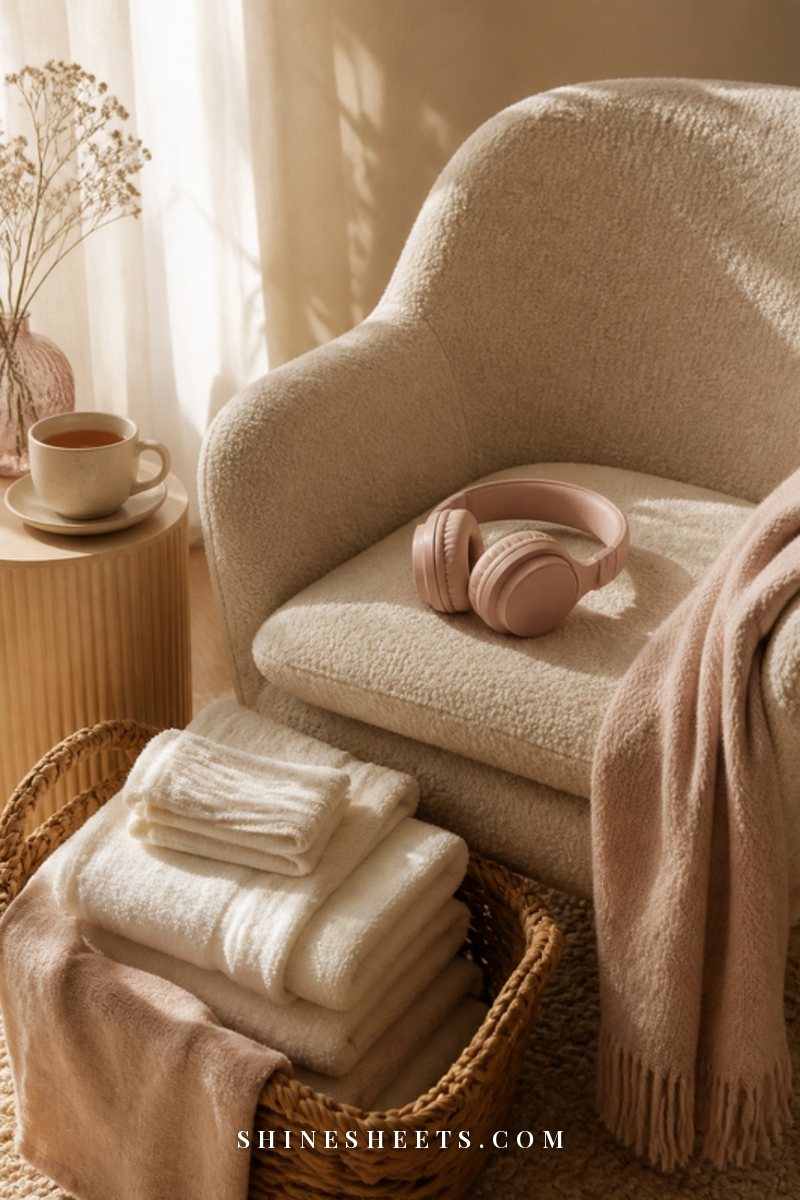
After a brave no or an honest conversation, your nervous system may still feel shaky, even if it went well. That's normal. Help it settle:
- Breathe out slowly, longer than you breathe in, five or six times.
- Wrap up in something heavy and comforting. A soft weighted blanket can feel like a hug when your body's still buzzing.
- Make a warm drink. A cup of calming chamomile tea in the evening is a little ritual I come back to often.
- Read a few gentle words to yourself. A deck of affirmation cards by your bed gives you something kind to reach for.
- Tell yourself, out loud if you can: "I'm safe. I did something brave."
What To Expect When You Start Changing

Growth here is real, but it's rarely tidy. A few things that are completely normal:
- Guilt. You may feel guilty the first many times you say no. Guilt doesn't mean you did something wrong. It often just means you did something new.
- Anxiety spikes. Your body may react strongly at first. It usually softens with practice.
- Some relationships shift. Most people adjust well, and some relationships even get closer. A few people may push back, which can tell you a lot.
- Slipping back. You'll fawn again, especially when you're tired or stressed. That's not starting over. It's simply being human.
- Unexpected feelings. Sadness, anger or relief can come up as you realize how much you've been carrying. Let them come, and be kind to yourself.
- Small wins. One day you'll realize you said what you wanted without thinking twice. Celebrate that.
I'm prone to anxiety myself, and I've learned that the nervous system changes in small, repeated moments rather than big breakthroughs. Every pause, every tiny no, every honest "I'd rather not" counts.
Gentle Journal Prompts for the Fawn Response
Journaling helps you hear your own voice again, which is exactly what fawning tends to quiet. Pick one prompt at a time, ideally on a calm evening, and write for five to ten minutes without editing:
- When did I say yes this week when I meant no? What did my body feel like in that moment?
- Whose disappointment am I most afraid of, and what do I imagine would happen?
- What is one thing I want that I haven't said out loud?
- When do I feel most like myself, and who am I with?
- What would I do this weekend if no one else's opinion mattered?
- What would I say to a friend who was carrying what I'm carrying?
There are no right answers here. Some evenings you'll fill a page, other evenings a single line. Both count, and both are you choosing to listen to yourself.
Fawn Response FAQs
Is the fawn response the same as people pleasing?
They overlap a lot. People pleasing describes the behavior. The fawn response describes the stress reaction underneath, when pleasing happens because something feels unsafe rather than because you've chosen it.
Can the fawn response go away?
For many people it softens a great deal with awareness, practice and support. It may still show up under stress, but it becomes easier to notice and to choose something different.
Is it bad to be accommodating?
Not at all. Being flexible and kind is a lovely quality. The goal is simply that it comes from choice, with your own needs still in the picture.
When To Work With a Trauma-Informed Therapist
Learning about the fawn response can bring up a lot, and you don't have to sort through it alone. A trauma-informed therapist understands how stress responses develop and can help you work with your nervous system at a pace that feels safe.
It might be time to reach out if:
- Fawning is affecting your work, health or relationships in a big way.
- You feel anxious, numb or exhausted most of the time.
- Thinking about your past brings up feelings that are hard to handle.
- You've tried to change but keep feeling stuck or overwhelmed.
There's nothing to prove before you ask for help. Wanting to feel safer in your own life is reason enough.
Final Thoughts
The fawn response was never a flaw. It was a clever way to stay safe, and it got you through. Now you get to add something new: the knowledge that you can be warm and still have needs, opinions and a no that belongs to you.
Go gently, one small pause at a time. Kindness feels so much lighter when it's truly yours to give.