Performance anxiety isn't a sign that you're not ready. Most of the time it's a sign that something matters to you, and your body is trying (a little too enthusiastically) to help. The racing heart, the shaky hands, the mind that goes oddly blank right before you start: all of that is your nervous system gearing up for a challenge, not proof that you're about to fail.
The good news is that you don't have to make the nerves disappear to do well. You only have to turn the volume down enough to think clearly, and give your body a few simple jobs to do while the adrenaline settles. That part is very learnable.
This guide is all about performance anxiety: what it is, why your body reacts the way it does, how to prepare in the days before, 6 calming tools for the final minutes, what to do in the middle of the moment, how to look back kindly afterward and a timing table you can screenshot for your next presentation, interview, exam, recital, match or first day.
I'm prone to anxiety myself (mostly well managed these days), so everything here is gentle and doable. Nothing requires you to become a different, fearless person.
What Is Performance Anxiety?

Performance anxiety is the nervousness that shows up before or during a moment when you feel watched, judged or measured. It's sometimes called stage fright, but it reaches far beyond the stage. It can appear before:
- A presentation, a pitch or a toast at a wedding
- A job interview or a performance review
- An exam, a driving test or an audition
- A recital, a concert or a dance performance
- A sports match or a race
- A first day at a new job, class or team
It feels a bit different for everyone. Some people feel it for weeks in advance, while for others it hits only in the last ten minutes. If your dread starts days or weeks before the event itself, my guide to anticipatory anxiety before a big event goes deeper into that early, waiting-room kind of worry.
What performance anxiety is not: a character flaw, a sign that you're bad at what you do or something you need to hide. Very skilled, very experienced people feel it too. Many of them simply have a routine for it, and that's what you're going to build here.
One gentle note: this article is general support, not a diagnosis. If your nerves feel much bigger than butterflies and start shaping your life, there's a section near the end about getting extra help.
Why Your Body Reacts This Way
When your brain decides a situation is important and a little risky (and being evaluated by other people counts as risky to a very old part of the brain), it flips on the fight-or-flight response. Stress hormones like adrenaline rise, and your body gets ready to act fast.
That's why performance anxiety tends to show up as a very physical package:
- A racing or pounding heart – your heart is pumping more blood to your muscles.
- Shaky hands or a trembling voice – your muscles are primed and tense.
- A dry mouth – digestion, including saliva, gets put on pause.
- Sweaty palms or feeling hot – your body is cooling itself for action.
- Butterflies or an uneasy stomach – blood moves away from digestion.
- A blank mind – attention narrows to "danger", so details feel harder to reach.
None of these sensations are dangerous on their own, even though they can feel alarming. They're your body's version of rolling up its sleeves. The tools below work because they send the opposite signal: slow breathing, loose muscles and a clear first step tell your nervous system that you're safe enough to think.
(A kind safety note: if you ever have chest pain, trouble breathing or symptoms that feel different from your usual nerves, please get checked by a doctor rather than assuming it's anxiety.)
Excitement and Anxiety Feel Almost the Same
Here's a reframe I genuinely love. Physically, excitement and anxiety are close cousins. Both come with a faster heartbeat, extra energy and a fluttery stomach. The biggest difference is the story your mind tells about those sensations: "something bad is coming" versus "something big is coming".
You don't have to force yourself to feel thrilled. But you can try a softer label. Instead of "I'm so nervous", try telling yourself "My body is getting ready" or "I'm a bit excited about this". For many people, simply naming the energy as readiness takes the edge off. It's a small shift, and it's worth testing a few times before you decide whether it works for you.
Before the Big Moment: Set Yourself Up Calmly
Most of the calm you feel on the day is built in the days before. Preparation won't erase nerves, but it gives your anxious brain fewer unknowns to worry about. Here's where I'd focus your energy.
Prepare and Rehearse Out Loud

Reading your notes silently feels like preparing, but your mouth and your memory need practice too. Rehearse out loud, standing up if you'll be standing on the day, at least three or four times. For an interview, say your answers to the most likely questions out loud rather than only thinking them through.
Aim to know your structure, not every single word. Write your main points on a few index cards or in a small pocket notebook: three to five key ideas, each with one example. If your mind goes blank, a single glance should be enough to find your place again.
Time yourself, too. Running short or long is one of the most common hidden worries, and knowing that your talk takes nine minutes (not "somewhere between five and fifteen") quietly lowers the pressure.
Practice Under Mild Pressure
Rehearsing alone in your bedroom is a lovely first step, but the real moment comes with eyes on you. Add a little pressure on purpose, in small, safe doses:
- Record yourself on your phone and listen back once (just once, not ten times).
- Practice in front of one friend or family member who will be kind.
- Do a full run-through in the outfit you'll actually wear.
- For an exam, do one practice paper under real time limits.
- For sports or music, rehearse your start with your heart rate already up, for example right after a brisk walk up the stairs.
Each small, slightly uncomfortable rehearsal teaches your body that being watched is survivable. That lesson is far more convincing than any amount of telling yourself to "just relax".
If speaking is the hardest part for you, my guide on how to speak with confidence even when you're nervous has voice and posture tips you can practice at the same time.
Build a Pre-Moment Routine
A pre-moment routine is a short sequence you do the same way every time before something big. Athletes and performers use them because a familiar ritual tells the brain, "I know this part". It also gives your hands and thoughts something to do in the waiting time.
Keep it to 10–20 minutes and make it portable. Here's an example layout:
- Arrive or log in 15 minutes early.
- Use the bathroom and drink a few sips of water.
- Read your first 30 seconds once, quietly.
- Do two minutes of slow exhale breathing.
- Roll your shoulders and unclench your jaw.
- Say your cue phrase to yourself.
Practice the routine during your rehearsals so it already feels familiar on the day. The evening before, journaling after a cup of tea is one of my favorite ways to empty my head. If you like prompts, look for a guided anxiety journal with short pages, and write three lines: what you're worried about, what you've already prepared and one thing you're looking forward to once it's over.
Sleep, Light Food and Less Caffeine

Your body handles adrenaline better when it isn't already running on empty. In the two or three nights before, protect your sleep: a regular bedtime, a dim, cool room and no late-night cramming if you can help it. One rough night isn't a disaster (it's very common, and adrenaline will carry you), but a run of short nights makes nerves louder.
On the day, eat something light and familiar a couple of hours before, so you're not shaky from hunger or sluggish from a heavy meal. This isn't the moment to try something new.
And go easy on caffeine. Coffee sometimes perks me up and sometimes makes me jittery and anxious, and big days always seem to land in the second category. Caffeine can mimic anxiety symptoms like a fast heartbeat and shaky hands. If you love your morning cup, consider a smaller one or a half-caf, and skip the extra one right before.
6 Calming Tools for the Minutes Right Before
These are the tools for the waiting room, the hallway, the side of the stage or the five minutes before the video call starts. Pick two or three favorites and practice them in advance so they're ready when you need them.
1. Slow Exhale Breathing (4 In, 6 Out)

Breathe in through your nose for a count of 4, then out slowly for a count of 6. The longer exhale is the key part, because it gently nudges your body toward its calmer "rest" mode. Repeat for 2–3 minutes, or about 10 to 15 breaths.
If counting to 6 feels like too much, try 3 in and 5 out. You can do this with your eyes open, standing in a line, and nobody will notice. For more patterns to try, I've gathered several in my guide to breathing exercises for calm.
2. Grounding With Your Feet on the Floor
Anxiety pulls your attention up into your head and into the future. Grounding brings it back down into your body and into the present. Stand or sit with both feet flat on the floor. Press them down gently and notice the pressure through your heels, the balls of your feet and your toes.
Then silently name three things you can see and two things you can hear. It takes about 30 seconds. If you'd like a longer list of quick ways to settle, my guide on how to calm anxiety fast has grounding techniques that work almost anywhere.
3. Loosening Your Shoulders and Jaw
Nervous tension loves to hide in your shoulders, jaw and hands. Lift your shoulders up toward your ears as you breathe in, hold for two seconds, then let them drop as you breathe out. Do it three times.
Next, let your jaw hang slightly open, rest your tongue softly behind your lower teeth and move your jaw gently from side to side. Finish by shaking out your hands for 10 seconds, as if you're flicking off water. It looks a little silly, which is exactly why the bathroom or a quiet corridor is the perfect place for it.
4. A Short Cue Phrase
A cue phrase is a few words you say to yourself to steady your attention. It works best when it's short, kind and true. A few examples:
- "Slow and clear."
- "I'm prepared enough."
- "One sentence at a time."
- "Nerves mean I care."
- "Share, don't prove."
Choose one and use it in every rehearsal so it becomes linked with feeling capable. You can write it on the first page of your notes, too. Before you walk in, rolling a little lavender roll-on onto your wrists can become part of the ritual. Any calming effect of scent is gentle and personal (and if your skin is sensitive, patch test first), but the small pause of doing it is a lovely anchor.
5. Focusing on the Message, Not on Yourself
Performance anxiety turns the spotlight inward: "How do I look? Can they tell I'm nervous? What if I mess up?" A helpful shift is to turn the spotlight outward, toward the message, the music, the game or the people you're there for.
Ask yourself one question before you start: "What do I want them to walk away with?" In an interview, it might be "that I'm reliable and curious". In a presentation, maybe "that this plan saves the team time". Holding that purpose in mind gives your attention somewhere useful to go. And when self-doubt whispers that you don't deserve to be there, my guide to quieting imposter syndrome may help you answer it back.
6. Your First 30 Seconds, Planned Word for Word
Nerves are usually strongest at the very beginning and ease once you're moving. That's why the first 30 seconds are the one part worth memorizing exactly. Write out your opening lines, practice them until they feel automatic and keep them close.
A simple opening formula: greeting + why you're here + what's coming. For example: "Good morning, everyone. I'm going to walk you through our new booking process, and by the end you'll know the three steps that save the most time." For an interview: "Thank you for having me. I'm really glad to talk about this role." Once those lines are out, your body realizes the hardest part is already behind you.
During the Moment: Pause, Breathe, Sip
Even with good preparation, you'll probably still feel some nerves once you begin. That's okay. You're not aiming for zero anxiety, just enough calm to keep going. A few things that help in the middle of it:
- Pause on purpose. A two-second pause feels endless to you but sounds thoughtful to everyone else. Pause between your main points and take one slow breath in each gap.
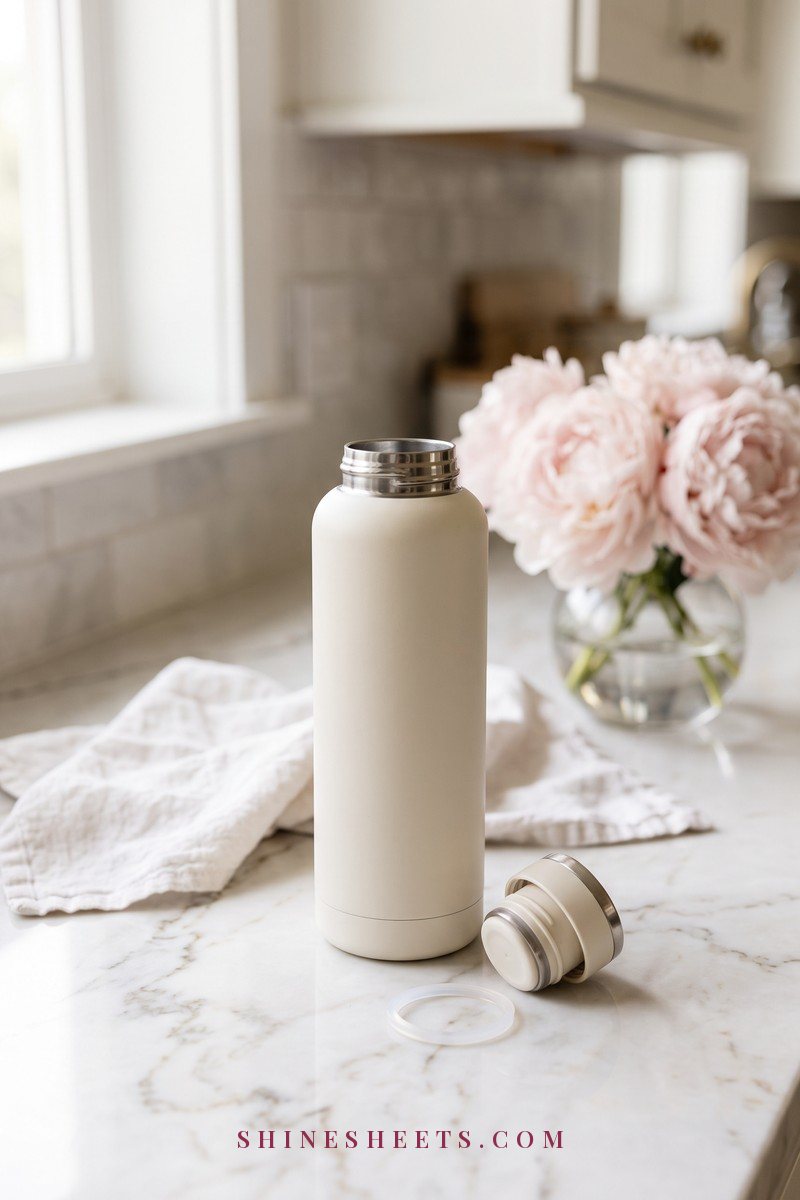
- Sip water. A dry mouth is very common. Keep water within reach, like a cream stainless water bottle on the table or in your bag, and take small sips when you change topics.
- Slow down slightly. Adrenaline speeds most of us up. Aim to speak a little slower than feels natural.
- Find friendly faces. In a room, look at a few people who seem warm and rotate between them.
- If you lose your place, glance at your notes, take a breath and say, "Let me come back to my main point." That's all it takes.
And here's your permission slip: it's fine if people notice you're nervous. Most audiences, interviewers and examiners are far kinder than the critic in your head, and many of them have stood exactly where you're standing. A slightly shaky voice doesn't cancel out good content, and a light acknowledgment ("I care about this, so I'm a little nervous") often makes people warm to you even more.
What you wear can help too, mainly because it's one less thing to fuss with. Choose something comfortable you've already worn for a few hours. A soft beige blazer over a simple top is a pick for feeling polished without anything pinching or riding up.
After: A Kind Review Instead of a Replay

Once it's over, your brain might want to replay every small stumble on a loop. Please don't let it run the show. Give yourself an hour or so to rest first, then do a short, kind review on paper with three questions:
- What went well, even a little?
- What is one thing I'd adjust next time?
- What did I learn about my nerves today?
Then close the notebook. One adjustment is enough. Writing a long list of "mistakes" only teaches your brain to fear the next time more.
If a moment keeps replaying anyway, speak to yourself the way you'd speak to a friend who just did something brave: "You showed up while nervous. That counts." Every time you go through a big moment and come out the other side, your nervous system collects a little evidence that you can handle it. That evidence quietly builds, every single time.
Performance Anxiety Timing Table
Here's the whole approach in one table, from the week before to the moment you walk out. Screenshot it before your next big day.
| When | What you might feel | What helps | Example |
|---|---|---|---|
| A week before | Dread, "what if" thoughts, trouble focusing | Prepare in small daily chunks, rehearse out loud | 20 minutes of practice each evening, then tea and an early night |
| 2–3 days before | Restless sleep, butterflies | Practice under mild pressure, protect your sleep | One full run-through in front of a kind friend |
| The night before | Racing thoughts in bed | Write worries down, lay out clothes and notes | Three journal lines: what I fear, what I've prepared, what I'm looking forward to |
| The morning of | Jitters, low appetite | Light, familiar food and less caffeine | A small breakfast you know sits well, plus a smaller coffee or herbal tea |
| 15 minutes before | Racing heart, dry mouth, shaky hands | Pre-moment routine, water, slow exhale breathing | Bathroom, a few sips of water, ten breaths of 4 in, 6 out |
| The first 30 seconds | Blank mind, trembling voice | Memorized opening, feet on the floor | "Good morning, everyone. Today I'll walk you through…" |
| During | Rushing, losing your place | Pause, sip, look at friendly faces | "Let me come back to my main point." |
| Afterward | Replaying every stumble | A kind three-question review | One thing that went well, one thing to adjust, then close the notebook |
You don't need to do every row perfectly. Even picking one helpful thing for "15 minutes before" and one for "afterward" will make a noticeable difference over time.
When To Get Extra Support
A bit of nervousness before a big moment is normal and often even useful. But if performance anxiety is stopping you from doing things you care about (turning down opportunities, skipping classes, avoiding auditions, quitting a sport you love), it deserves more support than an article can give.
A therapist can help a lot here. Approaches like cognitive behavioral therapy and gentle, step-by-step practice are commonly used for performance-related anxiety, and a good therapist will tailor them to your situation. If anxiety shows up in many areas of your life, not only before big moments, that's worth mentioning too.
You may have heard that some people take medication before performances. That's a conversation for your doctor only. Please don't take anything because a friend, a colleague or the internet recommends it, as only a doctor who knows your health can say what's safe and right for you.
Reaching out isn't a sign you've failed at coping. It's a smart, brave form of preparation, just like rehearsing.
Final Thoughts
Performance anxiety is your body's loud, slightly clumsy way of saying "this matters". You don't have to silence it to do well. Prepare in small steps, give your body a calm routine, plan your first 30 seconds and let yourself be a little nervous in front of people. They can handle it, and so can you.
Your next big moment won't feel perfectly calm, and it doesn't need to. Showing up with shaky hands and doing it anyway is exactly how confidence gets built, one brave moment at a time.