
Moving in together isn't really about the boxes. The boxes are the easy part. What makes or breaks those first months is everything you didn't say out loud before the keys changed hands: who pays for what, who notices the overflowing trash, how much quiet each of you needs after a long day, and what happens when one of you wants friends over on a Tuesday.
The couples who settle in most smoothly aren't the ones who never disagree. They're the ones who talked early, while everything still felt exciting and nobody was annoyed yet. Those conversations feel a little unromantic in the moment (spreadsheets are nobody's love language), but they're one of the kindest things you can do for each other.
This moving in together checklist walks you through it in order: the seven conversations to have before you move, a conversation checklist table you can work through together, the practical to-do list for the lease, your stuff and moving day, a gentle 30-day settling plan, and a few small habits that protect your relationship once you share a front door.
Take it one section at a time. You don't need every answer this weekend, just a good start.
Before You Move: The Conversations That Matter Most

Think of these talks as a map, not a contract. You're not trying to predict every future argument. You're trying to find out where your expectations already match and where they quietly don't, so nothing becomes a surprise in week three.
A few ground rules make them easier. Pick a calm evening, not the night before you sign the lease. Keep it to one or two topics per sitting, about 30–45 minutes each. And go in curious rather than ready to win. If talking about needs feels hard for either of you, my guide on how to communicate better in a relationship has simple phrases that keep these conversations soft.
1. Money: How You'll Split Rent and Bills
Money is the conversation most couples rush, and the one that causes the most quiet resentment later. Start with the big picture before the numbers: how does each of you feel about spending, saving and debt? Then get specific.
There are three common ways to split shared costs:
- 50/50: simple and clear, works best when incomes are similar.
- Proportional: each person pays a share that matches their income (for example, if one earns 60% of your combined income, they cover 60% of rent and bills).
- Shared account for shared costs: you each transfer an agreed amount every month into one account that pays rent, utilities and groceries, and keep the rest separate.
Also decide what counts as "shared." Rent and utilities, obviously. But what about streaming services, takeout, household basics or a new couch? Agree on a number (say, anything over $100) that you check with each other before buying for the home. If you want a simple way to track it all, my budgeting for beginners guide walks you through a monthly plan that works just as well for two.
2. Chores and the Mental Load
Chores aren't only about who does the dishes. They're also about who notices the dishes, who remembers you're out of toilet paper and who books the plumber. That invisible part is called the mental load, and it's often where the real friction lives.
Try this: each of you writes down every household task you can think of, from taking out recycling to watering plants to buying birthday gifts for each other's families. Then go through the list together and assign an owner to each task. "Owner" means that person handles it from start to finish, including remembering it. You can swap tasks later, but nobody should be "helping" with the other person's job by default.
It also helps to talk about standards. One of you might think a bed should be made every morning, the other might think that's a weekend thing. Neither is wrong, but you need a shared baseline. A simple cleaning schedule for daily, weekly and monthly tasks takes a lot of the guesswork (and the sighing) out of it.
3. Alone Time and Personal Space
Living together means you'll see each other far more, and that's lovely right up until one of you desperately needs an hour of silence. Wanting space doesn't mean something is wrong. It means you're a person.
Talk about how you each recharge. Do you need 20 quiet minutes after work before you can chat? A solo morning on Saturdays? A corner that's just yours, even if it's only a chair and a lamp? I'm prone to anxiety, and I've learned that a little protected quiet each day makes me a much warmer person to be around, so I'd always put this on the list.
Agree on a simple signal for "I need some space right now, and it's not about you." Something like "I'm going to take my tea and read for half an hour, then I'm all yours" works beautifully, because it names the need and the return.
4. Guests, Friends and Family Visits
One of you might love a full apartment on Friday nights. The other might want home to feel like a calm retreat. Both are valid, and you'll want a middle ground before the first surprise visit.
Cover these questions together:
- How much notice do you want before friends come over? (Many couples settle on "a text the day before" for casual visits.)
- Are overnight guests okay, and how often?
- How long can family stay when they visit from out of town?
- Do friends need to leave by a certain time on weeknights?
- Are there any house rules for guests, like shoes off or no smoking on the balcony?
If families tend to have strong opinions about your new living situation, it's worth deciding together how you'll respond. A calm, united "we've decided this together" goes a long way.
5. Pets, Plants and Sleep Habits
These sound small, but they're daily. Talk about whether pets come with you (or might join later), who feeds and walks them, and who handles the vet. If one of you has allergies, now is the time to say it.
Then talk about sleep, because you'll share it every single night. Early bird or night owl? Fan on or off? Window open or closed? Do you read in bed, watch videos in bed or need total darkness? None of this needs to be solved perfectly. It just needs to be known, so a soft silk sleep mask or a second reading lamp can solve it before anyone gets cranky.
6. Décor and Whose Stuff Stays
This is where many couples realize they have very different ideas of "home." One of you loves soft neutrals and glass candles, the other is attached to a giant gaming chair and a poster from college. You'll both have to give a little.
A helpful rule: each person gets a few "non-negotiables" (two or three items they really want to keep), and everything else is open for discussion. Then agree on a loose overall feel together, like "warm, calm and clutter-free," so you have something to measure new purchases against. Shared rooms should feel like both of you. Personal corners can feel like just one of you.
7. What Happens If It Doesn't Work Out
Nobody wants to talk about this one, and that's exactly why it matters. Discussing it isn't a sign you expect to break up. It's a sign you respect each other enough to make a hard moment less messy.
Keep it practical and kind. Whose name is on the lease? Who would stay and who would move out? How would you split furniture you bought together? What happens to a shared pet? You can even write down a few notes and tuck them away. If you never need them, wonderful. If you do, you'll both be grateful past-you was thoughtful.
The Moving In Together Conversation Checklist
Here's everything above in one table. Work through it over a few evenings, tick off each row once you've actually talked it through, and write your agreement somewhere you'll both see it. Screenshot it if that helps.
| Topic | Questions to answer together | Write down |
|---|---|---|
| Rent and bills | 50/50, proportional or shared account? What counts as a shared cost? | Your split and the monthly amount each person pays |
| Bigger purchases | At what amount do we check with each other before buying for the home? | Your "check first" number |
| Savings and debt | Do we have any debts or goals the other should know about? | One shared goal, if you have one |
| Chores | Who owns each task from start to finish? What are our cleanliness standards? | A list of tasks with one owner each |
| Alone time | How do we each recharge? What's our "I need space" signal? | Your signal phrase and any protected quiet times |
| Guests | How much notice? Overnight guests? Family visits? | Your guest ground rules |
| Pets and plants | Who feeds, walks, waters and handles appointments? | Care owners and any allergies |
| Sleep | Bedtimes, light, temperature, noise, screens in bed? | Any small fixes you agree on |
| Décor | What are our non-negotiables? What overall feel do we want? | Two or three items each, plus three words for your style |
| Food and groceries | Shared groceries or separate? Who shops? Do we eat together most nights? | Your grocery plan |
| Conflict | How do we want to handle disagreements? Do we need a cool-down rule? | One rule you both agree on |
| If it doesn't work out | Who stays? How do we split shared things? What about pets? | A short, kind plan you hope you never need |
If any row turns into a bigger disagreement, that's not a failure. It's information. Take a break, come back in a day or two, and try the gentle steps in my guide to conflict resolution for couples.
The Practical Moving In Together Checklist
Once the big conversations are underway, it's time for the hands-on part. If one of you has never set up a home before, my first apartment checklist covers the room-by-room basics. This section focuses on what's different when two lives (and two sets of stuff) become one.
Lease, Paperwork and Accounts
Do these at least four to six weeks before your move date, because some of them take longer than you'd expect:
- Decide whose name goes on the lease (ideally both, so you both have the same rights and responsibilities).
- Read the lease together, especially the parts about guests, pets, subletting and breaking the lease early.
- Give notice on any current leases and note the exact end dates.
- Set up or transfer utilities, internet and renters insurance, and decide whose name each account is in.
- Update your address with your bank, employer, subscriptions and the post office.
- Open a shared account or set up a shared money app if that's the split you chose.
- Make two sets of keys and agree who keeps any spares.
Merging Your Stuff Without a Fight

You probably have two toasters, two vacuums and roughly nine spatulas between you. Merging is the moment to keep the best of each, not everything from both.
Do it room by room, not all at once. Before the move, each of you lists the bigger items you own (furniture, appliances, kitchen sets, bedding). Put the lists side by side and pick the better one of each duplicate, based on condition and how well it fits the new space, not on whose it was. It's surprisingly calming to decide this on paper instead of standing in a hallway full of boxes.
When things start arriving, a little label maker is worth its tiny price. Label shelves, bins and drawers in the kitchen and bathroom for the first few weeks, so neither of you has to keep asking where the scissors live now.
What To Keep, Sell or Donate
For every item you're unsure about, ask three questions together:
- Does it fit, physically and style-wise, in the new home?
- Have either of us used it in the last year?
- Would we buy it again today?
Two yeses means keep. One yes means talk about it. No yeses means sell, donate or gift it to a friend who's moving too. Give sentimental items a gentler rule: each person can keep one box of sentimental things, no questions asked and no eye-rolling allowed.
Packing and Moving Day
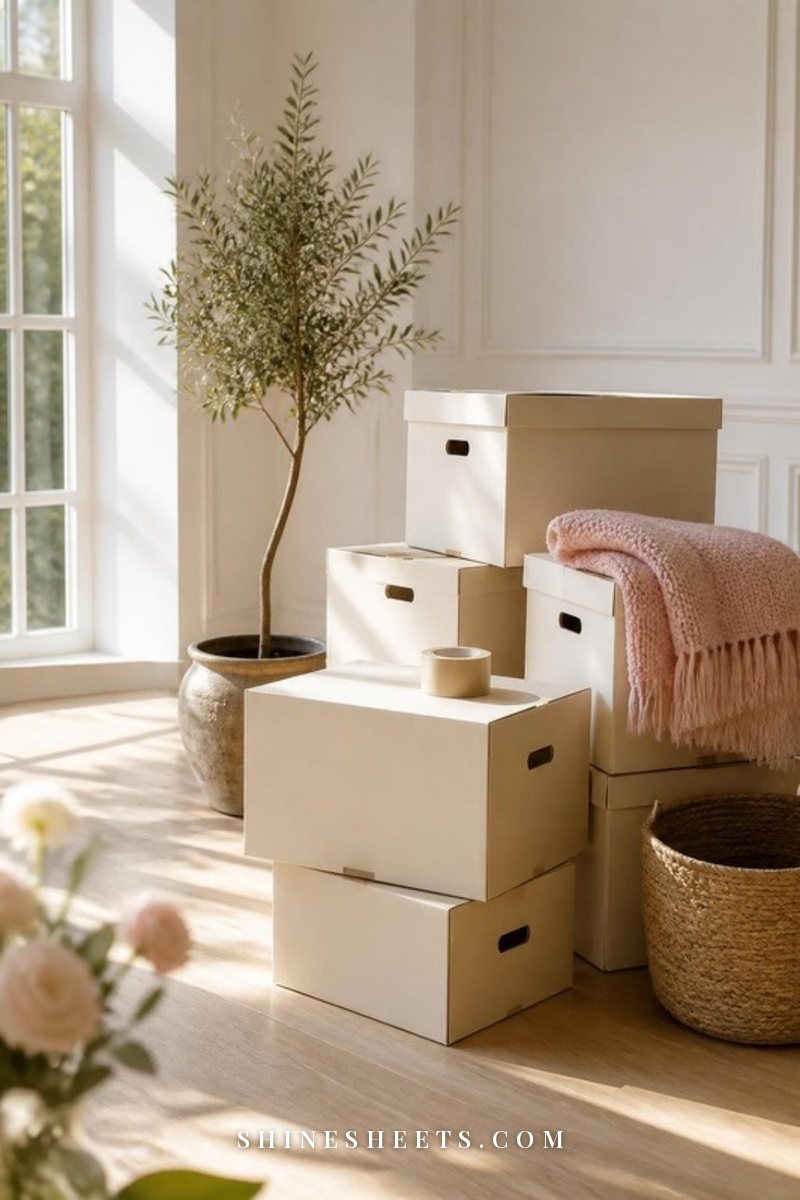
Start packing about three weeks out, beginning with the things you use least (books, out-of-season clothes, décor). Sturdy moving boxes with handles in two or three sizes make stacking and carrying so much easier than mismatched grocery boxes.
Write the destination room and a short list of contents on two sides of every box. Then pack one "first night" box each, kept with you rather than in the truck. Put in a change of clothes, toiletries, phone chargers, medication, a towel, toilet paper, a few snacks, two mugs and your favorite tea or coffee. On moving day, assign roles: one person directs boxes to rooms, the other handles the movers or friends helping. And plan to stop at a set time, even if it's not finished. Nobody has a good first night in a new home after fourteen hours of carrying.
Setting Up Your Shared Home

Set up in this order, and you'll feel at home faster: bed first, then bathroom, then kitchen basics, then the living room. Everything else can wait.
A few small things make a shared home feel like yours rather than two people's stuff in one place:
- A shared command center by the door or on the fridge. A blank dry-erase wall board is perfect for weekly plans, grocery notes and little messages.
- A landing spot for keys and mail, like a small tray or bowl, so nobody spends their morning hunting.
- Your first "new home" purchase made together. It doesn't need to be big. A pair of matching ceramic mugs for your morning coffee is a sweet, simple start.
- One spot that's just for each of you: a reading chair, a desk corner, a side of the closet that stays exactly how you like it.
- Something soft for the sofa, like a cream knit throw, because a home you can curl up in together is the whole point.
Your First 30 Days: A Gentle Settling Plan
The first month living together is an adjustment, even for couples who've basically lived at each other's places for a year. Routines collide, little habits show up and everyone's a bit tired. This 30-day plan keeps it gentle. Each week has one focus, so you're not trying to fix everything at once.
Week 1: Unpack the Essentials and Rest
Your only goals this week are a working bed, bathroom and kitchen, and enough rest that you're both still nice to each other. Unpack for about an hour each evening, then stop. Order something easy for dinner, sit on the floor if the couch isn't there yet, and let the rest of the boxes wait. It's okay if the place looks half-done. It's supposed to.
One small tip: agree on a "no big talks" rule for the first week, unless something is truly urgent. Everyone's tired, and tired conversations go sideways fast.
Week 2: Find Your Daily Rhythm
Now you'll start noticing how your days actually fit together. Who needs the bathroom first? Who's up early, and how quiet should they be? Do you eat dinner together most nights, or do your schedules make that hard?
Pay attention to the small moments that feel good (making coffee side by side, a walk after dinner) and the ones that feel bumpy (both rushing for the shower at 7:30). Don't fix anything yet. Just notice, and maybe jot a few notes on your phone for next week.
Week 3: Hold Your First House Meeting

A house meeting sounds formal, but it's really just a planned, cozy check-in about your home. Choose a relaxed time, like a Sunday afternoon with tea, and keep it to about 30 minutes.
Use this simple four-part format:
- What's working: each person names two things they love about living together so far.
- What's bumpy: each person names one thing that's been a little hard, using "I" language ("I've been feeling rushed in the mornings").
- One change to try: pick one small adjustment for the coming week, like staggering alarms by 15 minutes or swapping one chore.
- Something to look forward to: plan one fun thing together, even if it's just a takeout night in your new place.
If you'd like more questions to keep these check-ins going, my list of relationship check-in questions works beautifully as a monthly habit.
Week 4: Make It Feel Like Yours Together
By now the basics should be in place, so this week is about warmth. Hang one thing on the wall that you chose together. Host one small, easy evening with a friend or two, if you're both up for it. Revisit the chore list and adjust anything that isn't working, without blame.
At the end of the month, sit down for ten minutes and look back. What surprised you? What are you proud of? Living together is a skill you learn by doing, and one month in, you've already learned a lot.
How To Protect Your Relationship After Moving In
Sharing a home means you'll see each other in sweatpants, on bad days and at your most tired. That closeness is a gift, but it can also make it easy to slip into roommate mode. These habits keep the romance alive alongside the laundry:
- Keep dating each other. Plan one intentional date a week, even at home. Phones away, candle lit, real conversation.
- Greet each other properly. When one of you comes home, stop what you're doing for ten seconds and say hello like you mean it. It sounds tiny, but it changes the feel of an evening.
- Protect your own life. Keep your own friends, hobbies and solo time. You'll have more to bring back to each other.
- Don't keep score. Over a month, things should feel roughly fair. Over a single day, they won't, and that's fine.
- Repair quickly. After a disagreement, one simple line like "I didn't like how that went, can we try again?" goes a long way.
- Say thank you for the ordinary things. "Thank you for taking out the trash" sounds almost silly, but feeling noticed is one of the best parts of sharing a home.
And remember that some friction is normal. Two people learning to share one space will bump into each other sometimes. What matters is that you keep turning toward each other when it happens.
Final Thoughts
Moving in together is a big, sweet, slightly chaotic step, and it's completely normal for it to feel like all three at once. The talking you do now, about money, chores, space and even the hard "what ifs," isn't the unromantic part. It's the part that lets the romantic part last.
Go gently, give yourselves the full first month to settle, and keep choosing each other in the small, everyday moments. A home built on honest conversations and a lot of patience is a lovely place to start your next chapter together.