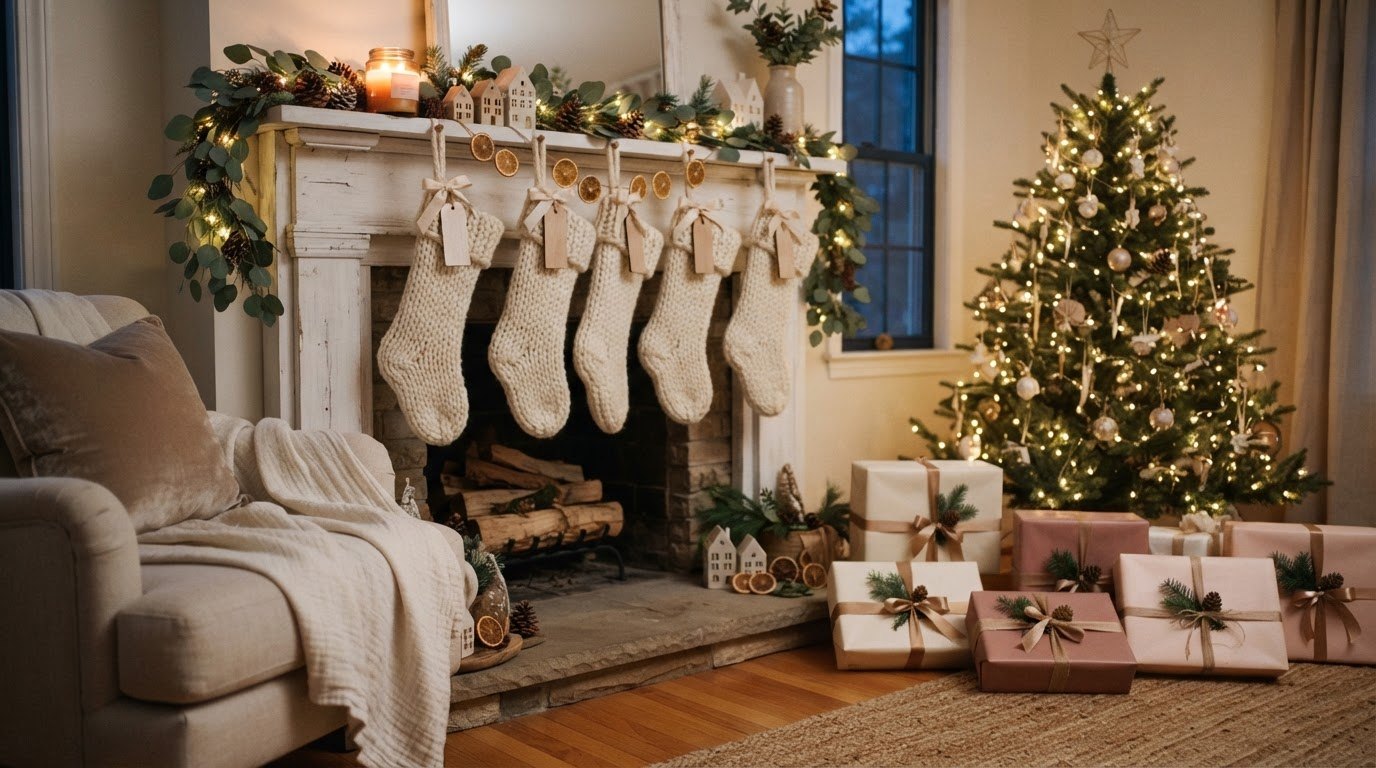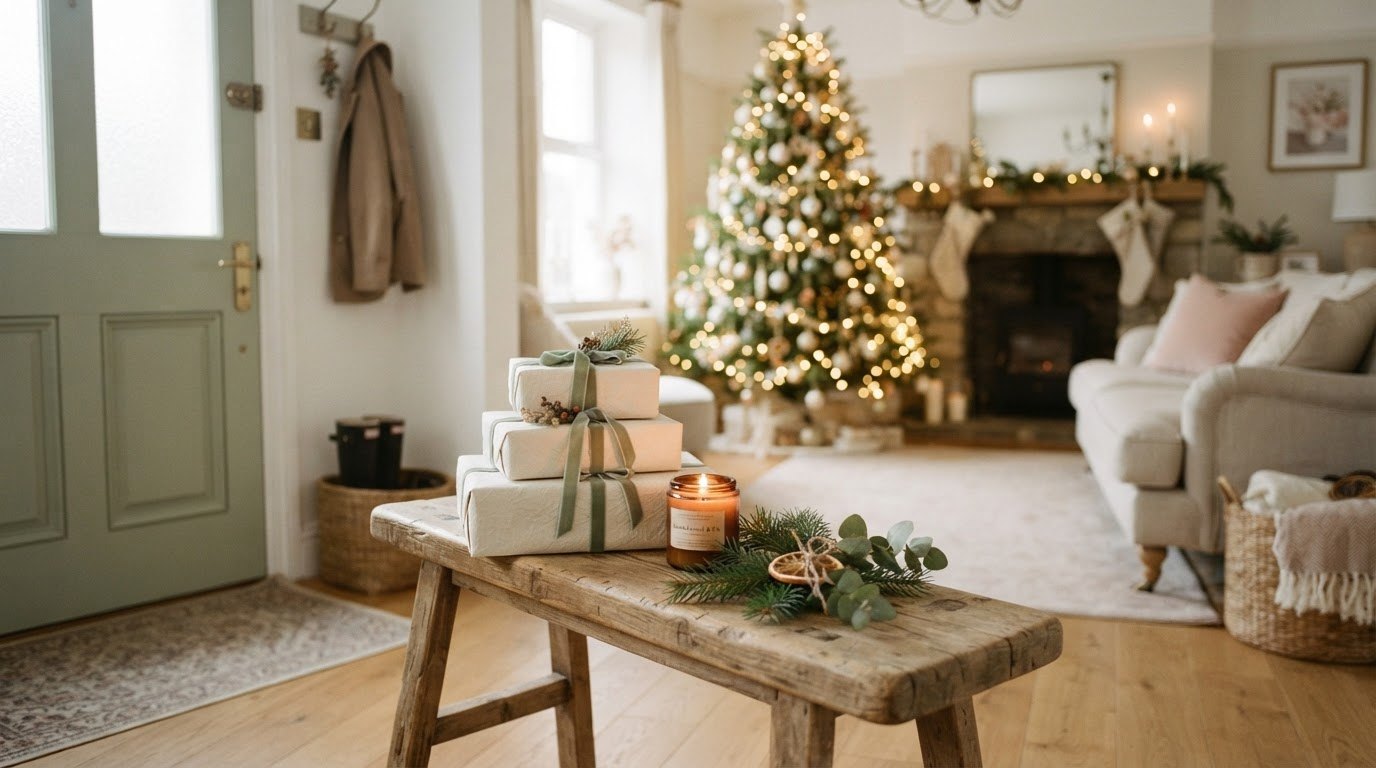
Your first Christmas together isn't really about choosing whose traditions win. It's about noticing that you each walked in carrying a whole set of them, often without realizing it, and gently building something that feels like both of you. That's a much softer, sweeter project than it sounds.
Most couples are surprised by how strong their holiday habits are. One of you grew up opening presents on Christmas Eve, the other on Christmas morning. One expects a real tree, the other has never had anything but an artificial one in the attic. None of these preferences is right or wrong. They're just memories, and memories deserve a little tenderness.
This guide is all about your first Christmas together and how to blend traditions as a couple. You'll find eight questions to ask about your childhood Christmases, a simple table to map out your shared version, a way to sort traditions into keep, blend, try once and gently let go, six ideas for a first tradition that belongs only to you, and how to stay kind when things feel tense. (If your big question is which family to visit and when, my guide to splitting the holidays between two families covers that side.)
Why Your First Christmas Together Feels Like a Big Deal

Christmas carries a lot of emotional weight. For many people it's tied to childhood, family, faith, comfort and a sense of home. When you build a life with someone, the holidays are often the first time you see how differently "home" can look.
That can feel exciting and a little vulnerable at the same time. Suggesting a change to a tradition can sound, to your partner, like a judgment on their family or their childhood. Holding on tight to a tradition can sound like you don't want to make room for them. Most tension around the first Christmas together comes from these quiet misunderstandings, not from the traditions themselves.
The good news: when you talk about traditions as stories rather than rules, the whole conversation softens. You stop debating and start getting to know each other, which is exactly what this season is for.
Start With a Warm Talk: 8 Questions About Childhood Christmases

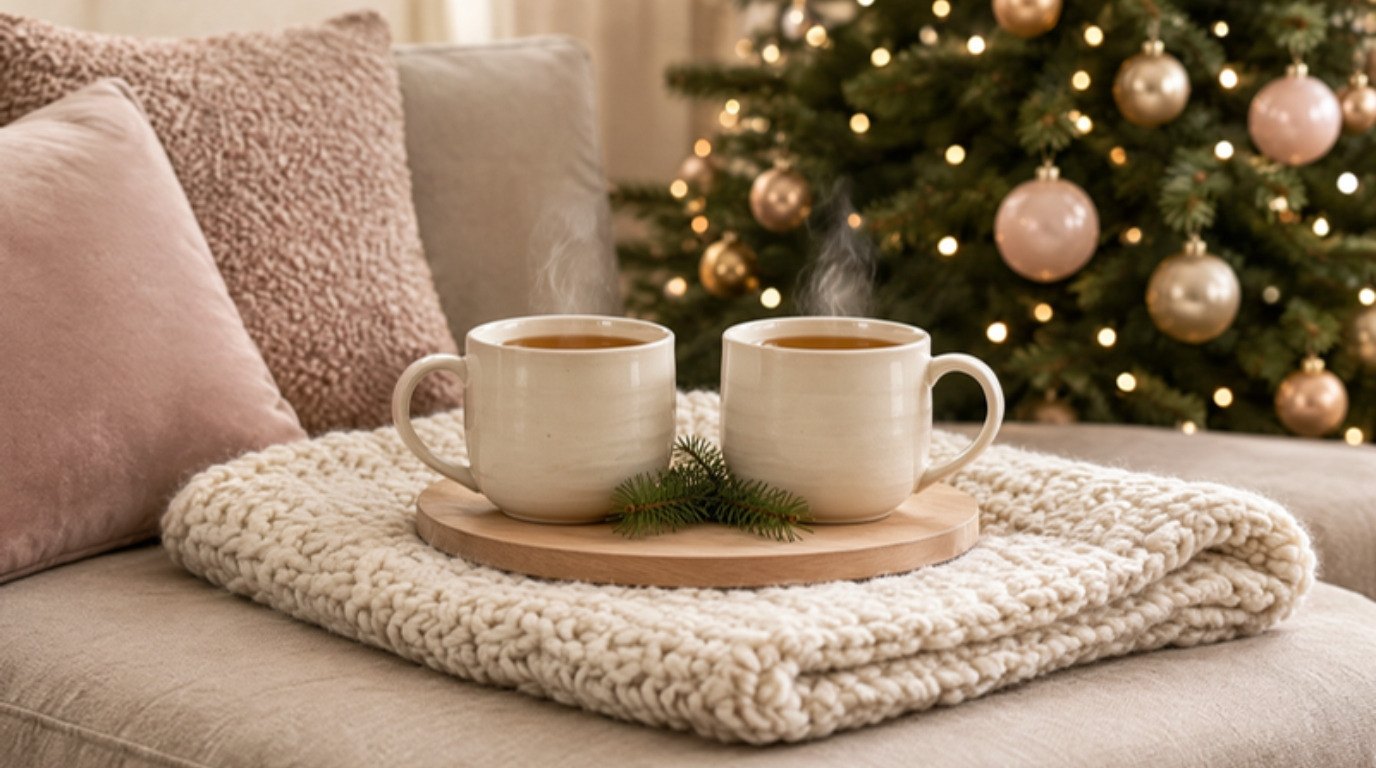
Before you plan anything, find a calm evening in late November or early December, make two cups of tea and just listen. These eight questions are a lovely starting point. Take turns answering each one, and try to ask "What did that feel like?" at least once.
- Was Christmas Eve or Christmas Day the main event in your family? This one shapes so much: when you'd travel, when you'd open presents and which evening feels most special.
- Did you have a real tree or an artificial one, and who decorated it? Ask about the tree topper too. There's often a story there.
- What did your home look like at Christmas? Lots of colorful lights, or white and minimal? Handmade ornaments or a matching theme?
- What music do you associate with the season? Carols, old crooners, a choir, a particular album someone played every year?
- Did church or a religious service play a part? Midnight Mass, a morning service, a nativity play, or nothing at all? Approach this one with extra gentleness.
- Which meal rituals mattered most? Not the recipes, the rituals: who sat where, whether there was a special dish, whether everyone cooked together.
- What did Christmas morning look like? Stockings first? Breakfast before presents? Pajamas all day?
- Was your Christmas quiet or busy? A small family at home, or a packed house with cousins everywhere?
You'll probably laugh a lot during this talk, and you might also hear something tender. If your partner's answer comes with a sad memory, you don't need to fix it. "Thank you for telling me" is enough. My guide on how to communicate better in a relationship has more on listening without jumping in.
Your Tradition Blending Table
Once you've talked, put it on paper. This table is the unique part of the process: it turns two separate histories into one shared plan. Fill in a row for each tradition that came up in your talk. A blank keepsake journal is a lovely place to keep it, because you can add to it every year.
| Tradition | Your family's way | Your partner's family's way | Your shared version |
|---|---|---|---|
| Main celebration | Christmas Eve dinner | Christmas Day lunch | A quiet Eve at home for two, family lunch on the Day |
| Tree | Real tree, chosen together | Artificial tree, up after Thanksgiving | A real tree in mid-December, picked on a weekend morning |
| Decor style | Colorful lights everywhere | White lights, simple greenery | Warm white lights with a few colorful ornaments from each childhood |
| Music | Classic carols | Old crooner albums | Carols while decorating, crooners on Christmas morning |
| Church | Midnight service | No service | An early evening service together, or a walk to see the lights |
| Christmas morning | Stockings, then breakfast | Breakfast, then everything | Stockings in bed, a slow breakfast, then presents |
| Pace of the day | Busy, lots of visitors | Quiet, small family | A busy afternoon with family and a quiet evening at home |
Your table will look different, of course. The point isn't to fill every row perfectly. It's to see, side by side, where you're already aligned (often more than you think) and where you'll need a gentle compromise.
Sort Your Traditions Into 4 Groups
With your table in front of you, sort each tradition into one of four simple groups. Doing this together, without rushing, takes the pressure off any single decision.
Keep
These are the traditions that mean a lot to one or both of you and fit easily into your life together. If something brings your partner real joy and costs you very little, keep it as it is. A favorite ornament, a particular carol, the way someone's family always leaves a light on in the window. Keeping these is a quiet way of saying "your history matters here."
Blend
Blending works when you both have a version of the same thing. Two morning routines can become one new morning. Two decor styles can live on the same tree. The trick is to take the feeling each of you loves, not necessarily the exact details, and combine them. Ask each other, "What's the part that makes it feel like Christmas?" and protect that part.
Try Once
Some traditions are easier to judge after you've experienced them. If your partner loves something that sounds a bit strange to you, agree to try it once with an open mind. You might fall in love with it. If you don't, you can talk about it kindly afterward. "Try once" is a wonderful pressure valve, because nobody has to commit forever.
Gently Let Go
Some traditions no longer fit: they're too expensive, too stressful, or they belonged to a stage of life that's passed. Letting go doesn't mean the memory was bad. You can honor it out loud ("I loved how we did that when I was little") and still choose something different now. Let go slowly if you need to. There's no rush.
6 Ideas for Your First Shared Tradition
Alongside everything you're bringing from your families, it's lovely to start at least one tradition that belongs only to the two of you. Keep it small and easy to repeat. For a much longer list, my article on Christmas traditions to start this year has thirty ideas.
1. An Ornament for Each Year Together

Choose or make one ornament every December that marks your year together. A set of plain white ceramic ornaments is perfect for this: you can write a tiny word or the place you lived on the back with a fine paint pen. Over the years, your tree becomes a quiet record of your story.
2. A Christmas Eve Walk
Bundle up after dinner on Christmas Eve and take a slow walk around your neighborhood to look at the lights. It's free, it fits any budget and it gives you a calm half hour together in the middle of a busy season. Many couples say this becomes the moment that feels most like "their" Christmas.
3. A Letter to Each Other

Each of you writes a short letter to the other: a favorite memory from the year, something you admire, one hope for the year ahead. Exchange them on Christmas morning, or read them aloud by the tree. Keep every letter in a box or envelope, and you'll have a beautiful collection to look back on someday. It doesn't need to be long. Five honest sentences are plenty.
4. A Christmas Movie Night
Pick one evening in December for your own movie night: one film from each of your childhoods, blankets, tea or hot chocolate, and the phones in another room. Choosing the films is half the fun, because you get to share a piece of your past. My Christmas movie night ideas include a setup guide and a list sorted by mood.
5. Cook One Dish Together
Pick a single dish to make side by side each year. It might be something from one of your families, or something entirely new that becomes yours. The point isn't the result. It's the evening in the kitchen, the music on, the mess and the laughing. Keep it to one dish so it stays fun rather than turning into a project.
6. A Slow Morning Ritual

Whatever the rest of the day holds, protect the first hour of Christmas morning for just the two of you. Matching soft cream pajama sets, a pot of coffee or tea in a pair of cream ceramic mugs, and nowhere to be. Some couples open stockings in bed, others just sit by the tree with the warm white fairy lights on. (Choose LED lights and switch them off before bed or when you head out.) A slow start can carry you calmly through a busy family day.
Whichever tradition you choose, take a photo each year and keep the prints together in a blush linen photo album. Turning the pages a few Decembers from now is one of the sweetest parts.
Talk About Budget and Expectations Early
Traditions come with costs, in money, time and energy. Talking about these early, ideally by the end of November, prevents a lot of quiet resentment later.
- Money: Agree on a rough total for decorations, travel and celebrations before December starts. Decide whether you'll each spend the same, or share costs in proportion to income. My guide on how to talk about money as a couple has a calm way to start.
- Time: How many events can you realistically fit in? List them and decide together which ones matter most.
- Energy: If one of you is more introverted, build in quiet evenings. A full calendar might delight one partner and exhaust the other.
- The big day: Talk through what each of you is picturing for Christmas Day itself, hour by hour if that helps. Mismatched pictures cause more disappointment than almost anything else.
A useful sentence to start with: "When you imagine a really good Christmas, what does it look like?" Then just listen. Expectations you've said out loud are so much easier to meet than ones you're both quietly carrying.
Bringing Both Families Into Your Plan
Your shared traditions don't exist in a bubble. Parents, siblings and grandparents often have their own hopes for your first Christmas together, and some of those hopes may never have been said out loud. A little thoughtfulness here goes a long way.
- Tell each family early. Share your plans by early December so nobody is caught off guard. "We're so looking forward to seeing you on Christmas Day. We're keeping Christmas Eve quiet at home this year" is clear and kind.
- Each partner speaks to their own family. News about a changed tradition usually lands more softly when it comes from the person who grew up with it.
- Bring a piece of each family with you. Play a song your partner's family loves, hang an ornament from your grandmother's tree or ask a relative to share the story behind a tradition. Small gestures show you're adding to their traditions, not replacing them.
- Leave room for change next year. Nothing you decide now is permanent. Saying "We're trying it this way for our first year" keeps everyone relaxed.
If one of you is meeting the other's family for the holidays for the first time, it can help to talk through who's who and which topics feel sensitive before you arrive. A quick heads-up about a loud uncle or a grandmother who loves to be asked about her garden helps your partner feel included from the first hello.
When It Feels Tense
Even the most loving couples hit a sticky moment or two. Holidays bring tiredness, travel and family dynamics, all at once. Two gentle principles help most.
No Ranking Whose Family Does It Better
It's tempting to say "My family's way just makes more sense." Try not to. Comparing traditions quickly turns into comparing families, and that can hurt. Talk about what you each love instead: "I love how cozy your mom makes the living room" lands very differently from "Your family's decorations are too much."
Compromise Without Scorekeeping
If you start counting ("We did your tree, so we're doing my morning"), Christmas turns into a negotiation. Aim for a plan where both of you feel seen overall, not a perfect fifty-fifty split of every detail. Some years will lean more toward one family's way, and that's okay. If a disagreement keeps coming back, pause it, have a cup of tea and return to it the next day with fresh eyes.
And remember: you're on the same team. The goal isn't to win the conversation. It's to have a Christmas you'll both remember warmly.
Look Back Together in January
Once the decorations are packed away and life has slowed down, set aside one quiet evening to look back on your first Christmas together. Make a pot of tea, open your keepsake journal to your tradition table and talk through three simple things:
- What felt most like us? The moments you'd love to repeat next year, exactly as they were.
- What felt like too much? Events, travel or expenses you'd like to scale back.
- What would we like to try next time? A tradition from the "try once" group, or a brand-new idea.
Write a few notes next to your table while the memories are fresh. When next December arrives, you won't be starting from scratch. You'll be building on something real, and the conversation will feel even easier the second time around.
Final Thoughts
Your first Christmas together is the first page of a story you'll keep writing for years. It doesn't need to be perfect, and it doesn't need to include every tradition you both grew up with. It just needs to feel like the two of you.
Ask the questions, fill in your table, choose one small tradition of your own and be kind with each other when things wobble. The traditions you build this year will one day be the memories you treasure most.