
Most limiting beliefs don't sound dramatic. They sound like common sense: "I'm just not a numbers person." "People like me don't get those jobs." "I'm too much for most people." They speak in a calm, reasonable inner voice, which is exactly why they're so easy to believe – and why they quietly decide what you try, what you ask for and what you never even consider.
Here's the hopeful part: a belief is not a fact. It's a story your mind learned, usually for a reason that once made sense, and stories can be edited. Not overnight, and not by repeating shiny sentences you don't believe, but with a little curiosity, some honest evidence and small actions that prove the old story wrong.
This guide is all about limiting beliefs: what they are in plain words, where they come from, 20 common examples grouped by life area, how to spot your own, a 5-step process to change them, a belief reset table you can screenshot, and how to keep the progress once it starts. Keep a guided reflection journal or any notebook nearby – you'll want to write a few things down as you go.
What Are Limiting Beliefs?

A limiting belief is a thought about yourself, other people or the world that you hold as true, and that keeps you smaller than you need to be. It usually comes in one of three shapes:
- "I am…" – "I'm bad with money," "I'm not creative," "I'm hard to love."
- "I can't…" – "I can't speak up in meetings," "I can't start over now."
- "People/the world always…" – "Men always leave," "Nice people finish last," "Good things never last."
The tricky thing is that limiting beliefs feel like observations, not opinions. You don't think "I believe I'm bad at money." You think "I'm bad at money," the same way you'd think "the sky is blue." And because it feels true, you act as if it is – you avoid the budget, the budget stays scary, and the belief gets one more piece of "proof."
That loop is the whole problem in one sentence: beliefs shape behavior, and behavior creates the evidence that keeps the belief alive. Breaking the loop anywhere – in the thought or in the action – starts to loosen it.
If you've read about the growth vs. fixed mindset, you'll notice the overlap. Many limiting beliefs are fixed-mindset sentences in disguise: they treat a skill, a trait or a situation as permanent when it's actually changeable.
Where Limiting Beliefs Come From

Nobody chooses a limiting belief on purpose. They tend to grow from a handful of familiar places:
- Things you heard often growing up. "Money doesn't grow on trees," "Don't get a big head," "You're the sensible one." Repeated words become inner words.
- Painful experiences. One harsh teacher, one embarrassing presentation, one breakup that came out of nowhere. Your mind draws a big conclusion from a small sample to protect you from feeling that again.
- Comparison. Watching people who seem further ahead and deciding there must be something they have that you don't.
- Culture and media. Quiet messages about how women "should" look, earn, speak or love.
- Old survival strategies. "Don't ask for too much" may have kept the peace once. It just doesn't fit your life now.
I find it helps to remember that every limiting belief was originally trying to keep you safe. "I'm not good at speaking up" may have protected you from criticism. That doesn't mean you have to keep obeying it – it means you can thank it, and then gently update it. (I'm prone to anxiety, and realizing that many of my worries were really old protective beliefs made them feel much less like the truth.)
20 Common Limiting Beliefs (and the Areas They Hide In)
Read through these slowly. You don't need to relate to all of them – often one or two will land with a small "oh." That reaction is useful information.
Self-Worth

- "I'm not good enough as I am."
- "I have to earn rest."
- "If people really knew me, they wouldn't like me."
- "My needs are less important than everyone else's."
These are the roots many other beliefs grow from. If they feel familiar, my guide to building self-worth goes deeper into the everyday habits that slowly change them.
Money
- "I'm just bad with money."
- "Wanting more money is greedy."
- "There's no point saving because it'll disappear anyway."
Relationships
- "I'm too much for people."
- "Everyone leaves eventually."
- "If I say what I need, I'll push them away."
- "All the good ones are taken."
Career and Work
- "I'm not qualified enough to apply."
- "It's too late to change direction."
- "Asking for a raise makes me look ungrateful."
- "Anyone could have done what I did."
That last one is the classic voice of imposter syndrome – a belief that your success is luck and you're about to be found out.
Body Image
- "I'll start living fully once my body looks different."
- "People are noticing every flaw I see."
Body beliefs can be tender. Be extra gentle here – the goal isn't to force yourself to love every part of you today, just to notice how much of your life is being put on hold for a "someday" body.
Creativity
- "I'm not a creative person."
- "If it isn't good right away, I'm not talented."
- "It's been done before, so there's no point."
How To Spot Your Own Limiting Beliefs
Your limiting beliefs rarely announce themselves. They hide in habits, moods and quick reactions. These five clues will help you catch them in the wild:
- Listen for "always" and "never." "I always mess this up." "Things never work out for me." Absolute words are a sign you're hearing a belief, not a description.
- Notice what you avoid. The email you keep postponing, the class you never sign up for, the conversation you skip. Ask: "What would I have to believe about myself for avoiding this to make sense?"
- Treat jealousy as a clue. Envy often points to something you want but have decided isn't available to you. If a friend's new business stings, there may be a belief like "people like me don't get to do that" underneath.
- Finish the sentence. Write "I can't…," "I'm not the kind of person who…" and "People like me don't…" at the top of a page and complete each one five times without editing.
- Watch for "yes, but." When someone suggests an idea and your instant answer is "yes, but…," whatever comes after the "but" is often the belief.
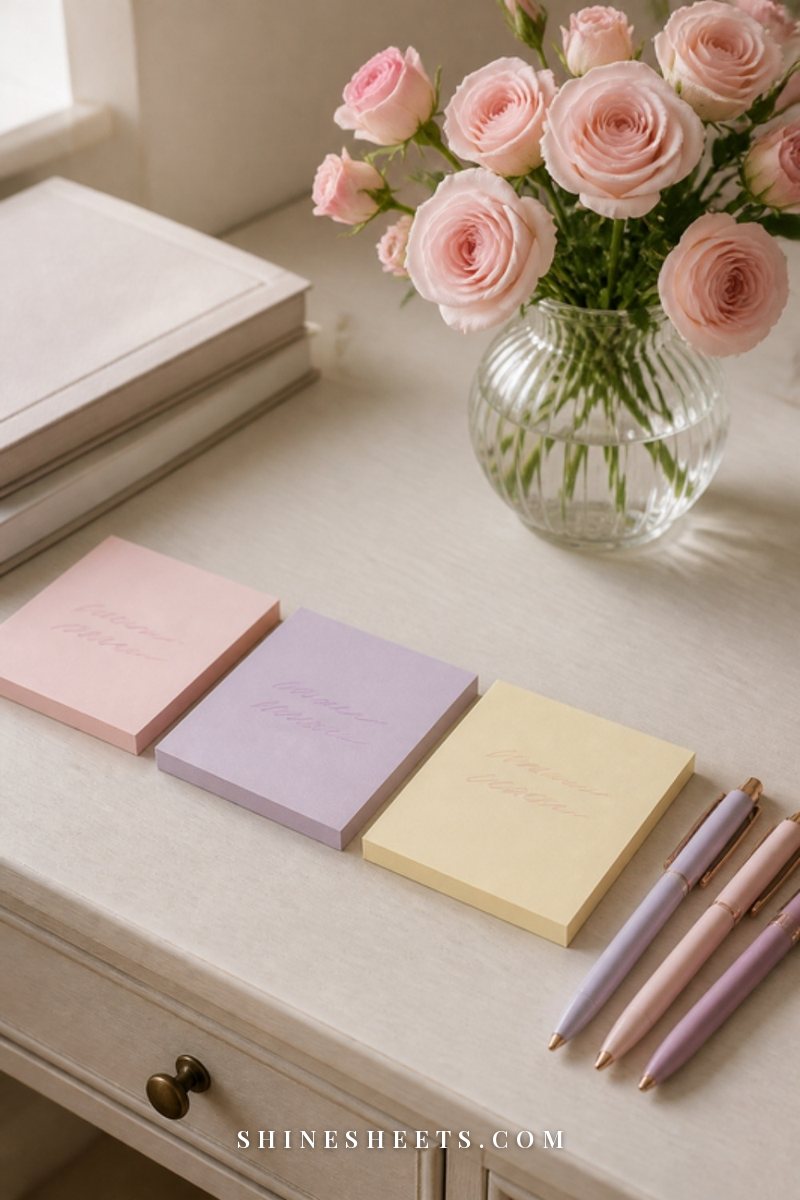
A tip that makes this much easier: write each belief you notice on its own pastel sticky note and stick them inside a cupboard door or the back of your notebook for a week. Seeing them all together, you'll notice patterns – often three or four beliefs are really versions of one root story.
It also helps to know the common thinking traps (all-or-nothing thinking, mind reading, fortune telling). Limiting beliefs love to travel with them.
How To Change Limiting Beliefs in 5 Steps

You can't argue a belief away in one evening. What works is a slow, kind process: look at it clearly, test it, and give your brain new experiences to learn from. Here are the five steps I'd follow, one belief at a time. Give each belief one or two weeks before moving on to the next.
Step 1: Name the Belief
Write it down in its exact, everyday words – not the polished version. "I'm not smart enough for this" is more useful than "I sometimes experience self-doubt." Then add one line: "When did I first start believing this?" You don't need a perfect answer. Even "school, maybe around math class" helps you see it as something learned, not something you were born with.
Step 2: Question the Evidence
Draw a line down the middle of a page. On the left, list the evidence that the belief is true. On the right, list the evidence that it isn't – or that it's only sometimes true. Be specific: dates, situations, people's actual words. Aim for at least three items on the right side, even small ones.
Questions that help:
- "Is this true 100% of the time?"
- "Would I say this about a friend in the same situation?"
- "What's one exception I've been ignoring?"
Step 3: Find the Cost
This is the step most people skip, and it's the one that creates real motivation. Write down what this belief has cost you so far, and what it will cost you over the next five years if nothing changes. Opportunities you didn't take, money you didn't ask for, friendships you kept at arm's length, rest you didn't allow. Seeing the price on paper makes the old story feel much less comfortable.
Step 4: Write a Believable New Belief
Here's the secret: the new belief has to feel at least a little true, or your mind will reject it. Jumping from "I'm terrible with money" to "I'm a financial genius" won't stick. Instead, write a bridge belief – a middle step that's honest and hopeful.
Formula: "I'm learning to… / It's possible that… / I've already shown that I can…"
For example: "I'm learning to understand my money, one small step at a time." Write it on a card and keep it where you'll see it daily, like your bathroom shelf or the first page of an undated weekly planner.
Step 5: Test It With a Tiny Action
Beliefs change fastest through experience. Choose one small action the new belief would take – something you can do in 15 minutes or less this week. If the bridge belief is "I'm learning to speak up," the action could be sharing one opinion in a group chat. If it's "I'm allowed to rest," the action could be a 20-minute bath with no phone.
Afterwards, write down what actually happened (not what you feared would happen). This is new evidence, and your brain needs a lot of it. Repeat with a slightly bigger action next week.
The Belief Reset Table: Old Belief, Evidence Check, Bridge Belief

This is the heart of the guide. Each row takes a common limiting belief through an evidence check and turns it into a bridge belief, plus one tiny action to test it. Screenshot it, or copy the rows that feel personal into your journal and fill in your own evidence.
| Old belief | Evidence check (ask yourself) | Bridge belief | Tiny test action |
|---|---|---|---|
| "I'm not good enough." | Good enough for what, exactly? Who decided the standard? | "I'm allowed to be a work in progress and still be worthy." | List three things you did well this week. |
| "I'm bad with money." | Have I ever paid a bill on time or saved for something? | "I'm learning to understand my money." | Check one account balance without judging it. |
| "I'm too much for people." | Who has stayed close even after seeing the "too much" parts? | "The right people can handle the real me." | Share one honest feeling with a safe friend. |
| "It's too late to change direction." | Do I know anyone who started something new later than now? | "Starting later still counts as starting." | Spend 15 minutes researching one course or path. |
| "I'm not creative." | Have I ever solved a problem in an unusual way? | "Creativity is a practice, and I can practice." | Make one small thing badly, on purpose. |
| "If I ask for what I need, they'll leave." | When I've asked before, what actually happened? | "Healthy people can hear my needs." | Ask for one small, specific thing this week. |
| "I have to earn rest." | Would I tell a tired friend she hasn't earned a nap? | "Rest is part of doing well, not a reward for it." | Take a 20-minute break before you feel finished. |
| "Anyone could have done what I did." | If it were that easy, why didn't everyone do it? | "My effort and skills played a real part." | Say "thank you" to praise without explaining it away. |
Notice that none of the bridge beliefs are huge. That's on purpose. Small, believable shifts repeated often will carry you further than big affirmations you secretly roll your eyes at.
Affirmations That Feel Believable: Bridge Statements

Classic affirmations like "I am abundant and limitless" can feel lovely for some people and completely hollow for others. If your inner voice answers "no, you're not" every time, the affirmation is actually reinforcing the old belief. Bridge statements work better because they meet you where you are.
Here are 10 bridge statements to borrow or adapt:
- "I'm open to the idea that this could get easier."
- "I've done hard things before, and I can do one small hard thing today."
- "I don't have to believe it fully yet to take a step."
- "I'm learning that my needs matter too."
- "My past doesn't get to make every decision for me."
- "It's possible that people like me more than I assume."
- "I can feel scared and still be capable."
- "Mistakes are information, not a verdict."
- "I'm allowed to want more and still be grateful."
- "Every small action is a vote for the person I'm becoming."
Pick one, not ten. Say it out loud in the morning and write it once in the evening. I like doing this with a candle in a glass jar lit and a cup of evening tea – it turns a slightly awkward exercise into a small ritual I actually look forward to. When a statement starts to feel true (usually after a few weeks), you can move to a slightly bolder version.
How To Keep Progress: The Evidence Journal

Old beliefs have years of "evidence" behind them. New beliefs need their own collection, or your mind will drift back to the familiar story the moment you have a hard day. That's what an evidence journal is for.
How it works:
- One page per belief. Write the bridge belief at the top.
- Add one piece of evidence per day, even tiny. "Asked for help at work and nobody thought less of me." "Checked my budget and it was okay."
- Use different colors for different beliefs – a soft pastel gel pen set makes the pages easy to scan later and, let's be honest, nicer to open.
- Review on Sundays. Read the whole page once a week. Most people are surprised by how much proof they collect in a month.
- Keep a "relapse" line. When the old belief wins for a day, write one line about what triggered it. No judgment – it just shows you where you need more support.
If you'd like to read further, a well-reviewed book on mindset can add new language and examples to what you're practicing. Just remember that reading about change and doing the tiny actions are two different things – the actions are where the belief actually shifts.
Progress won't be a straight line. Some weeks the old voice will be loud again, especially when you're tired, stressed or around people who knew the "old" you. That's normal. It doesn't erase the evidence you've collected; it just means it's time to reread it. And if insecurity in general is a constant companion, my guide on how to stop feeling insecure pairs well with this one.
When Limiting Beliefs Are Tied to Something Deeper
Some beliefs are light and loosen quickly once you look at them. Others are tied to painful experiences – a difficult childhood, a relationship that hurt you, loss or trauma. For those, journaling and tiny actions can still help, but they may not be enough on their own, and that's not a failure on your part.
Gentle signs it may be time for extra support:
- Looking at the belief brings up strong fear, shame or panic.
- The belief is connected to memories you find hard to think about.
- It affects your sleep, relationships or daily functioning.
- You've worked on it for months and it still feels completely unmovable.
A therapist (especially one trained in approaches like CBT or trauma-informed care) can help you work through deeper beliefs safely, at a pace that feels okay. Asking for that help is one of the clearest signs that "I'm worth investing in" is already starting to take root.
Final Thoughts
Limiting beliefs are just old stories that once tried to protect you. You don't need to fight them or feel embarrassed by them. Name them, question them kindly, count what they've cost you, and give yourself a believable new sentence plus one small action to prove it.
Start with one belief this week. Collect a little evidence every day. Over time, the new story stops feeling like a stretch and starts feeling like you – calmer, braver and a lot more free to say yes to the life you actually want.