A while ago I sent a message to a friend, watched it switch to "read," and then… nothing. For the rest of the evening I checked my phone every few minutes. Was she annoyed? Had I said something wrong? By bedtime I had written an entire imaginary conversation in my head. The next morning she replied with a cheerful "Sorry, fell asleep on the sofa!" All that worry, for nothing.
I'm prone to anxiety (mostly well managed these days, but it still sneaks in), so for a long time I thought being "unbothered" was a personality type I simply didn't have. Some women seemed to glide through gossip, moody coworkers and awkward silences without a ripple. I took everything home with me.
What I've learned since is that being unbothered isn't about being cold, aloof or pretending you don't care. It's about choosing where your energy goes. You still feel things – you just stop letting every small thing decide how your whole day feels.
This guide is all about how to be unbothered in a calm, kind way. You'll find what it really means (and what it doesn't), my eight "peace rules" to keep close, a "bothered → unbothered" reframe table for everyday situations and 15 gentle ways to protect your peace. Let's start with what we're actually aiming for.

What Being Unbothered Really Means
There's a version of "unbothered" online that looks a lot like not caring about anyone. That's not what we're going for. Here's the difference:
- Unbothered is not cold. You can still be warm, kind and caring. You just don't absorb every mood around you.
- Unbothered is not suppressing. You notice the feeling, name it and let it pass, instead of pushing it down or acting on it right away.
- Unbothered is not "never upset." Big things deserve real feelings. This is about the small things that take up far more space than they should.
- Unbothered is a choice you keep making. It's a habit, not a trait. Some days will be easier than others.
Think of it as having a calm center that other people's moods, opinions and timelines can't easily reach. If that center feels far away right now, my guide to the habits of calm, grounded women is a lovely companion to this one.
Why Small Things Bother Us So Much
Before the practical part, it helps to understand why a two-second moment can take over a whole evening. It isn't because you're dramatic or "too sensitive." There are a few very human reasons:
- Your brain is wired to scan for threats. Being left out or disliked once mattered a lot for survival, so your mind still treats a cold tone or an unanswered message as something urgent to solve.
- Tiredness lowers your threshold. When you're running on little sleep, skipped meals or a packed week, everything feels louder. The same remark that rolls off you on a rested Saturday can sting on a stressed Thursday.
- Old stories get triggered. If you've felt left out or criticized a lot in the past, new moments can echo old ones. You're reacting to the history, not only to today.
- Uncertainty is uncomfortable. Not knowing why someone is quiet or upset can feel worse than knowing, so your mind rushes to fill in an answer – usually the scariest one.
Knowing this doesn't make the feeling disappear, but it changes how you treat yourself while it's happening. Instead of "Why am I like this?" you can say, "Ah, my brain is trying to protect me again. Thank you, but I've got this." That small shift in tone is where calm starts.
It's also worth noticing your personal triggers. For some of us it's silence, for others it's criticism, unfairness or feeling ignored in a group. Spend a few minutes writing down the three situations that bother you most often. Those are the ones to practice with first, and they're the ones the reframe table below is built around.
My 8 Peace Rules
These are the short rules I come back to whenever I feel myself getting pulled into something that doesn't deserve my energy. Screenshot them or write them on the first page of your journal – they work best when you can see them.
- Not every thought deserves a reply.
- Other people's moods are weather, not a verdict on me.
- If it won't matter in a week, it gets five minutes, not five hours.
- I can't control the story they tell, only the life I live.
- A pause is always an option.
- I don't need to win every conversation.
- Silence is not always rejection.
- My peace is worth more than being right.
You don't need to believe all of them yet. Repeat one in a tricky moment and see how it feels. Over time, they start to sound like your own voice.
Bothered → Unbothered: The Reframe Table
Most of our "bothered" moments follow the same pattern: something small happens, our mind fills in the worst explanation, and we react to the story instead of the facts. This table shows the shift for situations that come up all the time.
| Situation | Bothered thought | Unbothered reframe |
|---|---|---|
| Being left on read | "She's ignoring me. I must have annoyed her." | "She's probably busy. I'll check in tomorrow if I need an answer." |
| Hearing gossip about you | "Everyone thinks badly of me now." | "People who know me know me. I don't need to chase every rumor." |
| Someone's bad mood | "What did I do wrong?" | "Their mood is theirs. I can be kind without fixing it." |
| Not being invited | "They don't like me." | "Not every plan includes me, and that's okay. I'll make my own." |
| A short, blunt email | "They're angry with me." | "Some people write briefly. I'll answer the question, not the tone." |
| A small critical remark | "I'm not good enough." | "Is there something useful here? If yes, keep it. If not, let it go." |
| Someone cutting in line | "How rude, this ruins my day." | "That's two minutes of my life. I'm not giving it the whole afternoon." |
| A friend cancels plans | "I'm not a priority." | "Things come up. I now have a free evening for myself." |
The reframe isn't about lying to yourself. If something keeps happening – a friend who always cancels, a coworker who is always rude – that's real information and worth addressing. The reframe just keeps one moment from turning into a whole storm.
15 Ways To Be Unbothered and Protect Your Peace
Pick two or three to practice this week. You don't need all fifteen at once – calm builds slowly, one small choice at a time.
1. Pause Before You React
Almost every reaction you later regret happens in the first few seconds. So give yourself a gap. When something stings, take one slow breath in through your nose for four counts and out through your mouth for six. Then decide what to do.
That small gap is where unbothered lives. Most things look smaller after one breath, and even smaller after a night's sleep.
2. Name the Feeling, Then Set It Down
Feelings get louder when we ignore them. Try naming what's happening in a simple sentence: "I feel embarrassed," "I feel left out," "I feel irritated." Naming it often takes the edge off, because now it's something you're noticing, not something that's swallowing you.
Then picture setting it down next to you, like a bag. It's still there. You're just not carrying it everywhere.
3. Ask "Will This Matter in a Week?"
This is my favorite filter. If the answer is no, the situation gets five minutes of thought, maximum. If the answer is yes, it deserves real attention – but calm attention, not panic.
You'll be surprised how many things fall into the five-minute pile: a typo in an email, an awkward joke, someone's raised eyebrow.
4. Stop Filling In the Blanks
When information is missing, an anxious mind fills the gap with the worst version. A late reply becomes "she's upset with me." A closed door becomes "they're talking about me."
Try this instead: list three neutral explanations. "She's busy. Her phone is on silent. She read it and forgot." You don't have to know which one is true. You just have to remember that the scary version isn't the only option.
5. Let People Misunderstand You
This one took me years. Not everyone will see you clearly, and not every misunderstanding is yours to fix. If someone has decided something about you that isn't true, you can explain once, calmly. After that, let your actions speak.
The people who matter will see who you are over time. The rest are just passing through.
6. Don't Take Moods Personally
When someone is short with you, it's easy to assume you caused it. Most of the time, you didn't. They might be tired, hungry, worried or having a terrible day you know nothing about.
You can still be kind ("You seem stressed – anything I can do?") without making their mood your responsibility. And if they snap, you can say, "I'll give you some space," and quietly step back.
7. Keep Your Response Short
When you feel bothered, the urge is often to over-explain, defend yourself or send a long message. Short replies protect your peace much better. "Thanks for letting me know." "I see it differently, but I hear you." "Okay, noted."
A calm, short response ends the loop. A long one usually opens a new one.
8. Separate Feedback From Noise
Not all criticism is created equal. Some is genuinely helpful, some is someone else's bad day landing on you. Ask: who said it, do they know the full situation, and is there something specific I can act on?
Keep the useful parts and let the rest go. My guide on how to handle criticism without taking it personally walks through this in ten calm steps.
9. Mute, Unfollow and Curate Your Feed
A surprising amount of "bothered" comes from our phones: comparison, drama, accounts that make us feel behind. You're allowed to mute anyone, including people you know in real life. Nobody gets a notification.
Once a month, go through who you follow and ask: does this make me feel calmer, inspired or informed? If not, mute it. Your feed should feel like a quiet room, not a crowded party. In the evenings, it helps to give your phone a home away from the sofa – a small cream ceramic tray by the door works nicely – so you aren't checking for replies all night.
10. Create a Calm-Down Ritual
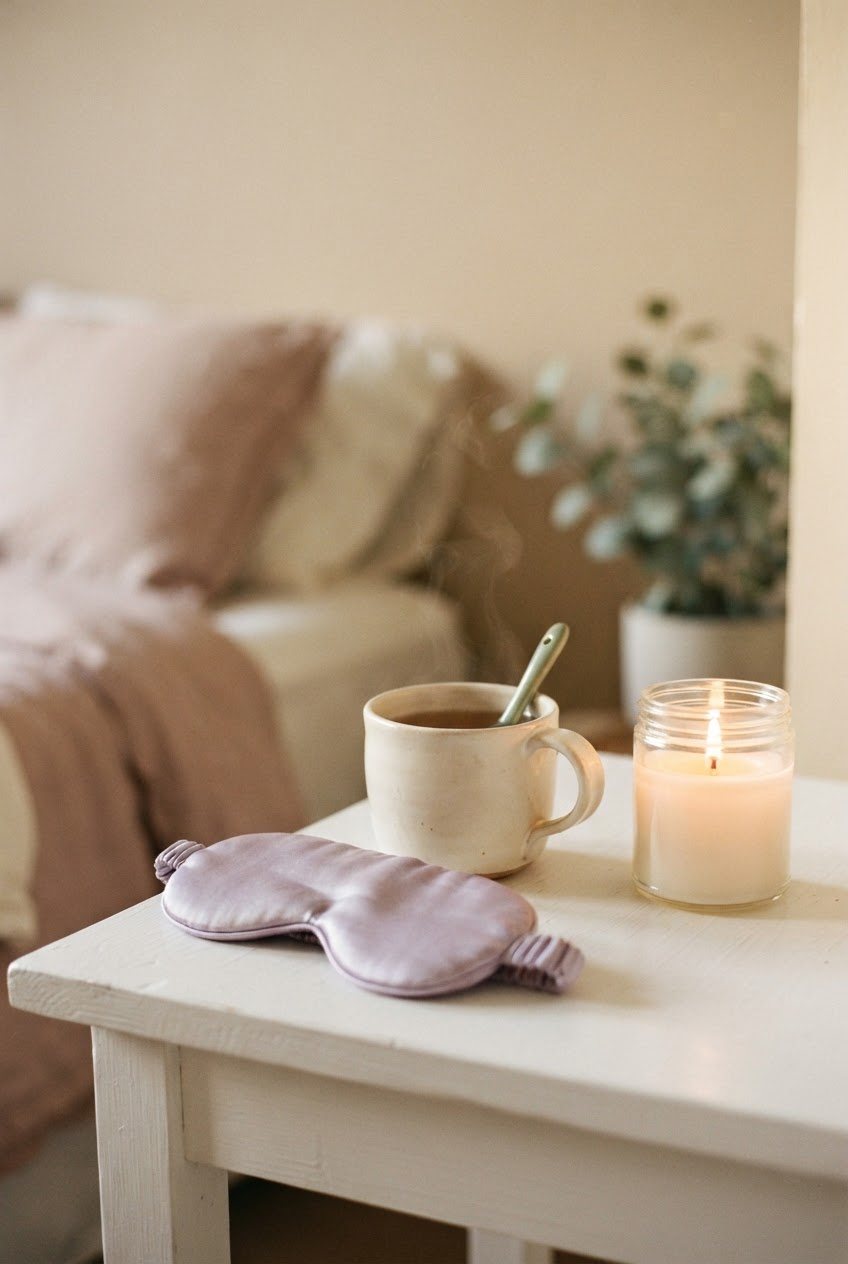
When something has rattled you, a small ritual tells your body that the moment is over. Mine is simple: a cup of evening tea, a candle and ten minutes with my journal. Making a pot of chamomile herbal tea and lighting a cream glass jar candle is my signal that the day's noise stays outside.
Your ritual might be a short walk, a warm shower or a favorite song. The point is doing the same thing each time, so your body learns the cue.
11. Write It Out, Then Close the Notebook
Journaling turns a spinning thought into something you can actually look at. Write down what happened, how you felt and what you'd like to do about it (often: nothing). Then close the notebook – literally – and move on with your evening.
A simple sage linen journal kept on your nightstand makes this easy. If you'd like prompts, try: "What am I making this mean?" and "What would the calmest version of me do next?"
12. Protect Your Sleep
Everything bothers us more when we're tired. A short night turns a mildly annoying remark into a crisis. Try to keep a steady bedtime, put your phone across the room and keep your bedroom dark and quiet. A soft lavender silk eye mask is a pick for light sleepers who wake at the first hint of morning.
If your mind still races at night, keep a notepad by the bed and jot down whatever is looping so you can deal with it tomorrow.
13. Stop Explaining Yourself to Everyone
You don't owe everyone a full report on your choices – why you left early, why you're not drinking, why you said no. "That doesn't work for me" is a complete answer.
The less you explain, the less you invite debate. And the less you invite debate, the more unbothered you naturally become.
14. Calm Your Body First
Sometimes being bothered is mostly physical: a racing heart, tight shoulders, a hot face. Logic doesn't land well when your body is on alert. Try a quick grounding exercise first: press your feet into the floor, name five things you can see and drop your shoulders away from your ears. Wrapping a soft, slightly heavy sage knit throw around your shoulders can help your body feel held while it settles.
My guide on how to calm anxiety fast has twelve grounding techniques that work almost anywhere, including at your desk.
15. Be Kind to Yourself When You Do Get Bothered
You will still get bothered sometimes. We all do. Being unbothered isn't a test you pass or fail – it's a direction you keep walking in. When you catch yourself spiraling, try talking to yourself the way you'd talk to a friend: "That stung. It makes sense you're upset. You're okay."
A little self-compassion brings you back to calm far faster than criticizing yourself for not being calm.
A Simple Daily Practice To Stay Unbothered
If you'd like something structured, here's a short daily routine that takes about ten minutes in total:
- Morning (2 minutes): Read your peace rules and choose one for the day.
- Midday (1 minute): Notice one moment that bothered you. Ask, "Will this matter in a week?"
- Evening (5 minutes): Write down anything still on your mind, then close the notebook.
- Before bed (2 minutes): Three slow breaths and one kind sentence to yourself.
After a few weeks, you'll notice the gap between "something happened" and "I'm upset" getting a little wider each time. That's progress.
When It's More Than Just Small Stuff
Being unbothered is for everyday irritations, not for situations that are genuinely harmful. If someone is repeatedly disrespecting you, crossing clear boundaries or making you feel unsafe, that isn't something to calmly let go of. It's something to address, with support if you need it. My guide on how to set boundaries without feeling guilty has scripts for those conversations.
And if you find that worry, low mood or anxiety are bothering you most of the time, please be gentle with yourself and reach out to a doctor or a mental health professional. Feeling better is not something you have to figure out alone.
Final Thoughts
Learning how to be unbothered isn't about building a wall. It's about building a quiet room inside yourself – a place where other people's moods, silences and opinions can knock, but don't get to move in.
Start small: one pause, one reframe, one short reply. Keep your peace rules close and be patient with yourself on the days it's harder. Your calm is worth protecting, and every small choice you make for it adds up to a softer, steadier life.