A home that smells lovely rarely has one big, loud scent. It has a quiet base of clean air, one gentle fragrance idea that runs from room to room, and small changes in strength depending on what each space is for. That is the whole secret, and it is much easier than buying a candle for every corner.
When every room has its own strong fragrance, the scents collide in the hallway and the whole place starts to feel heavy. When they are layered on purpose, walking through your home feels like turning the pages of the same soft story: a little brighter at the door, warmer on the sofa, softer by the bed.
This guide walks you through home fragrance layering step by step: how to build a clean base first, the five scent families in plain words, how to pick one family for your whole home, the best format for each room, a room-by-room plan for six spaces, a simple table you can screenshot, and how to keep everything safe and never overpowering. If you want one easy starting point, a cream soy candle in a glass jar in your main living space is usually the best first layer.
It took me a while to understand that less is the luxurious option here. A home should smell like it is cared for, not like a store at the mall.
What Home Fragrance Layering Actually Means
Layering is borrowed from perfume. With your skin, you might pair a body lotion with a matching mist so the scent lasts longer and feels richer (if that idea is new, my guide to perfume layering for beginners explains it nicely). At home, the idea is the same, just spread across space and time.
In practice, home fragrance layering has three parts:
- The base: clean, aired rooms and fresh textiles. This is the layer nobody notices, and the one everything else depends on.
- The background: one slow, steady source per room, such as a reed diffuser or a lightly scented candle you burn for an hour.
- The accent: a quick, short-lived touch, like a spritz of linen spray on pillows or a room spray before guests arrive.
The magic is in the connection. If your living room leans warm vanilla and your bedroom leans soft lavender, those two can feel like strangers. If both share a creamy, gentle base, they feel like sisters. You are not trying to make every room smell identical. You are trying to make them sound like the same voice speaking softly or a little louder.
Start With a Clean, Aired Base
No scent can cover a stale room. It just sits on top of it, and the mix is almost always worse than either smell alone. Before you add a single candle, give your home a fresh base. (If you are fighting real odors right now, start with my guide on keeping your apartment smelling fresh and come back here once the air feels neutral.)
Here is a simple base routine:
- Air every room for 10 to 15 minutes a day. Open windows on opposite sides if you can, so the air actually moves. Even in colder months, a short burst of fresh air helps more than a long, cracked window.
- Wash the soft things. Throws, cushion covers and curtains hold old smells. Washing cushion covers every few weeks and throws monthly makes a bigger difference than any spray.
- Empty bins often. Kitchen and bathroom bins are the most common hidden source of a "something is off" smell.
- Clean the drains and the fridge seal. A quick monthly wipe and a kettle of hot water down the sink keeps these quiet.
- Keep humidity in check. Damp air smells musty and makes every fragrance feel heavier. Run the bathroom fan during and after showers, and dry laundry with a window open or near good airflow.
Once your home smells like nothing in particular, you have a blank page. That is exactly where you want to start.
The 5 Scent Families, Explained Simply
Fragrance descriptions can sound like poetry written in another language. You really only need five families to plan a whole home.
Fresh
Clean cotton, citrus peel, sea air, crisp white tea. Fresh scents feel light and awake. They are lovely for entryways, kitchens and bathrooms, and they rarely feel too much, which makes them the safest choice if you are scent-shy.
Floral
Rose, peony, jasmine, gardenia, lily of the valley. Florals feel romantic and soft when they are gentle and quite heady when they are strong. A whisper of floral in a bedroom is beautiful; a strong floral in a small kitchen can feel like a lot.
Woody
Cedar, sandalwood, vetiver, soft musk. Woody scents feel grounded and calm. They work well in living rooms and home offices and make a room feel finished, a bit like a good cashmere throw.
Warm
Vanilla, amber, tonka, a hint of spice. Warm scents feel like a hug. They are perfect in the evening in living spaces and bedrooms, but they can feel heavy in the daytime or in small, warm rooms, so keep them low.
Green
Fig leaf, tomato leaf, basil, eucalyptus, cut grass. Green scents feel fresh but softer and more natural than citrus. They are wonderful in kitchens, bathrooms and any room with plants.
A tiny tip: families that sit next to each other blend easily. Fresh and green are friends. Floral and warm are friends. Woody gets along with almost everyone. Strong fresh citrus next to strong warm vanilla is the pairing most likely to clash.
How To Choose One Scent Family for Your Whole Home
Choosing one main family is what keeps your home from smelling like a busy perfume counter. Here is how to find yours in about ten minutes.
- Look at what you already love. Check your perfume, body lotion and favorite candles. Most of us lean towards one family without realizing it. If your shelf is full of vanilla and amber, you are probably a warm person.
- Match your decor. Light, airy, white rooms suit fresh and green. Rich textures, wood and warm lighting suit woody and warm. Blush and soft pink spaces love a gentle floral.
- Think about how you want to feel at home. Calm and grounded points to woody. Bright and clean points to fresh. Soft and romantic points to floral.
- Choose a second, neighboring family for contrast. For example: woody as your main family, with fresh in the kitchen and bathroom. Or warm as your main family, with floral in the bedroom.
The formula I like to keep in mind is simple: one main family + one neighbor + one unscented zone. That is enough variety to keep it interesting and enough consistency to make it feel intentional.
The Formats: Candles, Reed Diffusers, Sprays and More
Each format releases scent differently, and choosing the right one for each room is half of layering well.
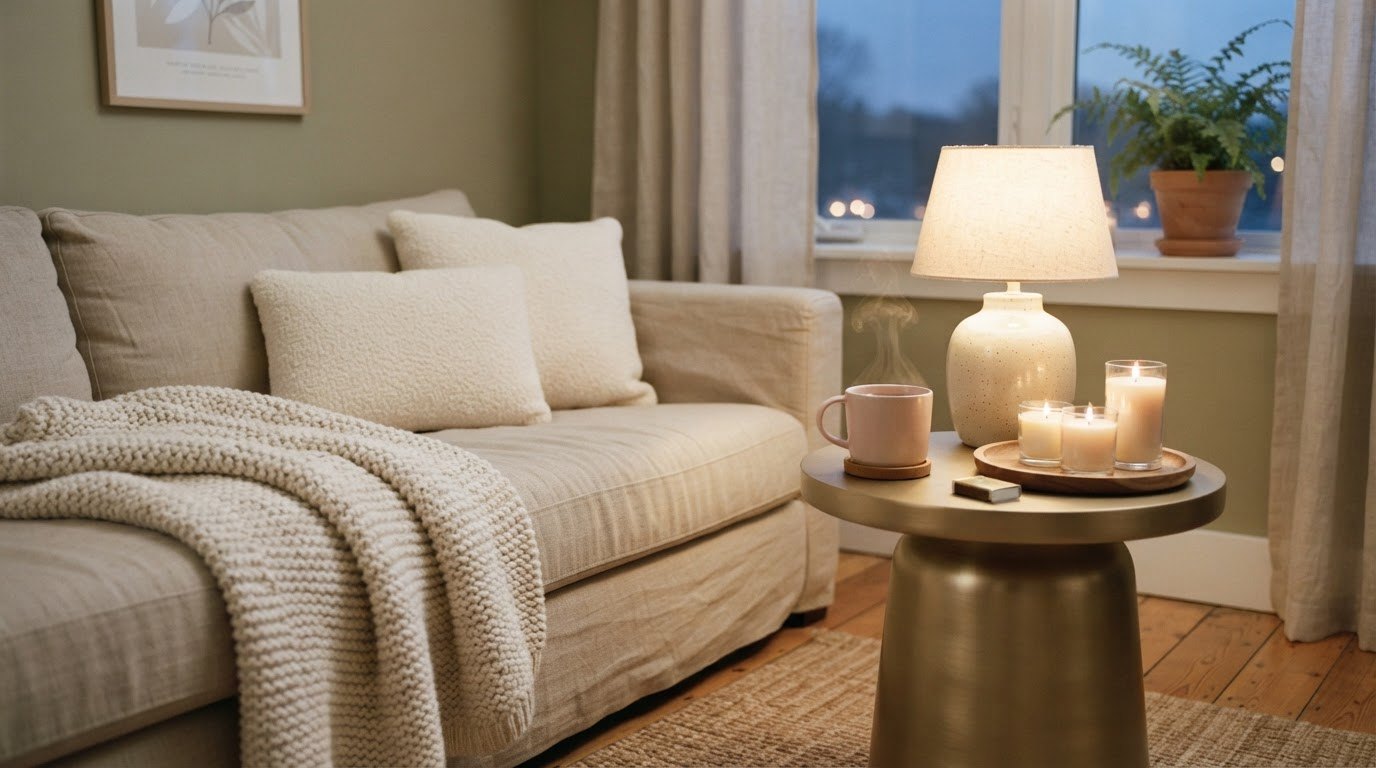
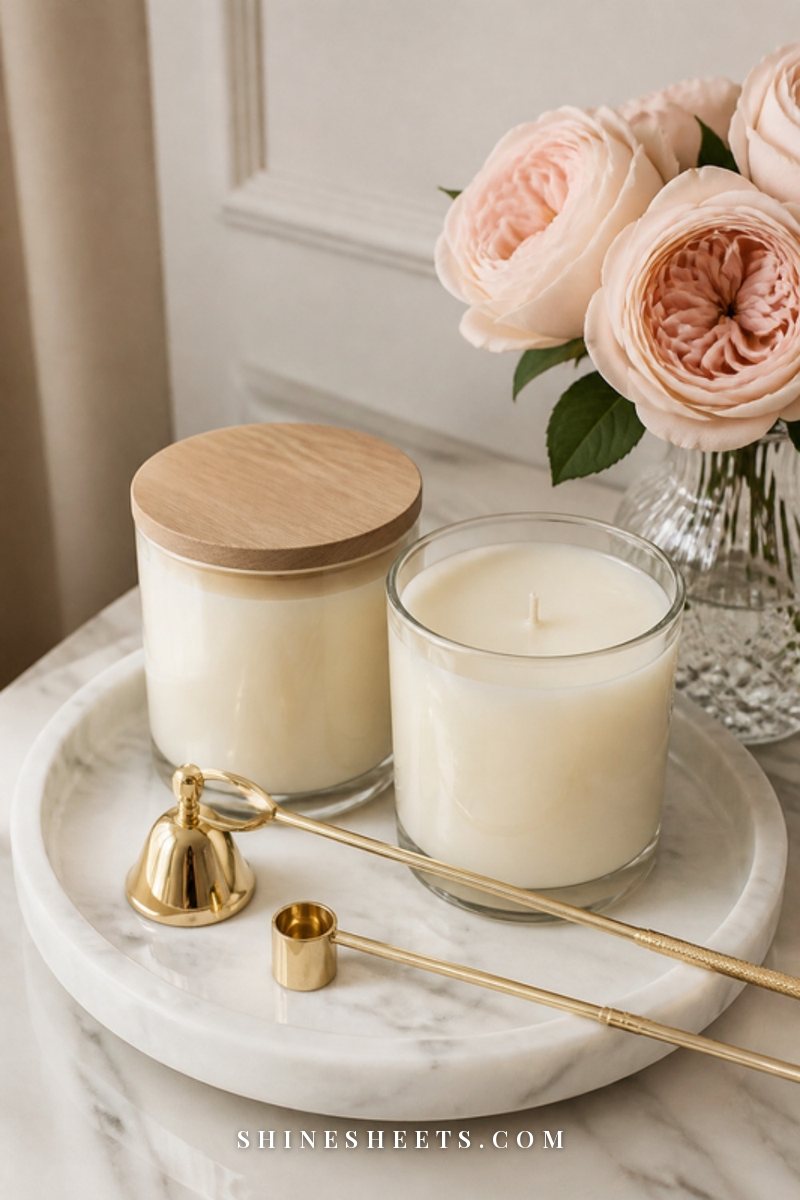
- Candles: warm, atmospheric and strongest while burning. Best for living rooms and evenings. Burn for one to three hours at a time, and on the first burn let the melt pool reach the edges so the candle burns evenly (my guide to stopping candle tunneling has the details). A gold-accent candle tray keeps a group of candles neat and catches any drips.
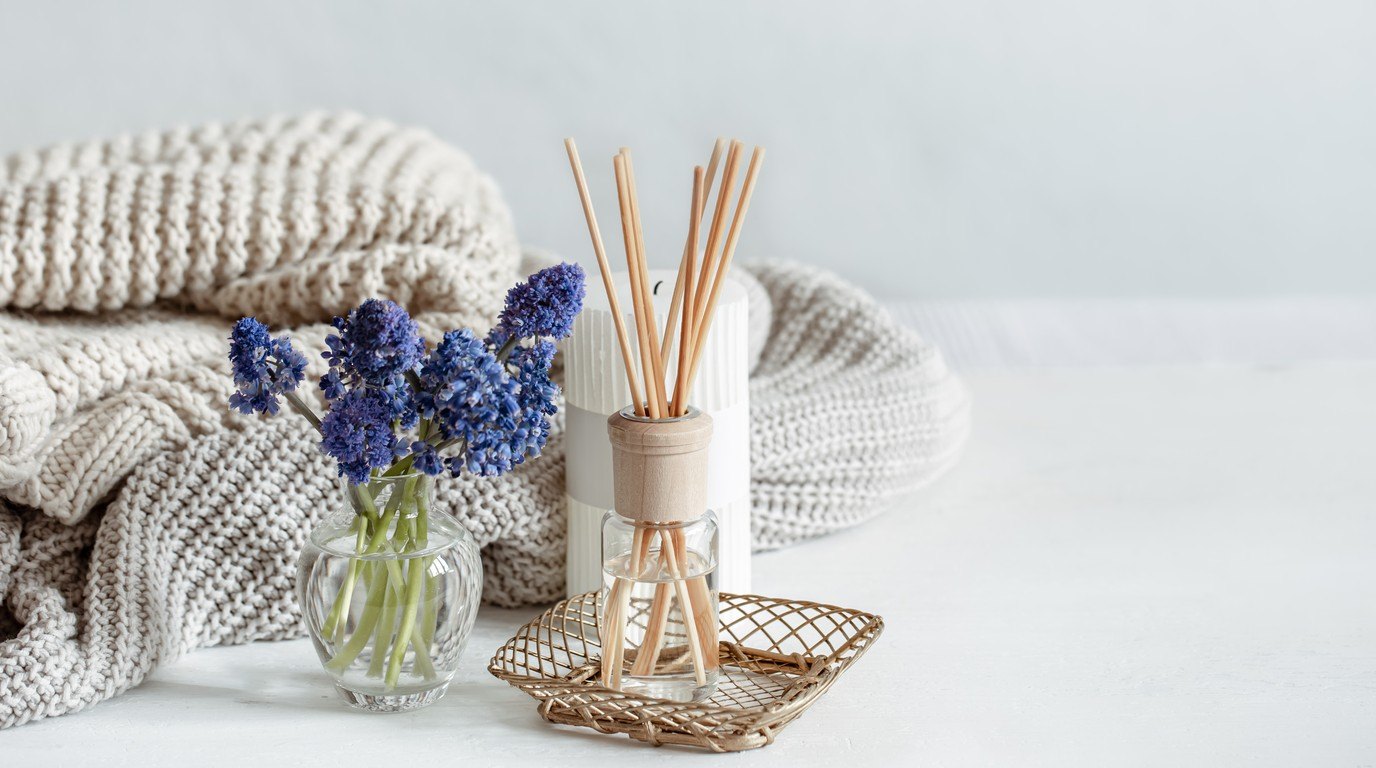
- Reed diffusers: slow, steady and hands-off. Best for entryways, bathrooms and hallways. Start with half the reeds and add more only if you cannot smell it after a day. A white reed diffuser blends into almost any room.
- Room sprays: instant and short-lived. Best for a quick refresh before guests or after cooking. Two or three sprays into the middle of the room, never directly onto furniture.
- Linen sprays: soft and personal. Best for bedding, curtains and throws. Spray from about 30 centimeters (a foot) away and let the fabric dry before you lie down. A blush linen spray in a soft floral or clean cotton scent is a lovely bedroom accent.
- Ultrasonic diffusers: adjustable and easy to switch off. Best for home offices and bedrooms in short sessions. A sage ceramic ultrasonic diffuser looks pretty on a desk or nightstand. Run it for 30 to 60 minutes rather than all day, and clean it regularly (here is how to clean an essential oil diffuser so it stays fresh).
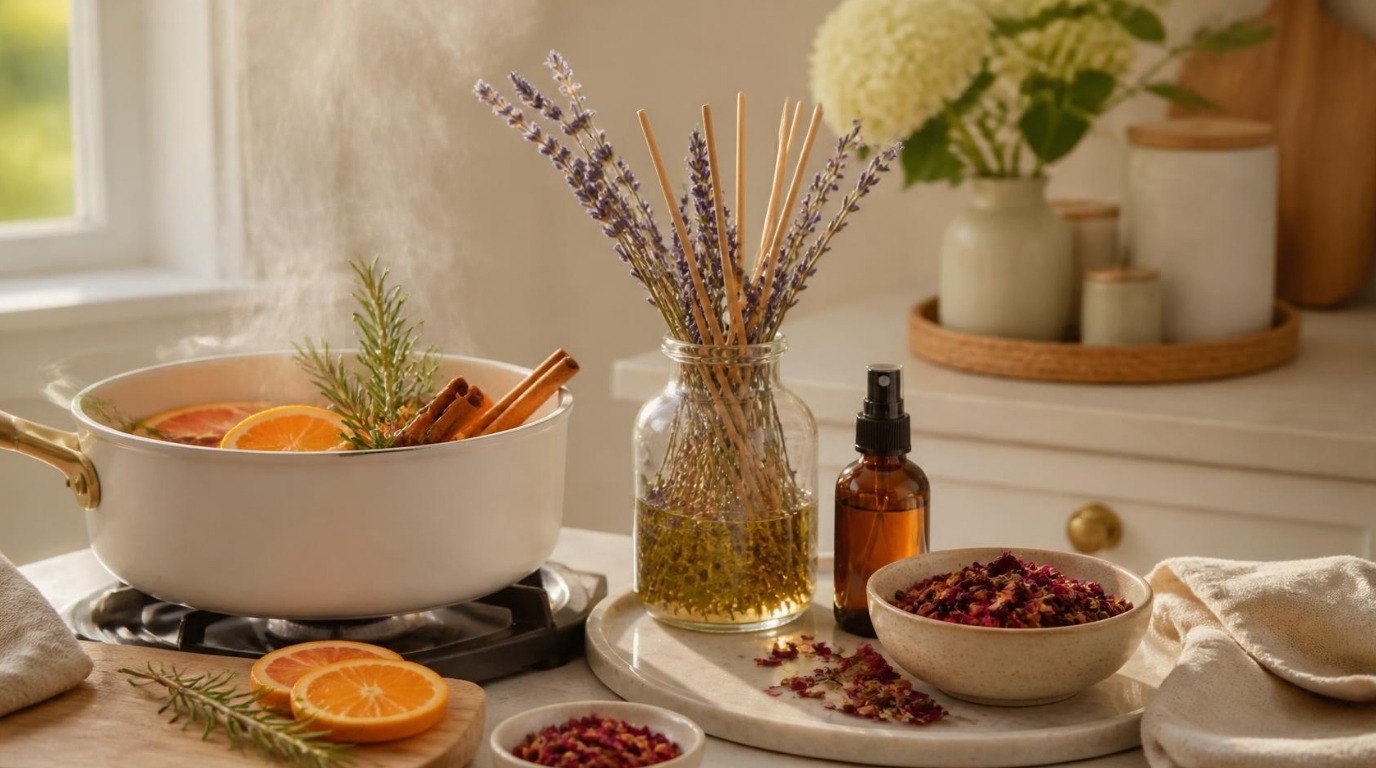
- Natural scents: fresh flowers, a bowl of citrus, a eucalyptus bunch in the shower, a sachet of dried lavender in a drawer. These are the gentlest layer of all and a beautiful way to add scent without any flame or oil.
Room by Room: How To Scent 6 Rooms
Here is how I would approach each space, from the moment you open the door to the last few minutes before sleep. Keep your main family running through all of them and adjust the strength and format.
1. Entryway
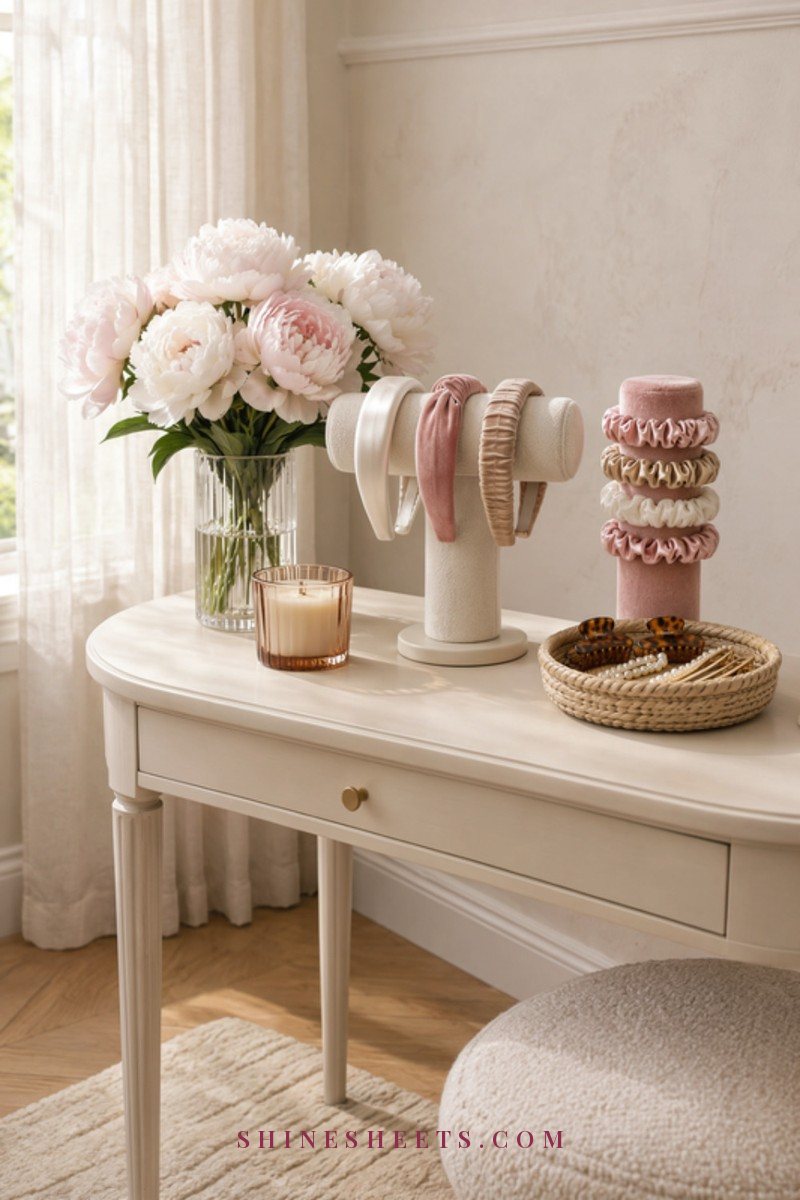
The entryway is your first impression, both for guests and for you after a long day. It should be light, clean and welcoming, not heavy.
- Best format: a reed diffuser with three to five reeds, placed on a console or shelf away from the door draft.
- Best families: fresh or a light version of your main family.
- Strength: low to medium. You want a hint as the door opens, not a wall of scent.
- Extra tip: shoes and coats are the main smell source here. Air the closet once a week and keep a cedar block or a lavender sachet near the shoes.
2. Living Room
This is where your main family gets to shine. The living room is the heart of the home and the best place for a candle.
- Best format: one candle in the evening, or a reed diffuser in the daytime. Not both at once in a small room.
- Best families: woody or warm, or your main family at its fullest.
- Strength: medium. Light the candle for an hour or two, then blow it out and enjoy the scent that lingers.
- Extra tip: group candles at different heights on a tray for a styled look, but only light one of them if the room is small. My guide on how to style candles at home has lots of arrangement ideas.
3. Kitchen
The kitchen already has its own scents (coffee, toast, the occasional garlic), so it needs the lightest touch of all.
- Best format: natural scents first: a bowl of lemons, a pot of basil or rosemary on the windowsill. A room spray after cooking if needed.
- Best families: fresh and green.
- Strength: very low. Food and strong fragrance fight each other.
- Extra tip: never place candles near the stove, kitchen towels or curtains. A tidy, wiped counter and an emptied bin do more here than any product.
4. Bathroom
The bathroom is where a gentle background scent really earns its place, because it is small, enclosed and used many times a day.
- Best format: a reed diffuser (fewer reeds than you think, since the room is small) and a fresh eucalyptus bunch hung from the shower head.
- Best families: fresh, green or a soft floral.
- Strength: low to medium.
- Extra tip: steam carries scent, so a bathroom often smells stronger after a shower. Run the fan, air the towels and wash bath mats every week or two to keep the base clean.
5. Bedroom
Your bedroom should smell soft and restful, never intense. This is where fragrance becomes more about feeling than about impressing anyone.
- Best format: linen spray on pillows and the top of the duvet, plus fresh bedding. An ultrasonic diffuser for 30 minutes before bed if you like it.
- Best families: soft floral, lavender, gentle warm notes like vanilla or a light woody musk.
- Strength: low. You should notice it when you get into bed, then forget it.
- Extra tip: never fall asleep with a candle burning. If you love a candle in the evening, light it while you read or journal and blow it out before you get sleepy.
6. Home Office
Even if your "office" is a corner of the dining table, a light, clear scent can help that space feel separate from the rest of your day.
- Best format: an ultrasonic diffuser in short sessions or a small reed diffuser.
- Best families: fresh, green or a light woody scent. Rosemary, citrus and cedar notes feel clean and clear.
- Strength: low. Strong scents can be distracting and may give some people a headache over hours.
- Extra tip: switch the scent off when you finish working. That small ritual helps the space shift back to "home".
Your Home Fragrance Layering Table
Here is the whole plan in one place. Screenshot it, swap in your own main family, and you have a scent map for your home.
| Room | Scent family | Best format | How strong |
|---|---|---|---|
| Entryway | Fresh or light main family | Reed diffuser (3–5 reeds) | Low to medium |
| Living room | Woody or warm (main family) | Candle in the evening, reeds by day | Medium |
| Kitchen | Fresh or green | Natural scents, room spray after cooking | Very low |
| Bathroom | Fresh, green or soft floral | Small reed diffuser, eucalyptus bunch | Low to medium |
| Bedroom | Soft floral, lavender, light warm | Linen spray, short diffuser session | Low |
| Home office | Fresh, green or light woody | Ultrasonic diffuser, 30–60 minutes | Low |
Notice that only one room is "medium" and none are "strong". That is on purpose. When the living room is the fullest and everything else steps back, the whole home feels balanced.
How Much Is Too Much?
Here is my small honest admission: for years I assumed the scent was "gone" after ten minutes and add more. It wasn't gone. My nose had just stopped noticing it. This is called nose blindness (or olfactory fatigue), and it is the main reason homes end up overscented.
A few simple rules keep things gentle:
- One main source per room. A candle and a reed diffuser and a plug-in in the same living room is three sources fighting for attention.
- Low diffusion first. Fewer reeds, shorter burns, shorter diffuser sessions. You can always add, but you cannot easily take away.
- Keep some unscented zones. A hallway, a dining area or a closet with no added fragrance gives your nose a reset and makes the scented rooms feel more special.
- Do the doorway test. Step outside or into another room for five minutes, then walk back in. Whatever you notice in the first few seconds is what guests smell.
- Ask a trusted person. If someone who doesn't live with you says "it smells nice in here", wonderful. If they say "wow, that's strong", turn it down.
- Rotate, don't stack. If you want variety, change the scent with the season or month rather than adding new ones on top.
If you ever feel a headache, a tight chest or itchy eyes, that is your cue to switch everything off and open a window. Fragrance should feel nice, never like something to push through.
Fragrance Safety at Home
A beautiful-smelling home is only beautiful if it is safe. A few gentle reminders:
- Never leave a candle unattended. Blow it out when you leave the room, before you sleep and before you get absorbed in a movie on the sofa.
- Keep flames away from curtains, bedding, books and shelves above. Leave at least 30 centimeters (a foot) of clear space around and above every candle, and keep them out of reach of pets and kids.
- Trim wicks to about 5 millimeters (1/4 inch) before every burn and stop using a candle when about 1 centimeter (1/2 inch) of wax is left.
- Ventilate. Any burning candle or running diffuser is best paired with a little fresh air, especially in small rooms.
- Be careful with essential oils around pets. Some oils can bother cats, dogs and birds in particular. If you have pets, keep diffuser sessions short, keep the door open so they can leave the room, and ask your vet before using oils regularly.
- Think of sensitive people. Some people with asthma, allergies, migraines or a sensitive nose find fragrance uncomfortable. When guests are coming, go lighter or rely on fresh air and flowers.
- Store sprays and oils safely. Keep them closed, upright and out of reach of children.
Final Thoughts
Home fragrance layering is really about care: a clean, aired base, one scent idea that ties your rooms together, and a soft hand with every candle and spray. Start with one room, live with it for a week, then add the next.
Your home doesn't need to smell like a luxury hotel. It just needs to smell like a place where someone lovingly looks after things, and that someone is you.