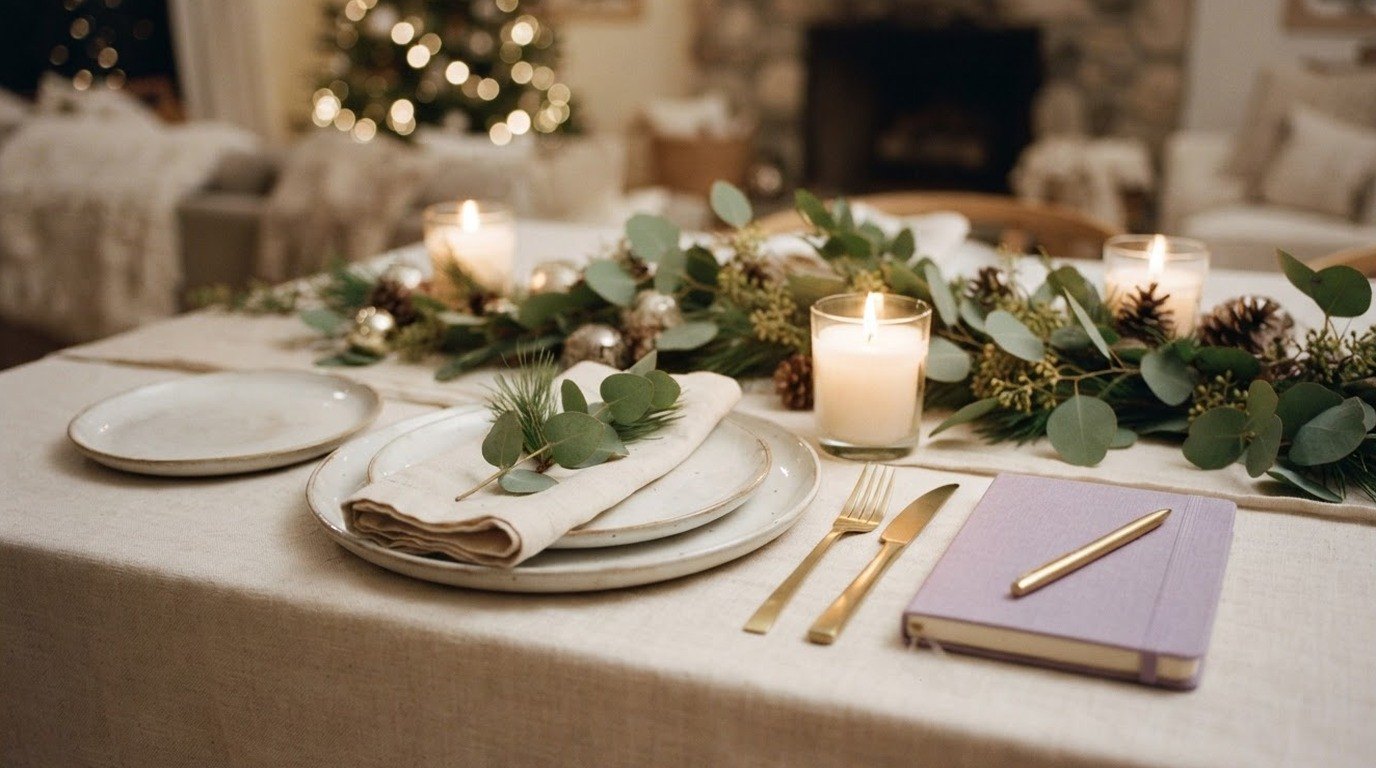
Grief doesn't take a holiday break. If anything, the season makes it louder. The music, the traditions, the photos everyone shares and the empty spot at the table all point straight at the person or the life you're missing. If you feel heavier right now while everyone around you seems to be celebrating, nothing is wrong with you. That contrast is one of the hardest parts of grieving in this season.
You don't have to make the holidays feel the way they used to, and you don't have to skip them entirely either. There is a lot of room in between, and you get to choose what fits this year.
This guide offers gentle ways to cope with grief during the holidays: why the season hits so hard, permission to do things differently, a simple "keep, change, skip" planning table, quiet ways to honor someone you love, how to get through gatherings, grief for different kinds of loss, being alone, caring for your body, supporting someone else and when to reach out for more help.
Take what helps and leave the rest. There's no right way to grieve, and there's certainly no deadline.
Why the Holidays Make Grief Feel Louder

Holidays are built on repetition. The same songs, the same dishes, the same people in the same places, year after year. That repetition is what makes them comforting, and it's also what makes loss so visible. When someone is missing, every tradition becomes a reminder of who used to be part of it.
There's also the pressure. The season comes with an expectation of joy, gratitude and togetherness, and grief rarely fits that script. You might feel like you're supposed to be happy for everyone else's sake, which adds a layer of exhaustion on top of the sadness.
And grief itself is unpredictable. You might feel almost fine at a busy party and then fall apart in the grocery store because of a song or a smell. That's not a setback. It's simply how grief moves: in waves, not in a straight line. Many people find the days before a holiday harder than the day itself, because the anticipation builds slowly.
You're Allowed To Do the Holidays Differently

This might be the most important permission in the whole guide: you don't have to do everything the way it has always been done.
You can skip the big gathering this year. You can go for an hour instead of the whole evening. You can keep one tradition and let the rest rest. You can travel somewhere new, stay in pajamas all day or change the menu completely. None of this means you're forgetting anyone or giving up on the holidays forever. It means you're being honest about what you can carry right now.
It also helps to know that you may feel two things at once. Laughing at a family story and then crying in the bathroom ten minutes later is normal. Enjoying a moment doesn't mean you've stopped missing someone. Grief and joy can share the same room.
If you tend to be hard on yourself when you're struggling, my guide to self-compassion has small, practical ways to talk to yourself the way you'd talk to a friend who's hurting.
Plan Ahead With Keep, Change, Skip

Uncertainty makes grief harder. When you don't know how a day will go, your body stays braced for it. A little planning gives you some control in a season that can feel like it's happening to you.
Sit down with a notebook (a guided grief journal can be a gentle place to start if a blank page feels like too much), and list the traditions and events coming up. Then sort each one into keep, change or skip. Here's an example of how that might look:
| Tradition or event | Keep, change or skip | What that looks like |
|---|---|---|
| Big family dinner | Change | Go for the meal only, leave before the evening gets long |
| Decorating the home | Change | A few favorite pieces and some candles instead of everything |
| Sending cards | Skip | A short message to close friends instead, or nothing at all this year |
| A special walk or outing you used to share | Keep | Go with someone who knew them, or alone with a playlist |
| Work or friends' parties | Change | Say yes to one, with your own transport and an exit plan |
| Gift shopping | Change | Online, early, or a family agreement for one small gift each |
| A new ritual to remember them | Keep (new) | Light a candle, share a story, or play their favorite song |
| The holiday morning | Change | Plan the first hour so it isn't empty: a walk, a call, a slow breakfast |
Share your plan with the people closest to you, kindly and simply: "This year I'm doing things a little differently. I'll be at dinner, but I'll head home early." You don't owe anyone a long explanation.
And remember that any plan is allowed to change on the day. If you planned to go and you can't, that's okay. If you planned to skip and suddenly want company, that's okay too.
Gentle Ways To Honor Someone You Miss

Many people find comfort in making space for the person they've lost, rather than trying to avoid the subject all season. These ideas are simple and can fit any belief or tradition (or none at all):
- Light a candle for them. A memorial candle in a glass jar on the table or windowsill is a quiet way to say "you're still part of this." Choose a simple, unscented or softly scented one, keep it on a heat-safe surface and never leave it burning unattended.
- Write them a letter. Tell them what's happened this year, what you miss, what you wish you'd said. You can keep it, burn it safely or tuck it into a keepsake box.
- Share stories out loud. Ask everyone at a gathering to share one memory. Many people are waiting for permission to say the name.
- Play their music. Their favorite song, album or holiday playlist, even if it makes you cry.
- Do something they loved. A walk they took often, a film they watched every year, a place they adored.
- Give in their name. A donation to a cause they cared about, or a small kindness to a stranger in their honor.
- Make a memory ornament or keepsake. A photo in a small frame, a piece of their clothing sewn into a cushion, or a keepsake that sits somewhere you'll see it.
- Collect memories from others. Hand out cream notecards and invite friends and family to write a memory or something they loved about the person. Reading them later can be a gift.
Choose just one if that's all you have energy for. Honoring someone doesn't need to be elaborate to be meaningful.
How To Handle Holiday Gatherings

Gatherings can be the hardest part: lots of people, lots of noise, and sometimes well-meaning remarks that land badly. A little preparation helps you walk in feeling steadier.
Make an Exit Plan
Before you go, decide how long you'd like to stay and how you'll leave. Drive yourself or arrange your own ride so you're never stuck. Agree with the host in advance: "I might slip out early, and if I do, please don't worry." Knowing the door is open often makes it easier to stay.
Bring a Support Person
Choose one person who knows what you're going through and ask them to keep an eye on you. Agree on a small signal, like touching your earring or saying "I need some air," that means "come find me" or "time to go." Just having someone on your side can lower your stress a lot.
Take Breaks Without Explaining
Step outside for fresh air, offer to help in the kitchen, or take five minutes in a quiet room. Breathe slowly, splash cool water on your wrists, and return when you're ready, or don't.
Keep a Few Simple Responses Ready
People often don't know what to say, so they say something awkward. Having a few short answers ready saves you from having to think on the spot:
- "Thank you for asking. It's a hard season, but I'm glad to be here."
- "I'd love to talk about them, actually. Do you remember when…"
- "I'm not up for talking about it tonight, but I appreciate you."
- "It's still very fresh. I'm taking it one day at a time."
Grief Comes in Many Forms

We often think of holiday grief as missing a person who has died. That's one kind, and it can be the deepest. But many losses make the season ache, and all of them deserve gentleness.
Losing a Person
Whether it's the first holiday or the tenth, losing someone you love changes the season. First holidays are often especially hard, but later years can surprise you too. Both are normal.
Losing a Pet
Pets are part of our daily rhythm, and their absence is felt in small moments: no one waiting at the door, no stocking to fill, no walk in the snow. Pet grief is real grief, even if some people around you don't understand it.
The End of a Relationship or Friendship
A breakup, a divorce or a friendship that faded can make holidays feel very different, especially when traditions were shared. You're grieving a person and a future you imagined. Take care of yourself the way you would after any loss.
Health Changes and Other Losses
A diagnosis, an illness in the family, a job loss, a move far from home, estrangement or infertility can all bring grief to the surface during the holidays. Sometimes we're grieving the season we hoped to have. That counts too.
If writing helps you untangle the feelings, these journal prompts for healing offer a gentle place to begin, one question at a time.
If You're Spending the Holidays Alone

Being alone during the holidays can feel like relief or like a weight, and sometimes both in the same afternoon. If you'll be on your own, a little structure makes the days feel less empty:
- Plan the hardest hours. For many people, that's the morning and the evening. Put something specific in those slots: a long walk, a phone call, a favorite film.
- Schedule one connection. A video call, a coffee with a neighbor, or volunteering for a few hours. One meaningful contact can change the tone of the whole day.
- Make your space soft. Clean sheets, candles, a soft cream throw blanket on the sofa. Your home can hold you gently.
- Limit social media. Other people's highlight reels can make grief sharper. It's okay to stay off for a few days.
- Let yourself rest. If you spend the day sleeping, reading and crying, that is a valid way to spend it.
If you celebrate Christmas, my guide to spending Christmas alone has more ideas for making the day feel gentle and your own.
A Gentle Plan for the Hardest Day
Whether it's the holiday itself, an anniversary or a birthday that falls in the season, one day often feels heavier than the rest. Instead of waiting to see how it goes, give it a soft outline:
- Morning: Start slowly. A warm drink, a few deep breaths by the window, and no pressure to be anywhere for the first hour.
- Midday: Get outside if you can, even for fifteen minutes. Daylight and fresh air won't fix grief, but they often take the edge off.
- Afternoon: This is when many people feel the dip. Plan a call, a visit or a small task you can finish, like tidying one shelf or watching a comfort film.
- Evening: Do your remembering ritual, whatever you chose, then wind down. A bath, clean pajamas, a candle and an early night are all good choices.
Write the plan down and let one person know it. If the day goes differently, that's fine. The outline is there to catch you, not to judge you. And when the day is over, it's over. Many people say the day after feels lighter, simply because they got through it.
Taking Care of Your Body While You Grieve
Grief is not only emotional. It shows up as exhaustion, poor sleep, headaches, low appetite or a tight chest. During the holidays, when routines fall apart anyway, your body needs a little extra care:
- Keep a steady bedtime as much as you can, even if sleep is light.
- Eat regular, simple meals, even small ones. Grief can make you forget.
- Drink water and something warm. A box of calming chamomile herbal tea by the kettle is an easy evening ritual. I love tea in the evening, and the act of making it slowly can be grounding on its own.
- Move a little each day. A ten-minute walk outdoors, especially in daylight, can soften the heaviness.
- Go easy on alcohol. It can numb for an evening and make everything heavier the next morning.
How To Support Someone Who Is Grieving

If someone you love is grieving this season, you don't need perfect words. You need to show up, gently and more than once.
- Say their loved one's name. Most grieving people want to hear it. It tells them the person isn't forgotten.
- Offer something specific. "Can I drop off dinner on Thursday?" is easier to accept than "let me know if you need anything."
- Invite them without pressure. "We'd love to have you, and it's completely okay if you'd rather not come."
- Check in after the holidays too. January can feel lonely once everyone else has moved on.
- Don't try to fix it. Skip "everything happens for a reason." "I'm so sorry. I'm here" is enough.
For more help finding the right words, see my guide on what to say to someone grieving, and if you'd like to send a kind note, these encouragement messages are a good place to start.
When To Reach Out for More Help
Grief is a natural response to loss, not a disorder. Still, sometimes it becomes too heavy to carry alone, and asking for help is a sign of strength. Consider talking to a therapist, a grief counselor or your doctor if:
- You can't manage daily tasks for weeks at a time.
- You feel numb, hopeless or disconnected from everyone around you.
- You're relying on alcohol or other substances to get through the day.
- Sleep, eating or work have been badly affected for a long time.
- The pain feels as intense months later as it did at the start, without any softening.
Grief support groups, in person or online, can also be deeply comforting, because everyone in the room understands. Many hospices and community centers offer them, often free of charge.
If you ever have thoughts of harming yourself or feel you can't go on, please reach out right away. In the US, you can call or text 988 to reach the 988 Suicide & Crisis Lifeline, any time, day or night. You deserve support, and you don't have to get through this alone.
Final Thoughts
There's no right way to spend the holidays while grieving. Some years you'll want to keep every tradition close, and some years you'll need to set most of them down. Both are acts of love.
Be as gentle with yourself as you would be with anyone else carrying this much. Light a candle, say their name, leave early, rest. The love you feel is still here, and it's allowed to take up space this season too.