
Bonding with your partner's kids isn't something you can rush, and the slow pace isn't a sign that something is wrong. In most blended families, real closeness takes a long time to grow, often years rather than months. The families who do well usually aren't the ones who clicked right away. They're the ones who stayed patient, kind and steady while trust grew in its own time.
That can be a relief to hear if you've been quietly worrying that the kids don't like you, or that you're "doing it wrong." You're probably not. Children who've been through a separation or loss have a lot of feelings to carry, and a new adult in the house is a big change, even a lovely one.
This guide gathers my most practical blended family tips for building a warm bond with your partner's kids: the one principle to hold onto, what to talk about with your partner first, 10 gentle ways to connect, an age-by-age table, how to handle the hard moments and why couple time matters too.
Go easy on yourself as you read. Wanting to get this right already says a lot about the kind of person you are.
Why Bonding Takes Time (and Why Slow Is Normal)

Kids in a new blended family are often dealing with several changes at once: two homes, new routines, maybe a new room or school, and big feelings about their parents' relationship. You arrive in the middle of all that. Even if they think you're nice, it's natural for them to hold back for a while.
A few things that are completely normal in the early stretch:
- They're friendly one week and distant the next.
- They're warm when their parent isn't around, and cooler when they are (or the other way around).
- They test rules or boundaries to see if you'll stay steady.
- They don't want hugs, nicknames or "family photos" yet.
It also helps to know that every child moves at their own speed, even within the same family. One might ask you to help with homework in the first month, while her older brother keeps a polite distance for a couple of years. Neither is a verdict on you. Younger kids often open up sooner, and teens usually need more time and more space, which is exactly why patience matters more than any single bonding idea.
Think of it like a garden rather than a light switch. You can't make a seed sprout faster by staring at it, but you can keep watering, keep showing up and trust that the roots are growing even when you can't see them.
The One Principle To Hold Onto: You're Not Replacing Anyone
If you remember only one thing from this guide, let it be this: you are not here to replace their parent. Not their mom, not their dad. You're an extra caring adult in their life, and that's a beautiful role in its own right.
When kids sense that someone is trying to step into a parent's place, they often push back hard, even if they like that person. When they feel that their bond with both parents is safe, they relax, and that's when space opens up for a bond with you.
The practical side of this principle: your partner leads discipline, especially in the first year or two. You can support the house rules and calmly remind kids of them ("Your dad said screens off at eight"), but consequences, big talks and decisions about their behavior come from their parent. Your job right now is to build trust, and trust grows much faster when you aren't the one handing out the consequences.
Before You Start: Talk With Your Partner First

A lot of stress in blended families comes from two adults who never quite agreed on the plan. Before (or as soon as) you move in together, set aside a calm evening or two to talk things through. Make some tea, light a candle and treat it as teamwork, not a negotiation. My guide on how to communicate better in a relationship has helpful tools if these conversations tend to get tense.
Roles
Talk about what your role looks like right now. Are you more like a friendly aunt, a mentor, a co-pilot? What will you help with (school pickups, homework, bedtime) and what stays with your partner for now? Agree that roles can grow over time as the kids get comfortable.
House Rules
Write down the handful of rules that matter most in your shared home: screens, bedtime, chores, manners, food in bedrooms. Keep it short (five to seven rules is plenty). Your partner should be the one to explain them to the kids, ideally with you sitting beside them as a united front.
Expectations
Share your hopes honestly, including the quiet ones. Maybe you hope the kids will call you by a certain name, or you'd love a big family dinner every Sunday. Talk about what's realistic in the first year and let go of any timeline. It also helps to agree on a simple signal for when one of you needs to step out of a tense moment and take a breather.
Respect Their Bond With Their Other Parent
Kids love both of their parents, and they need to feel free to keep loving them without guilt. That means a few gentle but firm habits on your side:
- Never criticize their other parent in front of them, even jokingly, even when you're frustrated. Kids often hear it as criticism of themselves.
- Keep adult issues between adults. Schedules, money and disagreements are for your partner and their co-parent to handle, out of the kids' earshot.
- Be warm about the time they spend in their other home. "Have a great weekend at your mom's!" goes a long way.
- Let them talk about their other parent freely, and respond with simple interest ("That sounds fun").
If relatives or the wider family make this harder, my guide on setting boundaries with family has kind, clear scripts. And when special days come around, splitting the holidays between two families walks you through sharing them without anyone feeling left out.
10 Ways To Bond With Your Partner's Kids
None of these needs a big budget or a grand gesture. Bonding happens mostly in small, repeated moments. Pick two or three that suit your family and come back to the rest over time.
1. Plan Low-Pressure One-on-One Time
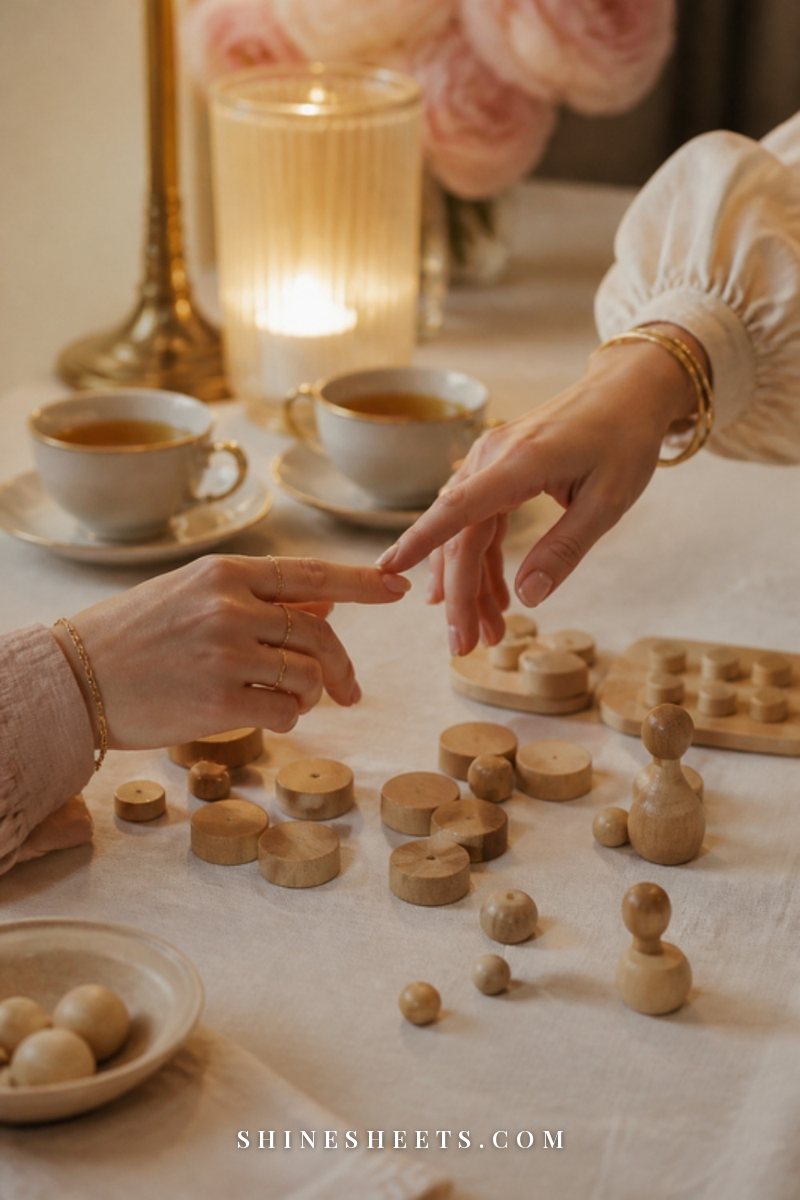
Short, easy activities side by side are often better than big outings face to face. Think a 20-minute walk to get a drink, a drive to practice, baking together from a box mix or a round of a simple cooperative family board game where you're on the same team. Side-by-side activities take the pressure off talking, and conversation often comes on its own.
2. Follow Their Interests
Ask what they're into, then actually learn a little about it: their favorite show, a video game, a sport, a band, a hobby. You don't have to love it. Asking "Can you show me how this works?" tells them they're interesting to you, and kids rarely get tired of being the expert.
3. Create Small Rituals
Little repeated moments build a sense of "us." A Friday movie night with everyone under a big cream knit throw, Saturday pancakes, a silly handshake, a set of matching mugs just for weekend hot chocolate. Keep rituals light and optional at first, so they feel like an invitation rather than a rule.
4. Be Reliable
Trust is built on boring consistency. Show up when you said you would, keep small promises, and if you can't, explain honestly and make it right. Kids who've lived through big changes are often watching quietly to see whether a new adult is someone they can count on. Every kept promise is a tiny deposit.
5. Let Them Set the Pace With Affection

Hugs, nicknames and "I love you" should come from them first, or at least be clearly welcome. Offer warmth in low-key ways instead: a smile, a high-five, a "Good morning, I saved you a seat." If they lean in, lovely. If they don't, that's okay too, and it's nothing personal.
6. Listen More Than You Advise
When they share something, resist the urge to fix it or teach a lesson. Try simple listening phrases like "That sounds really frustrating" or "What happened next?" Being a calm, non-judging adult they can talk to is one of the most valuable roles you can play, and it's one a parent can't always fill.
7. Celebrate Their Wins
Notice the things they care about: a good grade, a goal in the game, a drawing they're proud of, a hard day they got through. Be specific ("You kept going even when the second half was tough") rather than general. Show up to the recital or game when you're invited, and cheer from the stands without needing a front-row seat.
8. Keep Some of Their Old Routines

New family, new house, new everything can feel like a lot. Protecting a few familiar routines helps kids feel safe: their usual bedtime story, the way Sunday mornings always go, a favorite takeout night, the same spot on the sofa. Ask your partner which routines matter most and keep them going, even if they're not exactly how you'd do things.
9. Include Them in House Decisions
Let kids have a real say in age-appropriate choices: the color of their room, a new houseplant, what to do on a weekend, which photos go on the wall in a set of gold frames. Feeling part of the home, rather than a guest in someone else's, makes a big difference. A shared memory scrapbook album that everyone adds to over the year can become a lovely family project, too.
10. Give Them Space When Needed
Some days, the kindest thing you can do is step back. If they want time alone with their parent, encourage it warmly. If they're in a mood, let them be in their room without taking it personally. Space isn't rejection. It often makes it easier for them to come back to you when they're ready.
What Each Age May Need: A Bonding Table
Every child is different, so treat this as a gentle starting point rather than a rulebook. It's the part of this guide I'd suggest you screenshot and come back to.
| Child's age | What they may need | Bonding idea | What to avoid |
|---|---|---|---|
| Toddlers and preschoolers (about 1–5) | Routine, predictability and lots of patience | Read the same picture book at bedtime, play simple floor games | Big changes to their routine all at once |
| Young kids (about 6–9) | Fun, reassurance and feeling included | A weekly board game, a small shared hobby like gardening or puzzles | Asking them to choose between you and their other parent |
| Preteens (about 10–12) | Respect, fairness and some independence | Learn about their interests, drive them to activities and let them chat | Disciplining them yourself or teasing them in front of friends |
| Teens (about 13–17) | Privacy, space and being treated as almost adults | Low-key time side by side: a coffee run, cooking, a shared show | Pushing closeness, forcing family time or acting like a parent |
| Young adults (18+) | A respectful, friendly relationship on their terms | Occasional lunches, remembering what matters to them | Expecting them to treat you as a parent |
For younger kids, a big floral jigsaw puzzle left out on a side table is an easy, no-pressure way to spend time together. People drift over, fit a few pieces and chat without anyone having to make it a "thing."
Handling the Hard Moments

Even in warm blended families, there will be rough days. Your steady, calm response matters far more than finding perfect words.
When They Say "You're Not My Mom"
This one can sting, so it helps to be ready. Take a breath and agree with them, kindly and calmly: "You're right, I'm not. You have a mom who loves you. I'm just someone who cares about you, too." No arguing, no hurt speech, no punishment for saying it. It's often less about you and more about them checking that their mom's place is safe. Later, if it keeps happening, mention it privately to your partner so they can talk with their child.
Loyalty Conflicts
Many kids worry that liking you means betraying their other parent. They might be warm with you one day and suddenly cold after a weekend away. Make it easy for them: talk warmly about their other home, never compete, and let them know it's okay to love lots of people. Your partner can help by saying it out loud: "It's okay to like her. It doesn't change anything between you and your mom."
Tired Days (Yours and Theirs)
Some days you'll feel unappreciated, overstretched or like an outsider in your own home. That's human. Give yourself a break: step out for a walk, have a cup of tea in another room or call a friend. Talk to your partner about how you're feeling at a calm time, not in the heat of the moment. And on the kids' tired days, lower the bar. Getting through the evening kindly counts as a win.
Don't Forget Couple Time

It's easy for a blended family to become all logistics and no romance. But a steady, loving couple is the foundation everything else stands on, and kids feel safer when the adults are a calm team.
- Plan one small date a week, even if it's an hour at home after the kids are in bed.
- Take ten minutes each evening to check in on how you're both feeling, not just on schedules.
- Use kid-free weekends for real rest and fun, not only for errands.
- Back each other up in front of the kids, and talk through disagreements in private.
My guide on couple time ideas to bond has plenty of simple ideas. And if your partner is struggling with co-parenting stress, supporting your partner through a hard time can help you be the calm presence they need.
When a Family Therapist Can Help

Asking for help isn't a sign that your family is failing. It's a sign that you care enough to give it the best chance. A family therapist, especially one experienced with stepfamilies, can be a wonderful support if:
- Tension, arguments or silence have lasted for several months and aren't easing.
- A child seems very withdrawn, anxious, angry or unhappy for a long stretch.
- You and your partner keep having the same disagreement about the kids.
- Communication with the other household is very strained.
You can ask your doctor, your child's school counselor or your partner's co-parent for recommendations, and many therapists offer a short first call so you can see whether they feel like a good fit. Going together as a couple first, before involving the kids, is a gentle way to start.
Sometimes a few sessions are enough to give everyone new words and a fresh start. Kids can also benefit from their own counselor, a neutral adult who isn't "on anyone's side."
Final Thoughts
Blending a family is slow, loving work, and the small moments count more than the big ones: the kept promise, the shared puzzle, the calm "You're right, I'm not your mom." You don't have to win anyone over this month or even this year.
Keep showing up with patience and warmth, let your partner lead where they should, and trust that the roots are growing. One day you may look up and realize you've become one of the steady, safe people in their life, and that is a wonderful thing to be.