Waiting is part of life. Waiting to hear back, waiting for a move, waiting for test results, waiting for someone to decide. What wears us down isn't the waiting itself. It's quietly pressing pause on everything else while we wait, as if real life can only start once the answer arrives.
That pause has a name: waiting mode. In this guide I'll walk you through what it is, why it's so easy to slip into, seven gentle signs you might be there, and eight kind, practical ways to stop putting your life on hold, even when the answer you're waiting for is still out of reach.
No pressure to "just be positive." Some waiting is genuinely hard. The goal here is simply to help your days feel like yours again in the meantime.
What Is Waiting Mode?

Waiting mode is that in-between state where you put parts of your life on hold until something specific happens: a job reply, a diagnosis, a move, a decision from someone else, a relationship becoming clearer, or simply a vague "better time." The waiting may be weeks or years, and it's often so gradual that you don't notice you've stopped living fully.
It can look like:
- Not decorating your apartment because "we might move next year."
- Not starting a hobby until work calms down.
- Not making plans with friends until you hear back about the job.
- Not buying clothes that fit now because you're waiting to feel "ready."
- Not booking a trip until the relationship question is settled.
Each decision makes sense on its own. Together, they can leave you feeling like you're standing in a hallway, waiting for a door to open, while life happens in the rooms around you.
Waiting mode isn't a flaw or a diagnosis. It's a very human response to uncertainty. Recognizing it is the first gentle step out.
Why We Get Stuck in Waiting Mode
Understanding why waiting mode happens makes it much easier to be kind to yourself about it. Three things usually keep us there.
Uncertainty Feels Unsafe
Our brains don't love not knowing. When an outcome is uncertain, a lot of mental energy goes into "holding" the question, imagining possibilities, preparing for different scenarios. That leaves less energy for building a full life in the present. Pausing everything can feel like the safest option, even when it isn't helping. If uncertainty is weighing on you, my guide on dealing with uncertainty about the future may help you feel steadier.
Fear of Wasted Effort
"Why decorate if I'm moving?" "Why start something if I might change jobs?" It's a reasonable thought. Nobody wants to invest time or money into something that might not last. But this logic, followed all the way, means waiting to live until life is certain, and life is never fully certain.
Hope Keeps Us Holding On
Waiting mode often comes from hope. You hope the job comes through, hope the relationship works out, hope life will feel easier soon. Hope is beautiful, and it's worth keeping. The trouble is when hope turns into a reason not to enjoy today. You can hold hope for tomorrow and still live in today. Both can be true at once.
I'm prone to anxiety, and for me waiting mode often shows up as a kind of quiet, constant alertness: half of my attention always on the thing I'm waiting for. Naming that pattern was the first thing that loosened it.
7 Signs You're in Waiting Mode

You don't need to relate to all of these. Even two or three can be a gentle signal that some of your life has been put on hold.
1. Your Plans Keep Getting Postponed
Classes, trips, catch-ups, projects. They're all "for later." When later never quite arrives, it may be waiting mode rather than a busy season.
2. Your Life Feels Half-Unpacked
Sometimes literally (boxes still in the corner months after a move), sometimes emotionally: your home, routines or friendships feel temporary, like you're living in a waiting room instead of a home.
3. You Keep Checking
Email, messages, the tracking page, the person's profile. Constant checking is one of the clearest signs, because your attention keeps returning to the one thing you're waiting for.
4. You Save Things for Later
The nice candle, the good dress, the beautiful notebook, the fancy tea. All saved for a special occasion that hasn't come yet.
5. Your Motivation Is Low
It's hard to care about things that feel temporary. If you notice a flat, "what's the point" feeling about everyday tasks, waiting mode may be quietly draining your energy.
6. Time Feels Blurry
Weeks run together. You're not sure what you did last month. Time feels like it's both dragging and flying, because there's nothing in it to mark the days.
7. You Say "After This" a Lot
"After this project." "After I hear back." "After the move." If your sentences often start with "after," it's worth asking what you're waiting to do, and whether some of it could start now.
What Waiting Mode Quietly Costs
Waiting mode is understandable, but it isn't free. Over time it can leave you feeling restless, disconnected or flat. Small joys get postponed, friendships can drift, and the present starts to feel like something to get through rather than live in. And when the awaited thing finally does happen, it may not feel as satisfying as you hoped, because you've been running on hold for so long.
The good news is that you don't have to wait for the waiting to end. You can make the meantime meaningful. If your days have started to feel rushed and gray while you wait, my guide on how to slow down and enjoy life again is a lovely companion to this one, and if it feels like you need a fuller fresh start, these gentle ways to restart your life may spark an idea.
8 Gentle Ways Out of Waiting Mode
These aren't about forcing yourself to be productive or pretending the waiting doesn't matter. They're small ways to bring your attention, energy and joy back to the life you have now. Start with one.
1. Name What You're Waiting For

Waiting mode thrives on vagueness. Writing it down shrinks it to a real size. Take five minutes and write: "I'm waiting for ___. Until then, I've put ___ on hold." You might find you're waiting for more than one thing, or that some of what you've paused isn't connected to the waiting at all.
A guided reflection journal can make this feel less intimidating than a blank page. Look for one with short, open prompts and enough space to write freely. I like to journal after my evening tea, when the day is quiet and my thoughts are easier to hear.
2. Separate What You Can and Can't Control
Draw a line down a page. On the left, write what you can't control (the decision, the timing, someone else's reply). On the right, write what you can (how you spend your evenings, who you see, how you care for your body, what you prepare). It's a simple exercise, but it moves your attention from the closed door to the open rooms.
When your mind drifts back to the left column, gently say, "That's not mine to carry today," and pick one thing from the right.
3. Set a "Meanwhile" Plan
A meanwhile plan is a short list of things you'll do while you wait, things that make sense whatever the outcome. Think of it as a bridge between now and the answer. It might include a class, a few weekend outings, a home project, a book list or a skill you've wanted to learn.
Keep it small: three to five items for the next four weeks. An undated weekly planner works well for this, because you can start any week and not feel behind. Look for one with simple weekly spreads and room for notes. Revisit the plan every Sunday, gently, and adjust rather than start over.
4. Use the Nice Things Now
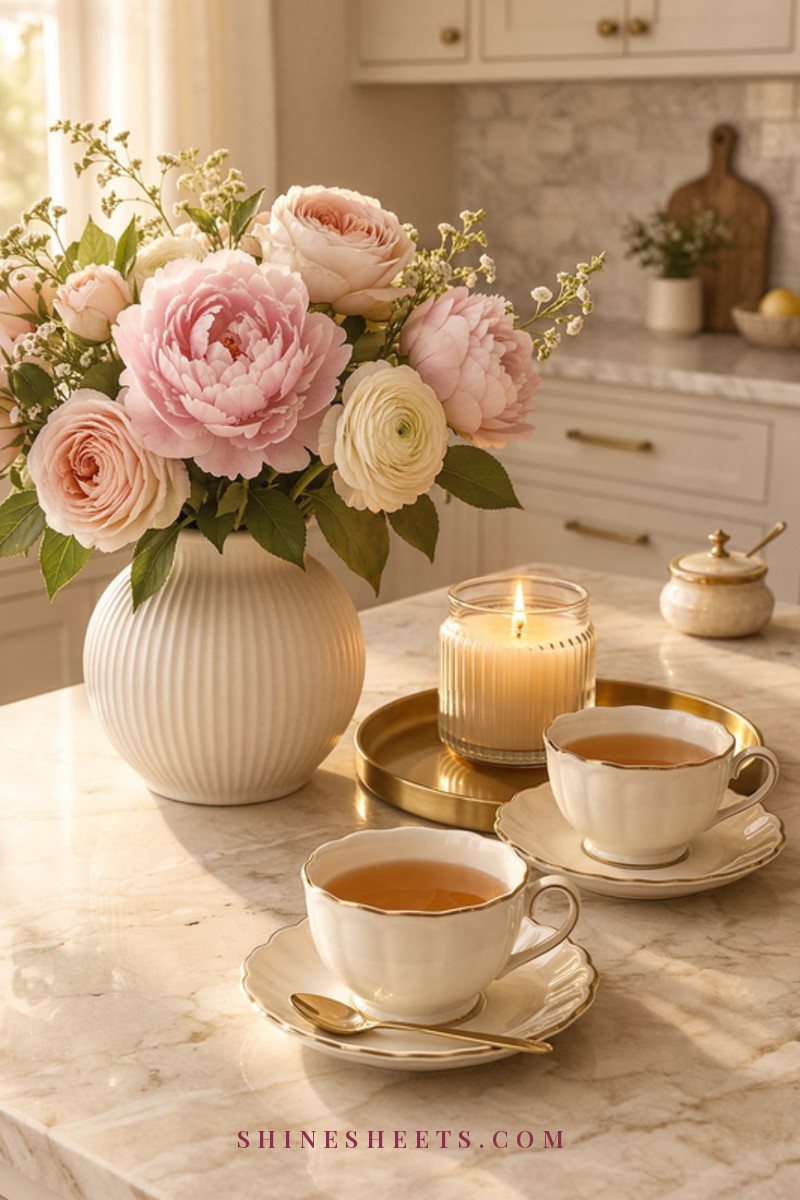
Light the candle. Wear the dress to a regular dinner. Drink tea from the good cup. Using the things you've been saving is a small, powerful message to yourself: my life is happening now, not later.
Choose one "saved" item this week and use it on an ordinary day. A cream scented candle in a glass jar is an easy place to start: something with a soft, warm scent you genuinely like, lit on a regular Tuesday evening simply because you can. Keep candles away from curtains and never leave them burning unattended.
5. Build Small Routines That Anchor the Week
When the big picture feels uncertain, small routines give your days shape. They help time feel less blurry and give you something steady to lean on. Ideas:
- A Sunday evening reset: tidy one room, plan the week, make tea.
- A Wednesday walk after work, rain or shine.
- A Friday night ritual: favorite meal, a film, a soft blanket.
- A morning slow minute: a drink by the window before checking anything.
Choose two or three and keep them simple enough that you'll do them on a hard day. A soft throw blanket in sage on the sofa makes the evening ritual something to look forward to. If you'd like more ways to anchor yourself in the present, my guide on how to be present has lots of small, easy ideas.
6. Give Yourself One Thing To Look Forward To
Waiting often means looking forward to something you can't control. Balance it with something you can. Plan one small, certain pleasure each week: coffee with a friend on Saturday, a new book arriving, a trip to the market, a bath on Thursday night. Put it on the calendar so it's real.
Anticipation is a gentle mood lifter in itself. Knowing something nice is coming makes the in-between days feel lighter. Try a new flavor from a herbal tea sampler each evening, for example. It's a tiny thing to look forward to, and a calming one.
7. Limit the Checking
Checking feels like doing something, but it usually feeds the waiting rather than easing it. Set gentle limits: check email twice a day at set times, turn off notifications for the app you keep refreshing, or move it off your home screen. When the urge to check comes, take one slow breath and do one small thing from your meanwhile plan instead.
You won't stop checking completely, and you don't need to. Even halving it can give you back a surprising amount of calm.
8. Talk It Through

Waiting often feels lonelier than it needs to. Saying it out loud to someone you trust ("I'm waiting to hear about this, and it's taking over my head") can make it lighter almost immediately. You don't need advice, just company.
Try a simple script: "I don't need you to fix anything. I just want to tell you what's been on my mind." A friend, a sister, a partner or a therapist can all be good listeners.
Your Meanwhile Table
Here's a table you can screenshot or copy into your journal. Fill in one row for each thing you're waiting for. The examples show how it works.
| What I'm waiting for | What I can't control | What I can do meanwhile | Small joy this week |
|---|---|---|---|
| A job reply | Their timeline and decision | Keep one other application going, refresh one skill, check email twice a day only | Coffee with a friend on Saturday |
| A move | The exact date, the housing market | Make the current home pleasant: flowers, a new throw, one unpacked box | Fresh flowers on the table |
| Medical test results | The result and when it arrives | Write questions for the doctor, keep gentle routines, rest well | A warm bath on Thursday evening |
| Clarity in a relationship | The other person's feelings and choices | Say what I need once, clearly; spend time with friends; keep my own plans | A walk somewhere beautiful |
| A "better time" | When life feels calmer | Start the hobby in its smallest form: 15 minutes, twice a week | Use the good notebook |
Look at the third and fourth columns often. That's where your life is happening right now.
Kind Things To Tell Yourself While You Wait
The way you talk to yourself during a waiting season matters. Harsh thoughts ("I'm wasting my life," "I should be over this by now") make the waiting heavier. Gentle, honest phrases help you stay steady without pretending everything is fine. Pick one or two that feel true and come back to them when your mind starts spinning:
- "I can hope for this and still enjoy today."
- "Not knowing is uncomfortable, and I can handle uncomfortable."
- "This is one part of my life, not all of it."
- "I've done what I can for now. The rest isn't mine to carry today."
- "Whatever the answer is, I'll figure out the next step then."
- "Today still counts."
Write your favorite on a small card and tuck it into your planner or journal, so you see it on the days the waiting feels loudest.
A Gentle Week Out of Waiting Mode
If eight ideas feel like a lot right now, here's a soft way to try them over one week, one small step a day:
- Monday: Name what you're waiting for and what you've put on hold (five minutes of journaling).
- Tuesday: Draw your two columns, what you can and can't control.
- Wednesday: Write a meanwhile plan with three small items for the next month.
- Thursday: Use one nice thing you've been saving.
- Friday: Set one gentle limit on checking, and notice how it feels.
- Saturday: Do the thing you planned to look forward to.
- Sunday: Tell someone you trust how the waiting feels, then choose two small routines for the coming week.
Miss a day? That's fine. Pick it up the next day, or skip it entirely. The point isn't to complete a program. It's to remind yourself, day by day, that your life is already happening.
When Waiting Feels Too Heavy
Some waiting is truly hard. Waiting for health news, waiting through a painful life change, waiting for someone you love. It's normal to feel anxious, tired or low during these seasons, and you don't have to do any of the steps above perfectly. Sometimes surviving the waiting is enough. My guide on how to cope with change may feel supportive if your life is shifting around you.
If anxiety, worry or low mood keeps building, affects your sleep or appetite, or makes everyday life difficult for more than a couple of weeks, please reach out to a therapist or your doctor. Talking to a professional isn't a sign you've failed at waiting well. It's a kind, practical way to carry something heavy with support.
Final Thoughts
The answer you're waiting for matters, and it's okay to hope for it. But your life isn't waiting in a hallway. It's here, in the cup of tea, the evening walk, the friend who listens and the candle you finally light on an ordinary night.
You can hold hope for tomorrow and still make today feel like yours. One small meanwhile at a time, life starts moving again, gently and on your terms.