Love and attachment can look almost identical from the outside. Both make you want to be close to someone, both make you miss them when they're gone, and both can make your heart jump when their name lights up your phone. The difference usually isn't in how strong the feeling is. It's in what the feeling is made of: love grows from care and choice, while attachment, in the clinging sense, grows from fear of losing something you feel you can't live without.
And here's the kind part: most of us carry a mix of both. Feeling attached doesn't mean your love is fake or that something is wrong with you. It simply means part of you is scared, and that scared part deserves a little attention instead of judgment.
This guide walks you through love vs attachment in plain words: why the two feel so similar, 8 differences you can actually notice in yourself, a table of everyday moments with a gentle shift for each one, 6 honest questions to ask yourself, and practical ways to move toward a calmer, healthier kind of love. (This isn't about attachment styles or putting yourself in a box. It's about reading your own feelings a bit more clearly.)
Why Love and Attachment Can Feel the Same
Your body doesn't come with separate alarms for "I adore this person" and "I'm terrified of losing this person." Both feelings bring closeness, longing and a strong pull to stay near. Both can make you think about someone all day. Both can make a weekend apart feel long.
That's why so many people get confused. You notice how much you need someone and assume it must mean you love them deeply. Sometimes it does. Sometimes the intensity is partly fear wearing love's clothes.
A helpful way to think about it: love is a feeling that wants to give, and clinging attachment is a feeling that needs to get, usually reassurance, certainty or proof that you won't be left. Most real relationships hold both at different moments. A partner can be someone you truly love and also someone whose absence makes you anxious. The goal isn't to remove every trace of attachment (some bond and need is a healthy, beautiful part of being close). The goal is to notice when fear starts steering.
If you already know you tend to worry in relationships, my guide to attachment styles explained gives the bigger background. This article stays with something simpler: your own feelings, one moment at a time.
What Love Looks Like in Real Life
Love is often quieter than we expect. It doesn't always feel like fireworks. More often it feels like warmth, ease and a steady sense of "I'm glad you're here."
- You want good things for them, even things that don't include you.
- You feel relaxed enough to be your regular, unpolished self around them.
- You can see their flaws and still choose them.
- You can enjoy time apart and look forward to seeing them again.
- Disagreements feel uncomfortable, but not like the end of the world.
Love has room in it. Room for two separate people, two sets of friends, two inner lives. It holds on with an open hand.
What Clinging Attachment Looks Like
Attachment in the fear-based sense feels tighter. It's the part of you that scans for signs of distance, needs constant updates and feels a wave of panic when a text goes unanswered for a few hours.
- You feel calm only when you're sure of where you stand.
- You change your plans, opinions or habits to keep things smooth.
- You struggle to imagine your life without them, even when you're unhappy.
- Their mood sets your mood for the whole day.
- Space between you feels like a threat instead of a breather.
None of this makes you a bad partner. These are very human responses, often learned long before this relationship started. Seeing them clearly is the first step to softening them.
8 Differences Between Love and Attachment
Read these slowly and notice which side you lean toward. You'll probably find yourself on both sides depending on the day, and that's completely normal.
1. Love Wants Their Good, Attachment Wants To Keep Them
Love asks, "What's good for you?" Attachment asks, "What keeps you with me?" When your partner gets an exciting opportunity, love feels happy for them first. Attachment feels a jolt of worry first: will this change things, will they need me less?
Try this: next time you feel that jolt, say to yourself, "I can feel scared and still be glad for them." Both can be true at once.
2. Love Feels Calm, Attachment Feels Anxious
Love has a settled quality. You may still get butterflies, but underneath there's a sense of safety. Attachment feels more like a low hum of alertness, as if you're always waiting for something to go wrong.
A quick body check helps here. Put a hand on your chest and notice: when you think about this person, does your breathing soften or speed up? Calm doesn't mean the love is weaker. Very often it means the love is steadier. (I'm prone to anxiety, so I know how easy it is to mistake that buzzy, on-edge feeling for passion.)
3. Love Gives Freedom, Attachment Needs Control
Love trusts your partner to have their own friends, hobbies and evenings. Attachment wants to know where they are, who they're with and when they'll be back, not to hurt anyone, but to quiet its own fear.
Control can be very gentle and still be control: checking their location "just to see," feeling hurt every time they make plans without you, hinting until they cancel. A simple test is whether your request is about connection ("I'd love to see you this weekend") or about soothing panic ("I need to know you're not going anywhere").
4. Love Sees Them Clearly, Attachment Idealizes
Love sees the real person, including the messy parts, the bad moods and the habits that drive you a little crazy. Attachment tends to polish them into someone perfect, or at least someone you absolutely cannot replace.
When you idealize someone, you're often in love with what they represent: safety, being chosen, finally feeling enough. If that idealizing feels very intense and focused on whether someone feels the same, my guide to limerence and how to break the obsession may feel familiar.
Try this: write down three things you love about them and three things that are just ordinary or a bit annoying. Seeing both lists side by side makes the love more real, not less.
5. In Love You Stay Yourself, in Attachment You Lose Yourself
In healthy love, you still have your own taste in music, your own opinions and your own Saturday rituals. In attachment, those things slowly fade because keeping the relationship safe feels more important than keeping yourself.
Notice the small signs: you stopped seeing a friend because your partner wasn't keen on her, you agree with everything, you can't remember the last thing you did just for you. Your partner fell for a whole person. You're allowed to stay one.
6. Love Can Handle Distance, Attachment Panics at Space

A work trip, a busy week, a partner who needs a quiet evening alone: love can sit with these. It may miss them, but it trusts the bond is still there. Attachment reads space as rejection and starts filling the gap with worst-case stories.
When the panic rises, try a simple three-step pause: name it ("This is fear of loss"), check the facts ("They said they'd call after dinner"), and give yourself one soothing thing to do for twenty minutes, like a bath, a walk or tea under a chunky cream knit throw. Often the wave passes before you need to act on it.
7. Love Talks About Hard Things, Attachment Avoids Them
Love can say, "That hurt my feelings," or "I need something different." Attachment often swallows these words, afraid that honesty will push the other person away. The irony is that unspoken needs usually create more distance, not less.
If you tend to stay quiet to keep the peace, start with low-stakes honesty: a small preference about dinner, a gentle "I'd rather not tonight." Each small truth teaches you that the relationship can hold your real voice.
8. Love Chooses, Attachment Feels It Has No Choice
Love says, "I could live without you, and I choose to live with you." Attachment says, "I can't live without you." The first one sounds less romantic in songs, but it's far more freeing for both people.
Being chosen by someone who doesn't have to stay is one of the safest feelings in the world. And choosing someone, rather than clinging to them, lets you love from a full cup instead of an empty one.
Love vs Attachment in Everyday Moments

The differences are easiest to spot in small, ordinary situations. Here's a table of common moments, how love tends to respond, how attachment tends to respond, and one gentle shift you can try. Screenshot it if you'd like it handy for the next wobbly moment.
| Situation | Love response | Attachment response | Gentle shift |
|---|---|---|---|
| They don't text back for a few hours | Assumes they're busy and carries on with the day | Checks the phone constantly and imagines they've lost interest | Put the phone in another room for one hour and do something absorbing |
| They make plans with friends | Feels happy they have people who care about them | Feels left out and quietly hurt | Make your own plan for that evening, even a small one |
| They seem quiet or distant | Asks kindly if they're okay, then gives space | Assumes it's about you and tries hard to fix it | Ask once: "You seem tired, want to talk or want quiet?" and trust the answer |
| You disagree about something | Shares your view and listens to theirs | Gives in quickly to avoid conflict | Say your view in one calm sentence before agreeing to anything |
| They get an exciting opportunity | Celebrates with them | Worries what it means for you | Congratulate first, talk about your worries later if they stay |
| You want a night alone | Takes it without guilt | Skips it in case they feel rejected | Tell them warmly: "I'm having a me evening, see you tomorrow" |
| You feel unsure about the relationship | Reflects honestly on what's working and what isn't | Pushes the doubt down because losing them feels unbearable | Write the doubt down and look at it again in a week |
You don't need to get every moment "right." Choosing the gentle shift even once a week slowly retrains your nervous system to feel safe in love.
6 Questions To Ask Yourself
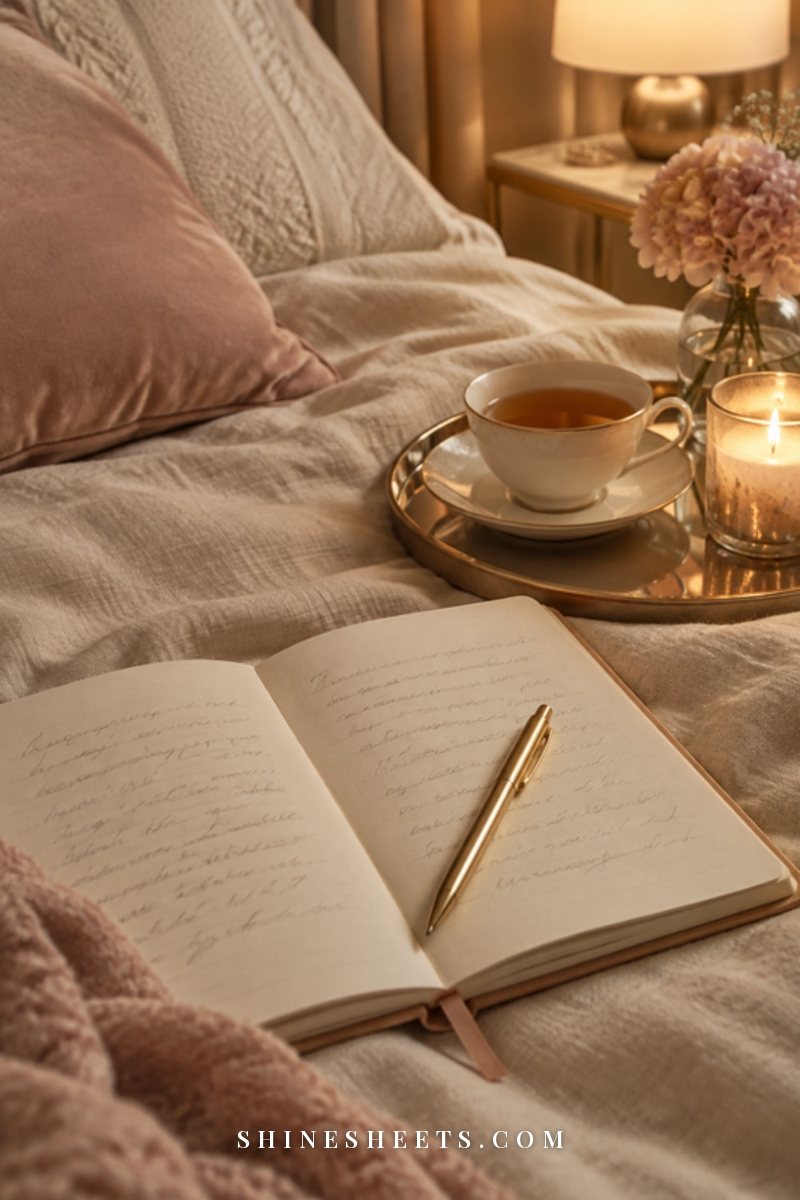
These questions aren't a test. They're a quiet way to check in with yourself. I'd answer them in a journal over a cup of evening tea, with no rush to find the "right" answer. A guided self-love journal can give you a soft structure if a blank page feels like too much.
- If they were happier without me, could I want that for them? You don't have to like the idea. Just notice whether any part of you could wish them well.
- Do I feel more calm or more anxious when I think about us? Pay attention to your body, not only your thoughts.
- Am I still the person I was before this relationship, in the ways I liked? Think about your friends, hobbies and opinions.
- What am I most afraid would happen if this ended? Often the answer points to a deeper fear, like being alone or not being enough.
- Do I see this person as they really are, or as who I need them to be? Try to name one real flaw with affection.
- Am I staying because I choose to, or because leaving feels impossible? Both answers can be true at once, and that's okay to admit.
If several of your answers point toward fear, please don't panic. That's information, not a verdict. It tells you where a little care is needed.
How To Move Toward Healthier Love
Moving from attachment toward love isn't about caring less. It's about feeling safer inside yourself, so love doesn't have to carry the whole weight of your security. These four areas make the biggest difference.
Build a Life Outside the Relationship
The more your days are filled with things that belong only to you, the less your peace depends on one person. This isn't about pulling away. It's about having more to bring back.
- Keep one weekly plan that's just yours: a class, a walk with a friend, a library hour.
- Reconnect with one friend you've drifted from. A short message is enough to start.
- Pick a small hobby you can do alone and enjoy, like reading, sketching or gardening.
- Protect at least one evening a week as a solo evening, with no checking in required.
A cozy ritual helps solo time feel like a treat instead of a gap. Pour something warm into a blush ceramic tea mug, light a lavender soy candle in a glass jar and let the evening be yours.
Soothe the Fear of Loss
Fear of loss is the engine behind most clinging. You can't argue it away, but you can calm it. When it rises, try this short routine:
- Breathe slowly. Inhale for four counts, exhale for six, five times. A longer exhale tells your body it's safe.
- Name the fear out loud or on paper. "I'm scared they'll leave." Naming a fear makes it smaller.
- Ask what you need right now. Often it's comfort, not information. You can give yourself comfort.
- Wait twenty minutes before acting. No extra texts, no checking. Make a cup of calming chamomile tea and let the wave crest.
If insecurity is a regular visitor for you, my guide on feeling insecure in a relationship goes deeper into where it comes from and how to feel safe, and the one on anxious attachment has more tools for soothing that worried part of you.
Talk Openly With Your Partner
Attachment thrives in silence and guessing. Love thrives in honest, gentle conversation. You don't need a big, dramatic talk. Small, regular check-ins work better.
A simple formula: "When ___ happens, I feel ___, and what would help me is ___." For example: "When I don't hear from you all day, I feel a bit anxious, and what would help me is a quick message at lunch." It's specific, it owns your feeling and it gives your partner something easy to do.
If starting these conversations feels awkward, a deck of couples conversation cards on the coffee table can make it feel lighter and more playful. And learning how you each feel loved, through something like love languages, can turn vague worries into clear, kind requests.
Let Your Self-Worth Rest on More Than One Person
When one relationship is the only thing telling you you're lovable, of course you'll cling to it. The fix is to spread your sense of worth across many places: your friendships, your skills, your values, your kindness, the way you care for yourself.
- Each evening, write one thing you did that you're quietly proud of.
- Notice compliments from friends and actually let them land.
- Keep promises to yourself, even tiny ones like a ten-minute walk.
- Remind yourself: "I was worthy before this relationship, and I'll be worthy whatever happens."
If this part feels hard, my guide on how to start feeling your self-worth is a gentle place to begin.
Attachment Is Human, Not Wrong
I want to say this clearly: feeling attached doesn't make you needy, broken or "too much." Humans are wired to bond and to fear losing the people we bond with. That fear once kept us safe, and it still shows up in modern love, especially if you've been hurt or left before.
Healthier love doesn't mean never feeling scared. It means the fear gets a seat in the car, not the steering wheel. You can notice it, comfort it and still make choices from care.
And if the fear of losing someone feels overwhelming, keeps you up at night or makes daily life hard, talking to a therapist can really help. A good therapist can help you understand where the fear comes from and build a sense of safety that doesn't depend on one person. Reaching out for that support is a strong, loving thing to do for yourself.
Final Thoughts
Love and attachment will probably always live side by side in your heart, and that's okay. The aim isn't to feel only pure, perfect love. It's to notice when fear is doing the talking and gently bring yourself back to care, choice and calm.
Start with one small shift this week: one solo evening, one honest sentence, one moment of choosing instead of clinging. Little by little, the love you give, and the love you let yourself receive, becomes softer, steadier and much more your own.