
Cheering up a friend rarely takes a big gesture. What usually helps most is feeling noticed: someone remembering, checking in, showing up with a cup of tea and no agenda. The small things you might think are "not enough" are often exactly what she'll remember.
The tricky part is knowing what to do, because every friend and every hard moment is different. A breakup needs something different from a stressful week at work, and grief needs something different again. Some friends want company; others want quiet support from a distance.
This guide covers how to cheer up a friend in thoughtful, practical ways: how to tell what she needs, 40 ideas grouped into words, small gifts, time together, practical help and long-distance support, a table of ideas by situation, what not to say, how to build a care package and when to gently suggest more support. I'll say "she," but every idea works for any friend you love.
Let's start with the part most people skip.
First, Figure Out What She Needs

Before you plan anything, take a moment to read the situation. People in a hard place generally want one of four things: comfort, distraction, practical help or space. Guessing wrong isn't a disaster, but asking makes it much easier.
Some signs she wants company: she reaches out first, replies quickly, mentions being lonely or bored, or says yes to plans. Some signs she wants space: short replies, "I'm fine, just tired," canceled plans, or a known habit of processing things alone.
When in doubt, simply ask, and give her easy choices:
- "Do you want to talk about it, or would you rather be distracted?"
- "I can come over tonight, or I can just drop something at your door. Whatever feels better."
- "Would it help if I took care of something practical for you this week?"
It also helps to think about who your friend is on a normal day. A friend who loves a party might feel better after an evening out with a few close people. A quieter friend might find the same evening exhausting and prefer a walk, a long phone call or a care package left at the door. Cheering someone up works best when it fits how she already recharges.
Choices take the pressure off. She doesn't have to explain what she needs; she just has to pick. And whatever she chooses, respect it without making her feel guilty.
40 Ways To Cheer Up a Friend
Pick two or three ideas that fit your friend and the moment. You don't need to do everything; consistency matters more than size.
10 Ways To Cheer Her Up With Words

Words are free, quick and powerful, especially when they're specific and sincere.
- Send a "no need to reply" text. "Thinking of you today. No need to answer, I just wanted you to know." Removing the pressure to respond is a gift in itself.
- Record a voice note. Hearing a familiar voice is surprisingly soothing. Two minutes of you talking about your day, a funny story or simply "I'm here" can lift her mood more than a long text.
- Write a real letter. A handwritten note on pretty floral notecards feels completely different from a message on a screen. Mention one specific thing you admire about her.
- Remind her of a funny memory. "Remember when we got completely lost looking for that tiny cafe?" Shared laughter is one of the fastest ways back to feeling like yourself.
- Tell her what she means to you. Be specific: "You're the person I call when everything goes wrong, and you always make it feel smaller."
- Send a photo from your past together. An old picture with a short caption – "us, being iconic" – says "I treasure our friendship" without needing any big words.
- Ask a gentle, open question. "How are you really doing?" or "What's been the hardest part this week?" Then listen without rushing to fix anything.
- Check in again a few days later. Most people get support on day one and silence afterward. A second message on day four or five is often the one that means the most.
- Send a song. A song that reminds you of her, or one that always makes you both dance in the car. Add one line about why you chose it.
- Leave a sweet note where she'll find it. If you live nearby or visit, tuck a small note into her bag, on her fridge or by the kettle.
8 Small Gifts That Lift Her Mood

A thoughtful little gift isn't about money. It's a physical reminder that someone was thinking of her.
- Fuzzy socks. Soft fuzzy socks are an easy, comforting gift that says "stay in and rest."
- A tea sampler. A tea sampler set gives her a reason to slow down with a warm cup every evening this week.
- A candle in her favorite scent. A glass jar candle instantly makes a hard evening feel softer.
- Face masks for a self-care night. A pack of Korean sheet masks turns an ordinary night in into a little pampering ritual.
- A good book. Choose something light and absorbing rather than heavy – a comforting novel is perfect.
- Fresh flowers. A small bunch from the grocery store, delivered in person or left at her door with a note.
- Her favorite treat. The snack, coffee order or chocolate you know she loves. It's the being-remembered part that counts.
- A full care package. Combine a few of the above in one box. More on how to build one below.
8 Ways To Spend Time Together

Presence is often the most comforting thing you can offer. Keep it low-pressure and let her lead the energy.
- Go for a walk together. Side-by-side conversations feel easier than face-to-face ones. Thirty minutes outdoors can shift a heavy mood.
- Have a movie night at her place. Bring snacks, let her choose the film and don't expect her to host anything.
- Meet for coffee. Keep it short and easy if she's tired: one drink, one hour, no pressure to talk about the hard thing.
- Plan a self-care night. Face masks, nail care, a comforting show. My list of self-care night ideas has plenty of inspiration.
- Sit with her and do nothing. Sometimes the best thing is simply being in the same room – reading, watching TV, folding laundry together.
- Take her somewhere new. A bookstore, a garden, a little shop she's never visited. Novelty gently interrupts sad thoughts.
- Do something active. A yoga class, a swim, a dance class. Movement can lift mood, even a little.
- Ask her the deeper questions. When she's ready to talk, a thoughtful question opens the door. My deep questions to ask friends are lovely for slow evenings.
7 Kinds of Practical Help

When someone is overwhelmed, practical help is love in its most useful form. The key is offering something specific.
- Drop off a meal. Cooking is often the first thing to go when someone's struggling. Leave something easy to heat at her door – no visit required.
- Run an errand. Pick up groceries, collect a parcel, return something to the store. Ask: "I'm heading out anyway, what can I grab for you?"
- Help with the house. Offer an hour of tidying, doing dishes or a load of laundry together. A clearer space often means a clearer head.
- Walk her dog or water her plants. Small practical tasks lift a surprising amount of weight.
- Offer a specific time. Instead of "let me know if you need anything," try "I'm free Saturday morning – can I come help with something?"
- Help with a phone call she's dreading. Sit with her while she calls the doctor, the landlord or the bank.
- Handle the planning. If she's overwhelmed, take over a small decision: book the restaurant, choose the time, send the reminder.
7 Ways To Cheer Up a Friend From Far Away
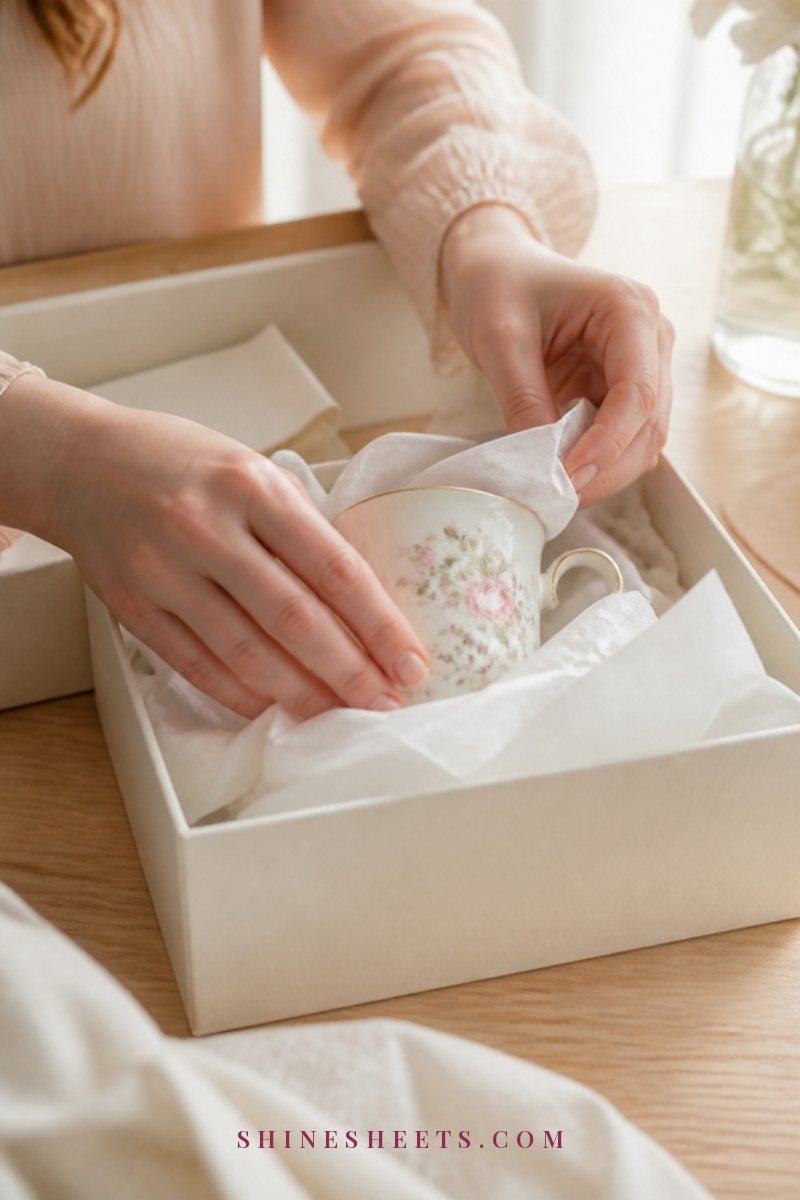
Distance doesn't have to mean distant. These ideas help her feel close even if you're in different cities or time zones.
- Send a care package by mail. A box arriving at her door is a lovely surprise, even if it holds just tea, socks and a note.
- Schedule a video call with a theme. Watch the same movie at the same time, or have "tea together" on a call.
- Make open when letters. A small set of open when letters gives her comfort she can reach for whenever she needs it.
- Order her favorite food to her door. A delivery with a note: "Dinner's on me tonight."
- Start a shared playlist. Add a song each day for a week.
- Play a game online together. A simple word or puzzle game you both play daily gives you a light reason to connect.
- Plan a visit. Even a visit months away gives her something to look forward to. Put the date in both calendars.
How To Cheer Up a Friend by Situation
Different hard moments call for different kinds of care. Use this table as a quick starting point, then adjust to your friend.
| Situation | What usually helps | Try this | Avoid |
|---|---|---|---|
| Breakup | Company, distraction, reassurance | Movie night, a long walk, "you deserve so much" | Bashing the ex too hard (they may get back together) |
| A bad day | Lightness and a little comfort | A funny voice note, her favorite treat, a short call | Turning it into a big serious talk |
| Work stress | Practical help and a break | Take over a small task, plan a no-work evening | Career advice she didn't ask for |
| Grief | Steady presence, practical care | Drop off meals, check in weeks later, say the person's name | "Everything happens for a reason" |
| Illness or recovery | Rest, practical help, gentle company | Errands, a short visit, a comforting book | Long visits, health advice, comparing stories |
| Far away | Regular, small contact | Mail a care package, a themed video call | Only reaching out when something's wrong |
| Feeling lonely or low | Inclusion and consistency | Regular plans, a standing weekly call | Waiting for her to reach out first |
For grief especially, words can feel impossible. My guide on what to say to someone grieving has gentle phrases for those moments.
What Not To Say (and What To Say Instead)

Well-meaning phrases can sometimes land badly. A few swaps:
- Instead of "Look on the bright side," try "That sounds really hard. I'm sorry."
- Instead of "At least…," try "That makes sense that you're upset."
- Instead of "I know exactly how you feel," try "I can't fully know how it feels, but I'm here."
- Instead of "You should…," try "Do you want ideas, or do you just want me to listen?"
- Instead of "Let me know if you need anything," try "I'm bringing dinner Thursday – is 7 okay?"
- Instead of "Cheer up!" try "You don't have to feel better right now. I'm staying anyway."
Listening well is the quiet skill behind all of this. My guide on how to be a good listener covers small habits that make people feel truly heard.
How To Build a Care Package
A care package is one of the sweetest ways to cheer up a friend, whether you hand it over in person or mail it. A simple formula: something warm + something soothing + something sweet + something from you.
- Something warm: fuzzy socks or a soft scarf.
- Something soothing: a candle, a tea sampler, a sheet mask.
- Something sweet: her favorite chocolate or snack.
- Something from you: a handwritten note, a photo of the two of you, a playlist on a small card.
Pack it all in a cream gift box with tissue paper, tie it with a ribbon and write her name on the top. It doesn't have to be expensive. Four small things chosen with care feel more personal than one big gift.
How To Keep Showing Up Over Time
Most support arrives in the first few days and then quietly disappears, just when the reality of a hard situation is sinking in. If you want to be the friend she remembers, think in weeks rather than days:
- Week one: the first message, a visit or a care package, practical help with anything urgent.
- Week two: a casual check-in that isn't about the hard thing – a funny photo, a "coffee on Saturday?"
- Week three or four: an invitation to something normal and light, like a walk, a movie or a browse in a bookstore.
- A month or two later: a note or message that says "I haven't forgotten. How are you doing with everything?"
Put a few gentle reminders in your own calendar if that helps. It isn't unromantic or calculated; it's a way of making sure your care doesn't get lost in a busy week. For grief in particular, anniversaries, birthdays and holidays can be hard for a long time, and a short message on those days means a great deal.
What If She Pushes You Away?
Sometimes a friend who's struggling goes quiet, cancels plans or tells you she's fine when she clearly isn't. It can feel like rejection, but it usually isn't about you. People withdraw when they're exhausted, embarrassed or afraid of being a burden.
A few gentle ways to handle it:
- Keep your messages light and pressure-free: "No need to reply, just thinking of you."
- Don't take canceled plans personally, and don't stop inviting her.
- Let her know the door stays open: "Whenever you feel up to it, I'm here."
- Respect a clear "I need some time alone," and check in again after a few days.
Being patient without disappearing is one of the kindest things you can do for someone. She may not say so now, but she'll notice who stayed.
When To Gently Suggest More Support

Friends can do a lot, but they can't do everything. If your friend has seemed low for weeks, is struggling to eat, sleep or get through the day, or has lost interest in things she used to love, it may be time to gently mention professional support.
A kind way to bring it up: "I love you, and I've noticed things have felt really heavy for a while. Have you thought about talking to someone, like a therapist or your doctor? I'd be happy to help you find someone." Offer to help with the practical side: searching for a counselor together, or sitting with her while she books an appointment.
If she ever talks about not wanting to be here or about hurting herself, take it seriously: stay with her, and contact local emergency services or a crisis line right away. You don't have to handle that alone, and you shouldn't.
Take Care of Yourself, Too
Supporting someone you love can be draining, especially over a long hard season. It's okay to have limits. Keep your own routines, get enough rest and lean on other friends for support. You'll be a steadier presence for her if you're not running on empty.
If you notice yourself feeling resentful or worn out, that's a signal to share the load – loop in another friend, take an evening off or have a slow night of your own with tea and a book. Caring for yourself isn't stepping away from her; it's how you keep showing up.
Being there for each other through the hard parts is one of the clearest signs of a good friend, and that care should flow both ways over time.
Final Thoughts
Knowing how to cheer up a friend comes down to one simple thing: letting her know she's not alone. A text, a walk, a box of tea and socks, a meal left at the door – none of it fixes the hard thing, but all of it makes it lighter to carry.
Start with one small gesture today. She'll remember that you showed up.