Having standards in dating isn't about being picky. It's about knowing how you want to be treated and noticing, early and calmly, whether someone is able to treat you that way. The right standards don't make dating harder. They make it so much simpler, because they quietly filter out the people who would leave you confused.
A lot of women hear "have high standards" and picture a long list: a certain height, a certain job, a certain car. That's not what I mean here. Real standards are about character and behavior, the things that actually decide whether a relationship feels safe, kind and steady.
In this guide to dating standards, you'll find the difference between standards and an unrealistic wish list, eight core standards and what each one looks like in practice early on, a quick standard, green flag and red flag table, how to hold your standards without feeling cold, what to say when someone isn't a fit, and when it's wise to rethink a standard.
Standards vs. an Unrealistic Wish List

Standards and preferences are not the same thing, and mixing them up is where a lot of dating frustration comes from.
- Preferences are nice-to-haves: tall, loves hiking, has a dog, likes the same music. They're allowed, and they're fun, but they're flexible. Lots of wonderful partners don't tick them.
- Standards are about how someone treats you and others: honesty, respect, consistency, kindness. These are not flexible, because without them a relationship can't feel good, no matter how many preferences are ticked.
- Unrealistic wish lists are long lists of surface details that leave almost no real human able to qualify. They often come from fear, a way to protect yourself from getting hurt by making sure no one gets close.
A simple test: if a quality affects how safe, respected and cared for you'd feel day to day, it's a standard. If it mostly affects how a relationship looks from the outside, it's a preference.
It helps to write this down. Take a guided self-love journal or any notebook, draw a line down the middle and sort your current "list" into standards on one side and preferences on the other. Most women find the standards column is shorter, and more important, than they expected.
The 8 Dating Standards Every Woman Should Have

These eight are the foundation. They're not about perfection. Everyone has off days, and nobody is consistent, honest and emotionally open every single minute. What you're looking for is the overall pattern.
1. Consistency
Consistency means their words and actions match, and they show up in a steady way over time. Early on, it looks like this:
- They text when they say they will, roughly.
- Plans are made and kept, not constantly "maybe" or cancelled last minute.
- Their interest doesn't swing wildly from intense to silent.
Consistency is the standard I'd put first, because almost everything else is easier to judge once you can see someone's real pattern. Hot-and-cold behavior keeps you guessing, and guessing is exhausting.
2. Respect

Respect is the way someone treats your time, your opinions and your feelings. On early dates, it shows up in small ways:
- They arrive roughly on time or let you know if they're late.
- They listen when you speak instead of waiting for their turn.
- They can disagree with you without mocking or talking down to you.
- They speak kindly about their exes, or at least without cruelty.
If someone makes "jokes" that leave you feeling small, that's not a sense of humor issue. That's a respect issue. My first date tips include a few gentle ways to notice these signs without turning the date into an interview.
3. Kindness to Others
How someone treats you on a date is only half the story. How they treat the server, the barista, the driver and the stranger who bumps into them tells you more. Kindness to others looks like:
- Saying please and thank you to staff.
- Patience when something goes wrong, like a mixed-up order.
- Talking about friends and family with warmth.
Someone can be charming with you and dismissive with everyone else, but that charm usually doesn't last. Kindness that's real shows up everywhere.
4. Effort
Effort doesn't mean grand gestures or expensive dinners. It means they're actively choosing to spend time and energy on getting to know you. Early on, that might look like:
- Suggesting specific plans rather than "we should hang out sometime."
- Remembering little things you said, like the name of your friend or your big week at work.
- Initiating contact at least some of the time.
- Making small adjustments so you feel comfortable, like picking a place close to you.
Effort should feel roughly mutual. If you're always the one planning, reaching out and keeping the conversation alive, you're carrying the connection alone.
5. Honesty
Honesty is the base of trust. In the early stage, it doesn't mean someone tells you everything about their past on the second date. It means:
- Their stories stay the same over time.
- They're clear about what they're looking for, even if it's not what you hoped.
- They admit when they've made a mistake or forgotten something.
- Their online profile matches the real person in the ways that matter.
Honesty also includes being honest about not knowing. "I'm not sure what I want yet, but I like spending time with you" is honest. Promising a future they can't back up is not.
6. Emotional Availability

Emotional availability means someone is ready and able to connect, to share feelings, to hear yours and to build something real. Early signs look like:
- They can talk about their feelings, at least a little.
- They're curious about your inner world, not only your hobbies.
- They don't shut down or change the subject every time a conversation goes deeper.
- They're not still deeply tangled up in a past relationship.
Someone can be lovely and still not be available right now. That's not a judgment of them. It's just information about timing.
7. Respect for Your Boundaries
Boundaries are the limits that keep you feeling safe and like yourself. A good partner hears a boundary once and respects it. Early on, that means:
- They accept a "no" or "not yet" without sulking or pushing.
- They don't pressure you to move faster than you want, physically or emotionally.
- They respect your time with friends, your work and your alone time.
- They don't make you feel guilty for having needs.
Pay special attention to how someone reacts to a small boundary, like "I can't stay out late tonight." Their response to little limits tells you a lot about how they'd handle bigger ones.
8. Shared Values
You don't need identical lives, but some core values need to point in the same direction for a relationship to work long-term. These might include:
- How you each think about family, friends and community.
- What you want from the future: where to live, how you want to spend your time.
- How you treat money, work and rest.
- What kindness, loyalty and honesty mean to you.
Shared values aren't always obvious on the first date. They reveal themselves gently over many conversations, which is one more reason not to rush.
Standard, Green Flag, Red Flag: A Quick Table

Here's a quick reference to keep in mind while you're getting to know someone. Screenshot it if it helps. Remember: one small red flag isn't always a dealbreaker, but a pattern of them is worth taking seriously.
| Standard | Green Flag | Red Flag |
|---|---|---|
| Consistency | Steady contact and plans that actually happen | Intense one week, silent the next |
| Respect | Listens, disagrees kindly, values your time | Mocks, interrupts or makes you feel small |
| Kindness to others | Warm and patient with staff and strangers | Rude to servers, cruel about friends or exes |
| Effort | Suggests specific plans and remembers details | Only reaches out late at night or when bored |
| Honesty | Clear about what they want, stories stay the same | Vague answers, stories that keep changing |
| Emotional availability | Curious about your feelings, shares a little of their own | Shuts down or jokes away every deeper topic |
| Respect for boundaries | Accepts "no" or "not yet" easily | Pushes, sulks or makes you feel guilty |
| Shared values | Similar hopes for how life should feel | Dismisses what matters most to you |
For a deeper look at the signs on both sides, my guide to red flags and green flags goes through many more examples. And if things are going well and you're wondering whether it's heading somewhere, these signs he's serious about you are a lovely next read.
How To Hold Your Standards Without Being Cold

Some women worry that having standards will make them seem cold, demanding or "too much." It doesn't have to. You can be warm, open and fun while still knowing what you won't accept.
A few ways to keep both:
- Observe, don't interrogate. You don't need to ask "Are you emotionally available?" on a first date. Just notice how they talk, listen and follow through.
- Give a little grace for nerves. First dates are awkward. A shy person might not be chatty right away. Look at the pattern over two or three dates, not the first five minutes.
- Lead with curiosity. Ask open questions and enjoy the answers. Standards work quietly in the background; they don't need to be the topic of conversation.
- Be the person you're looking for. Show up on time, be honest, be kind to the server. Your own standards apply to you, too.
- Stay grounded in your own life. When your days are full of friends, hobbies and rest, you're far less likely to lower your standards just to avoid being alone.
That last one matters more than it seems. Standards are easiest to keep when your sense of worth doesn't depend on someone else's attention. If you notice yourself waiting for texts to feel okay, my guide on how to stop seeking validation has some gentle exercises to help.
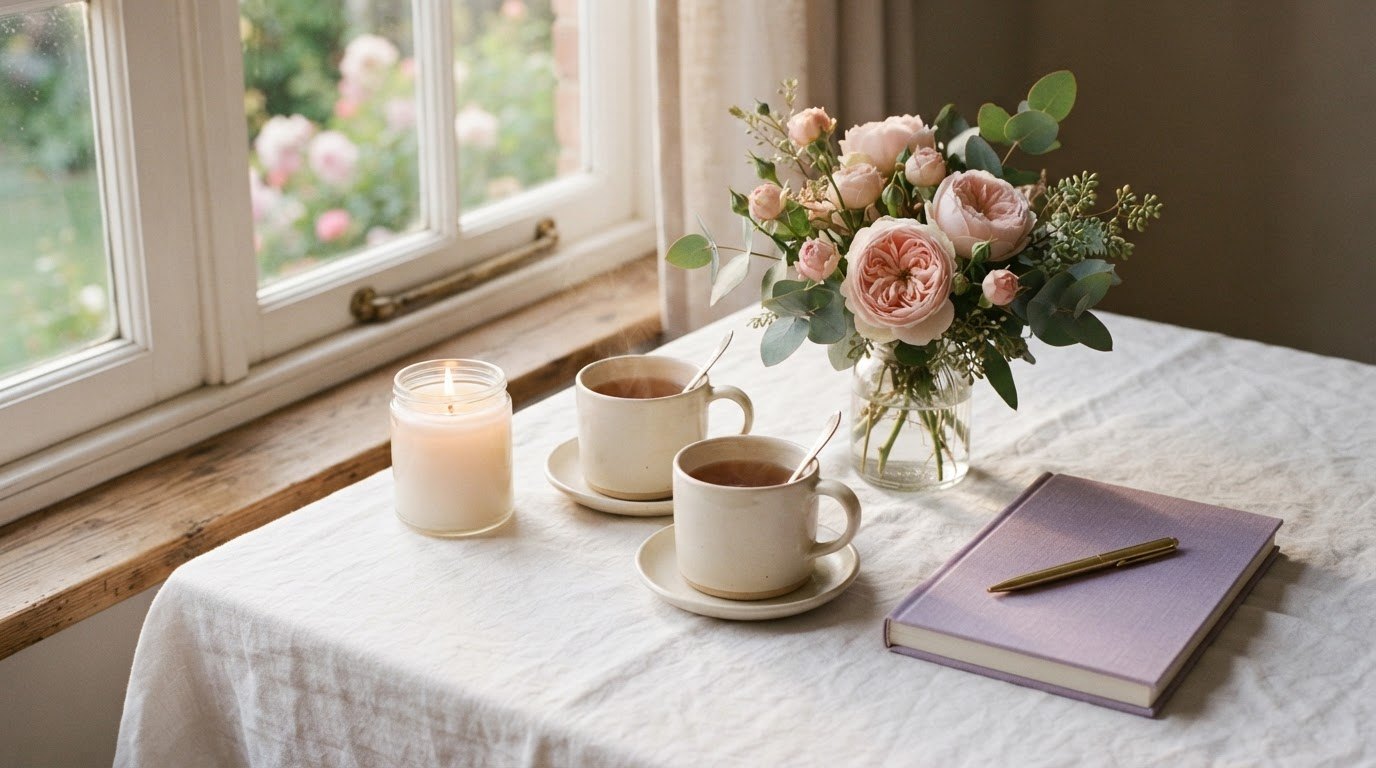
A small ritual can help, too. After a date, light a glass jar candle, make a cup of tea and write a few lines with a nice gold pen: How did I feel during the date? How did I feel afterward? Did their actions match their words? Your body often knows before your mind catches up.
Signs You've Been Lowering Your Standards
Lowering standards rarely happens all at once. It usually happens in tiny, reasonable-sounding steps: "they're just busy," "it's only been a few weeks," "I don't want to seem needy." Here are some gentle signs it might be happening:
- You're making excuses you'd never accept for a friend. If your best friend described this situation to you, what would you tell her?
- You feel anxious more than happy. Early dating can be nerve-racking, but if most of your time is spent decoding texts, something is off.
- You've stopped asking for small things. Maybe you used to say "please let me know if you're running late" and now you just wait.
- You're shrinking parts of yourself. Hiding your opinions, skipping plans with friends or downplaying what you want so you don't scare them away.
- You're holding on to potential. You like who they could be much more than how they're acting now.
- You feel relieved when they show basic decency. If a simple reply or a kept plan feels like a big win, the bar may have slipped.
If several of these feel familiar, please don't be hard on yourself. It happens to almost everyone, usually because you're kind, hopeful and willing to give people a chance. Those are lovely qualities. They just work best alongside clear standards.
A gentle reset: go back to your eight standards and ask, honestly, which ones are being met right now. Then decide on one small step, like naming a need out loud or giving yourself a week to see whether things change. You don't have to make a big decision today. You just have to stop ignoring what you already know.
How To Tell Someone Kindly It's Not a Fit
Holding your standards sometimes means ending things with someone who is perfectly nice but not right for you. You don't need a long explanation, and you don't need to list everything they did wrong. Kind and clear is enough.
A few scripts you can adapt:
- After one or two dates: "Thank you for the lovely evening. I really enjoyed meeting you, but I didn't feel the connection I'm looking for. I wish you all the best."
- After a few weeks: "I've really enjoyed getting to know you, and I want to be honest with you. I don't think we're the right fit for what I'm looking for long term, and I didn't want to keep going without telling you."
- When a standard was crossed: "I've noticed that our plans keep falling through, and consistency is really important to me. I don't think this is going to work, but I'm glad we met."
- If they ask why: "It's not about anything being wrong with you. It's just not the right match for me."
Send it by text or say it in person, depending on how far things went. And then, gently, let it be done. You don't owe anyone a debate about your decision. If you're dating again after a long break or a big life change, my guide to dating after 30 has more ideas for staying confident through the ups and downs.
When To Rethink a Standard

Standards should be firm, but they shouldn't be frozen. Sometimes what we call a standard is really an old fear, a past hurt or a rule we picked up from someone else. It's worth checking in now and then.
Consider rethinking a standard if:
- It's actually a preference in disguise. "Must be over six feet" isn't a standard. Neither is "must earn more than me." Ask whether it affects how you'd be treated.
- It protects you from closeness rather than harm. If your list is so strict that no one ever gets past date one, it might be keeping you safe from vulnerability, not from bad partners.
- It came from someone else. Parents, friends and social media all hand us ideas about who we should date. Check whether the standard is truly yours.
- Your life has changed. What you needed years ago might be different from what you need now.
- It expects perfection. "Never gets upset" or "always knows what to say" isn't a standard anyone can meet, including you.
Pour a cup from your favorite tea set, open a cream notebook and ask yourself: Where did this standard come from? Does it still serve me? What would I lose if I let it go, and what might I gain? There are no wrong answers. The goal is a short, honest list you truly believe in.
The standards worth keeping forever are the ones about safety, respect and kindness. Everything else is allowed to soften as you grow.
Final Thoughts
Your dating standards are a quiet promise to yourself: that you deserve consistency, respect and real care, and that you'll notice when someone can't offer it. Keep them warm, keep them few and keep them yours. The right person won't feel like a test you're grading. They'll feel like relief, steady and kind, and that's exactly what you've been holding space for.