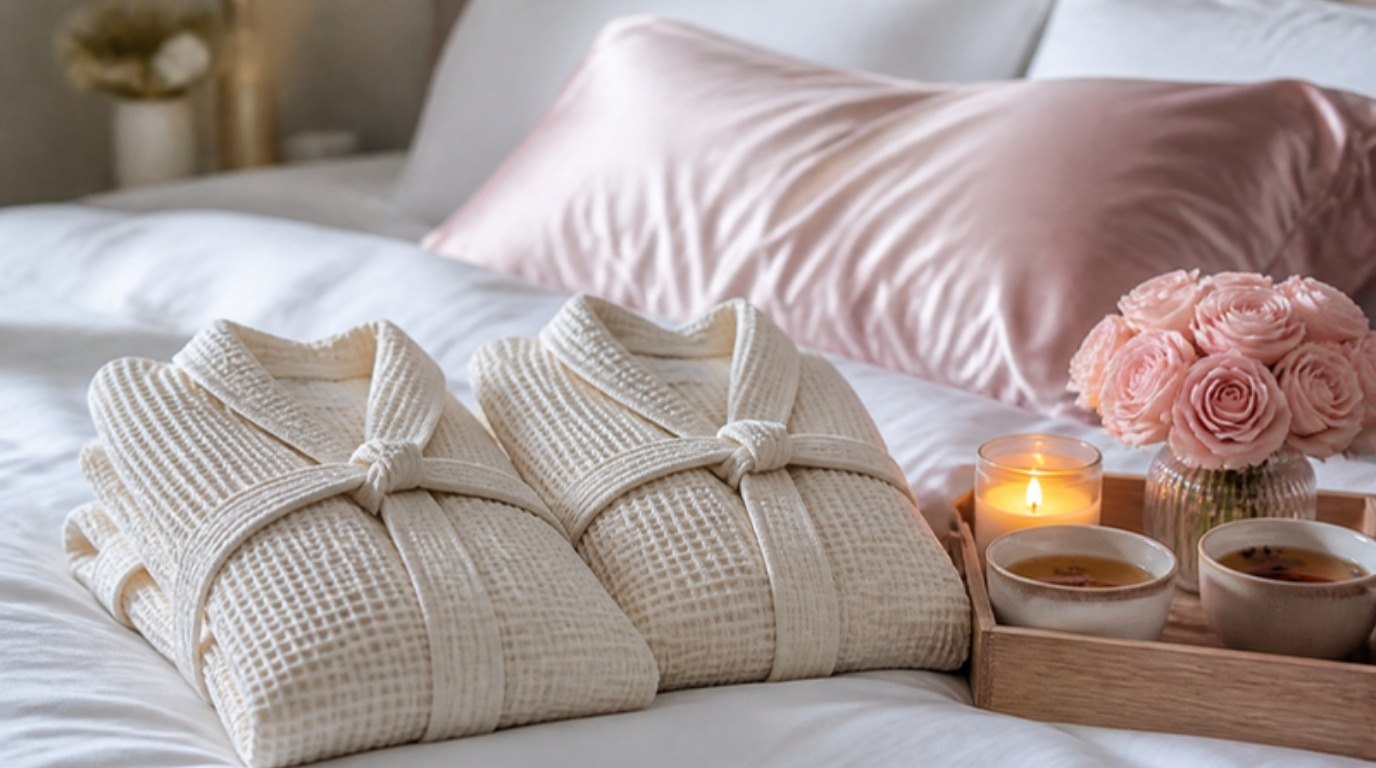
Self-care doesn't always have to be a solo project. Some of the most restoring evenings happen when two tired people decide, together, that tonight nothing else needs to get done. Shared rest is its own kind of intimacy: you're not performing, not planning, not fixing. You're just recharging side by side.
This guide is full of self-care ideas for couples, exactly 30 ways to recharge together, grouped into spa nights, slow mornings, gentle movement, screen-free evenings, creative time, quiet nights in, mental load resets and the underrated art of being alone together. You'll also find how to honor two different recharge styles and a simple weekly ritual with a "self-care night for two" plan you can copy.
None of it needs to be fancy. It just needs to be on purpose.
Why Self-Care for Couples Matters
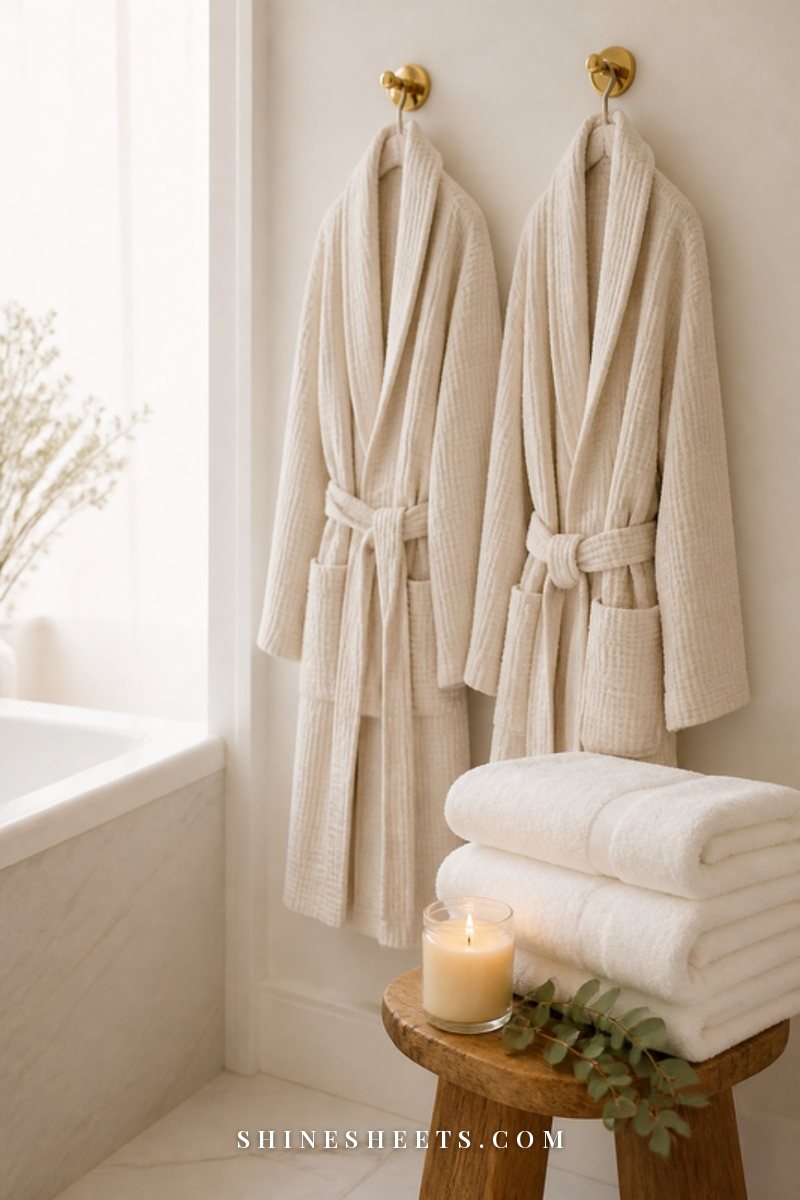
Most couples are great at being busy together. You share errands, chores, calendars and the endless question of what's for dinner. What often gets lost is shared rest, the kind where neither of you is on duty.
When you take care of yourselves together, a few lovely things happen. Stress drops for both of you at the same time, which means fewer evenings where one of you is calm and the other is running on empty. You build positive rituals that belong only to you. And you remind each other, without saying it, that your relationship is a soft place to land, not another item on the to-do list.
Couple self-care doesn't replace your own personal self-care, by the way. You still need your solo bath, your walk, your journal. This is the extra layer: rest that also connects you.
Couple Self-Care vs. a Regular Date
A date is usually about doing something: going out, trying a place, making a plan. Couple self-care is about undoing something: the tension, the rush, the mental noise of the week. The goal isn't entertainment. It's recovery.
A good way to tell the difference is to ask how you feel afterward. A great date leaves you excited. A great self-care evening leaves you softer, sleepier and a little more patient with each other. Both matter, and the healthiest couples have a mix of the two. If your relationship has had plenty of fun lately but you both feel frayed, self-care is probably what's missing.
It also tends to cost less. Most of the 30 ideas below need nothing more than what you already have at home, plus maybe a candle and a box of tea.
30 Self-Care Ideas for Couples
Pick two or three that feel easy right now. You can always come back for more. If one idea feels awkward at first, give it a second try; new rituals usually feel strange before they feel natural.
At-Home Spa Night
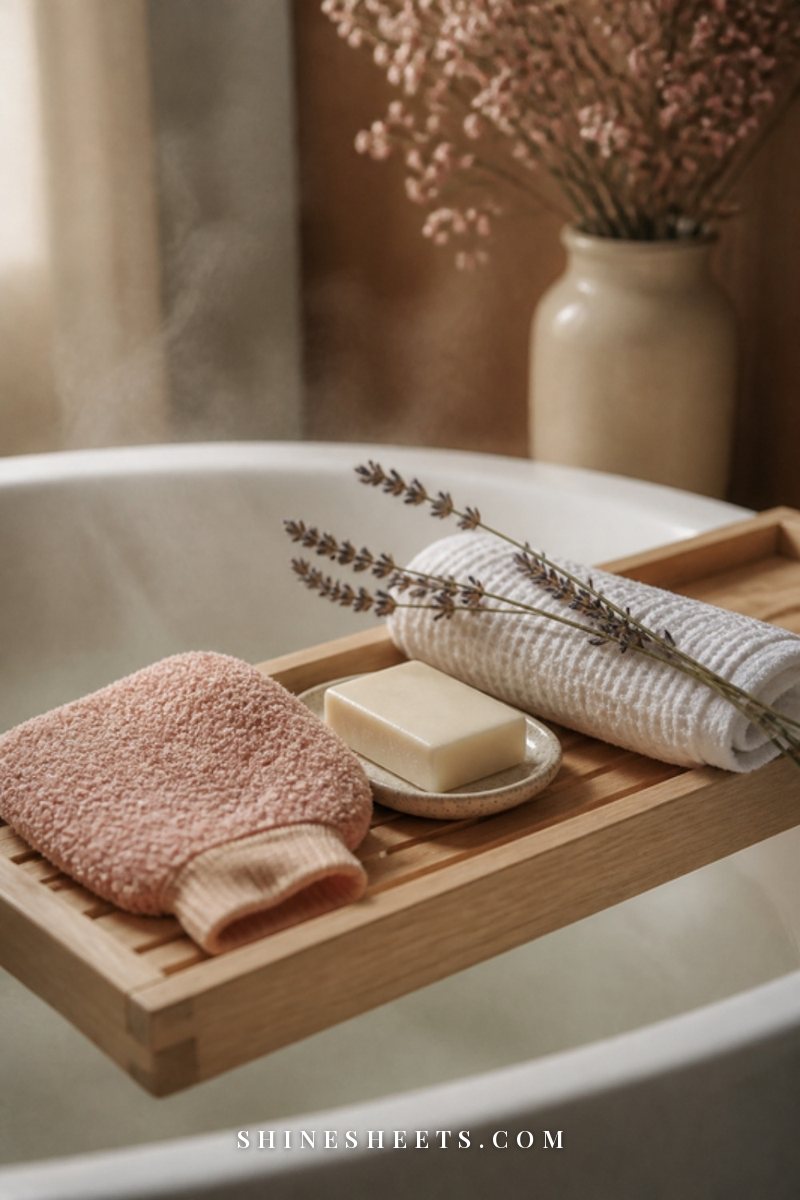
1. Do face masks together. Clean faces, sheet masks on, 15 minutes of lying back and trying not to laugh at each other. A Korean sheet mask set with a few different types makes it easy to let each person pick what their skin needs.
2. Trade hand or foot massages. Ten minutes each, with a rich lotion and no phone in sight. Take turns choosing the music. It's simple, inexpensive and one of the fastest ways to relax a tense body.
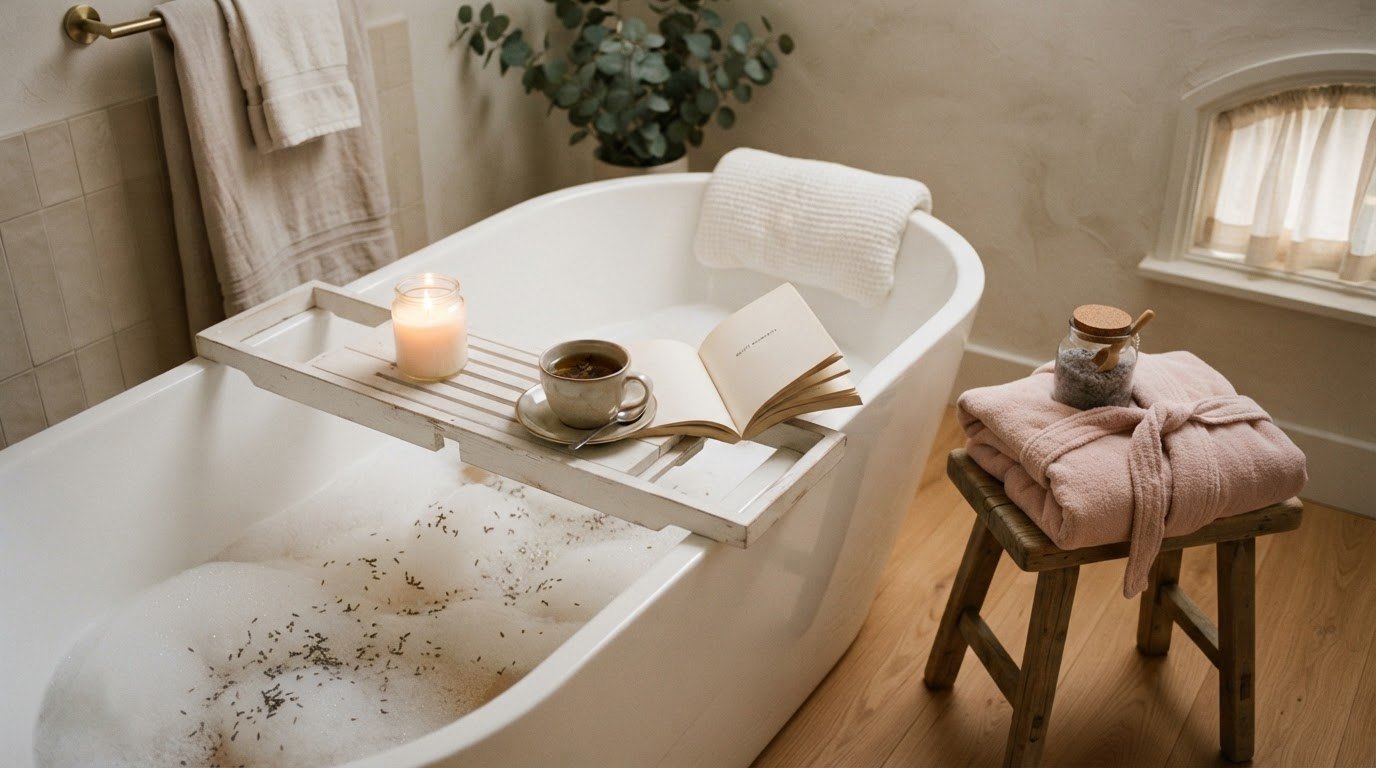
3. Run a bath for one, then switch. One person soaks while the other brings tea and a book, then you swap the next week. My bath ideas guide has plenty of small ways to make the water feel special.
4. Wear matching robes all evening. It sounds small, but slipping into soft waffle robes after a shower tells your body the day is officially over. Add warm socks and a slow evening on the sofa.
Slow Mornings
5. Have a no-alarm Saturday. Turn off every alarm and let whoever wakes first quietly make coffee. No plans until 10 a.m.
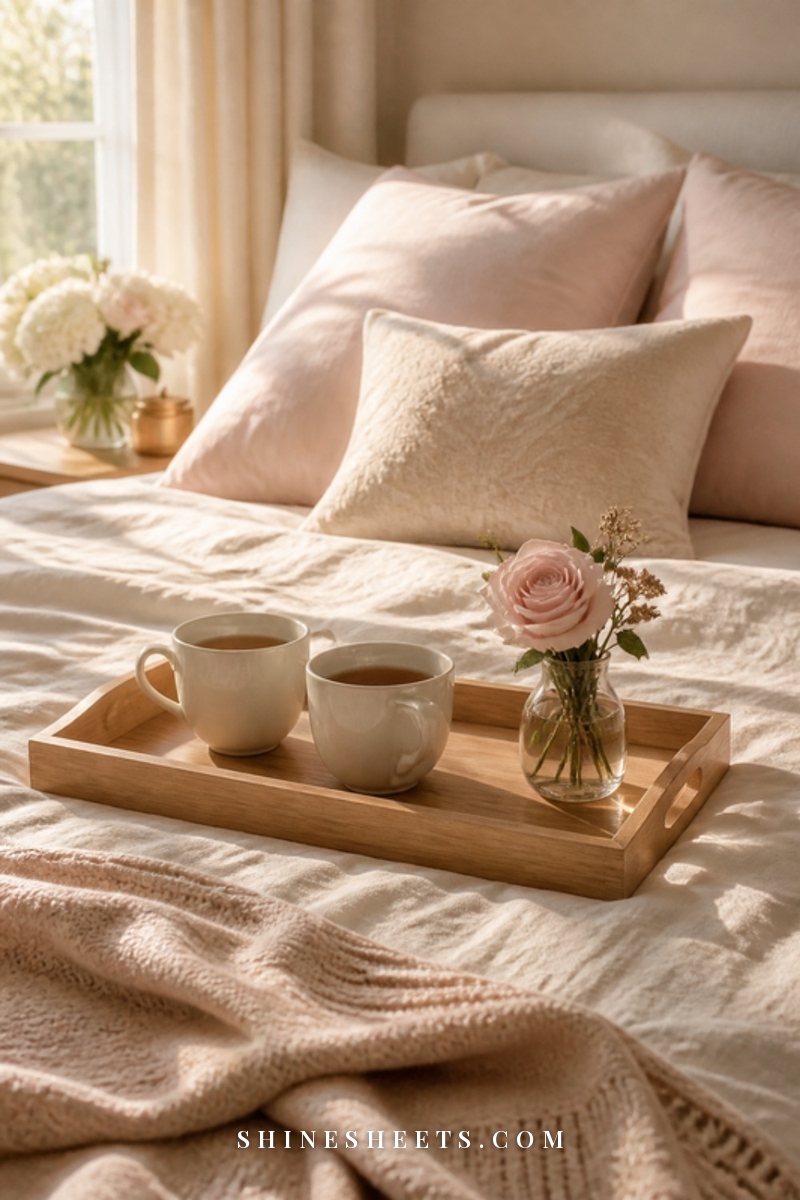
6. Bring coffee or tea back to bed. Sit up against the pillows, talk about nothing important and watch the light change. This is one of my favorite tiny rituals to recommend.
7. Stretch together for five minutes. A few gentle stretches on the bedroom floor, side by side, before anyone checks a phone.
8. Plan the week over breakfast. Ten calm minutes with a notebook: who needs what, which evenings are free, what you're looking forward to. More gentle ideas live in my couple morning routine guide.
Gentle Movement Together

9. Take an evening walk with no destination. Twenty minutes around the neighborhood, hands free, phones in pockets. Walking side by side makes talking easier, especially about hard things.
10. Try a beginner yoga video together. Something slow and short, 15 to 20 minutes. You don't need to be good at it. You only need to breathe.
11. Have a kitchen dance break. One song, full volume, terrible dancing. It shakes off a whole day of sitting in about three minutes.
12. Take a weekend nature walk. A park, a lake path, a forest trail. Notice five things you can see and hear, and compare lists at the end.
Digital-Free Evenings
13. Set a phone bedtime. Both phones go to a basket in another room at 9 p.m. The first few evenings feel strange; by the second week, they feel like relief.
14. Read side by side. Two books, one blanket, a lamp and silence. Read a favorite line out loud now and then. If you're not big readers, a magazine or a book of short essays works just as well, and nobody has to finish anything.
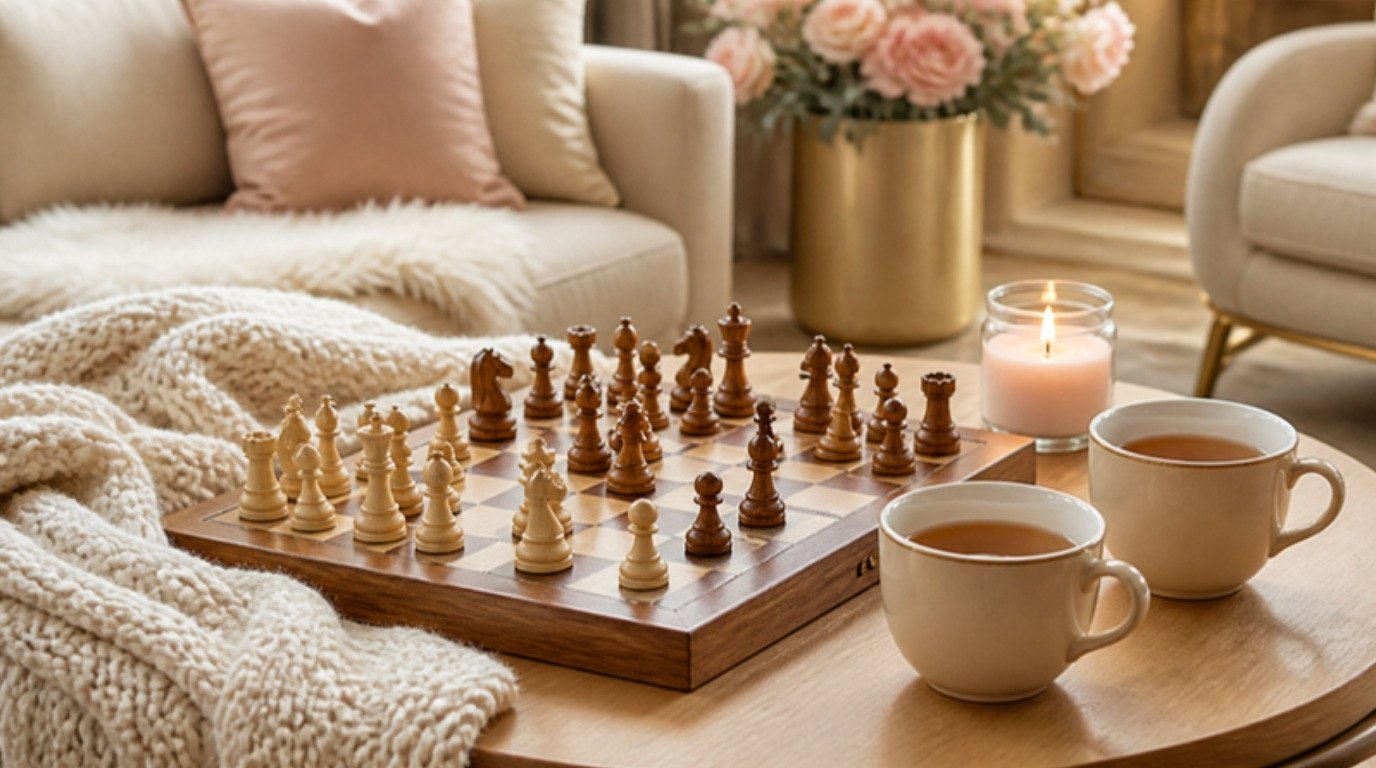
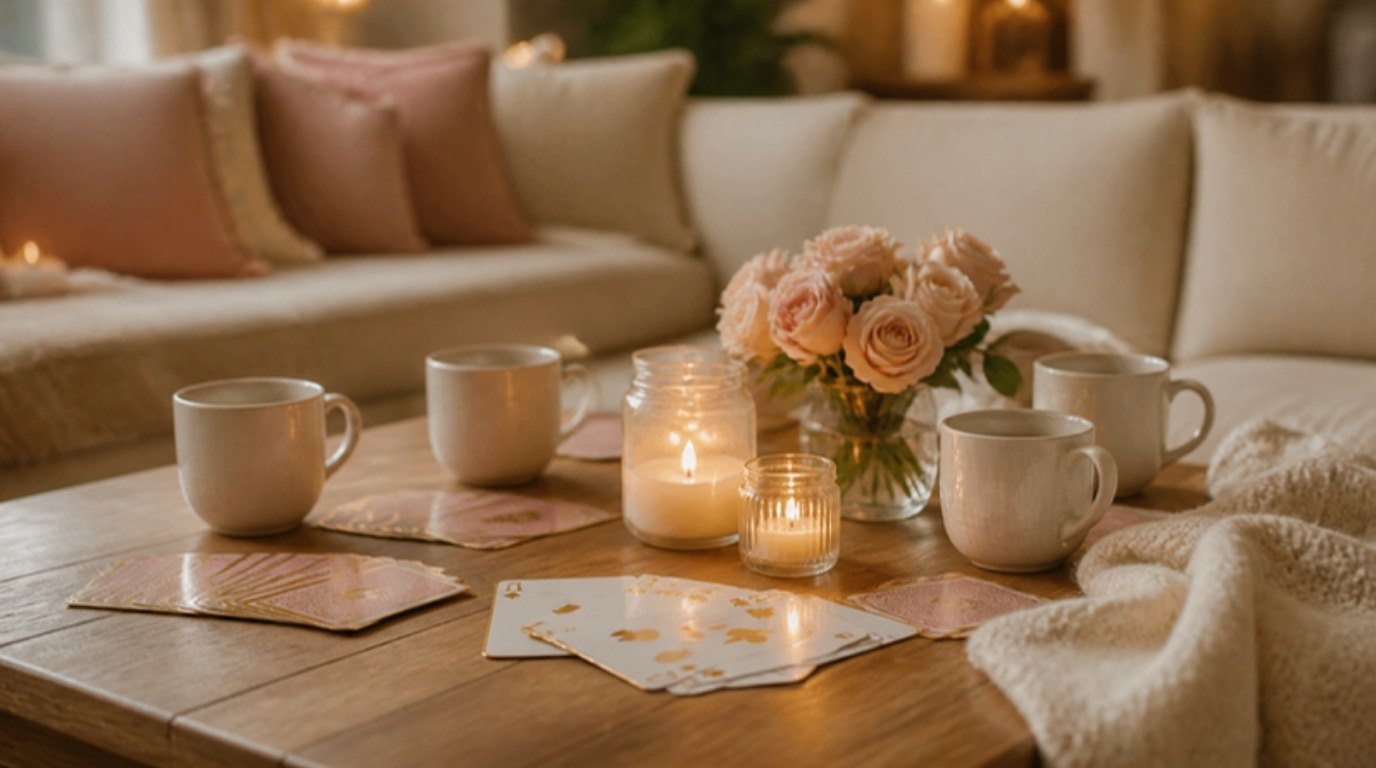
15. Play a card or board game. A quick two-player game is a lovely way to laugh without looking at a screen. Keep one game in an easy-to-reach basket so it becomes the obvious choice on a tired evening, and let the loser make the next round of tea.
16. Ask each other better questions. Skip "how was your day" and try "what was the best five minutes of your day?" or "what's been on your mind lately?" Real answers make real connection.
Creative Time
17. Do a puzzle together. Leave it out on a table and add a few pieces whenever you pass. It's quietly meditative. A 500-piece puzzle is the sweet spot: big enough to last a couple of weeks, small enough that you'll actually finish it and feel proud.
18. Paint, draw or color together. No skill needed. Put on music and see what each of you creates in 30 minutes. A simple watercolor set or a pack of colored pencils is all you need, and the results are always better than you expect (or funnier, which is just as good).
19. Make a shared playlist for slow evenings. Each of you adds five songs that feel calm and warm, then play it during your next night in. Over time it turns into the soundtrack of your quiet evenings, and just pressing play starts to relax you both.
Quiet Nights In

20. Create a "nothing night." No chores, no errands, no plans. Just blankets, candles and whatever feels restful. For more ideas, my guide to cozy night in ideas is full of small, soft plans.
21. Light candles and dim the overhead lights. A couple of glass jar candles and a lamp instantly change the mood of a room. Lower light helps your body wind down for sleep.
22. Brew a pot of herbal tea. Chamomile, peppermint or lavender in the evening, sipped slowly. An herbal tea gift set lets you each find a favorite and makes the ritual feel a little special.
23. Upgrade your bed for the week. Fresh sheets, an extra pillow and a silk pillowcase each. There's something very restful about climbing into a bed that feels like a hotel.
Mental Load Reset
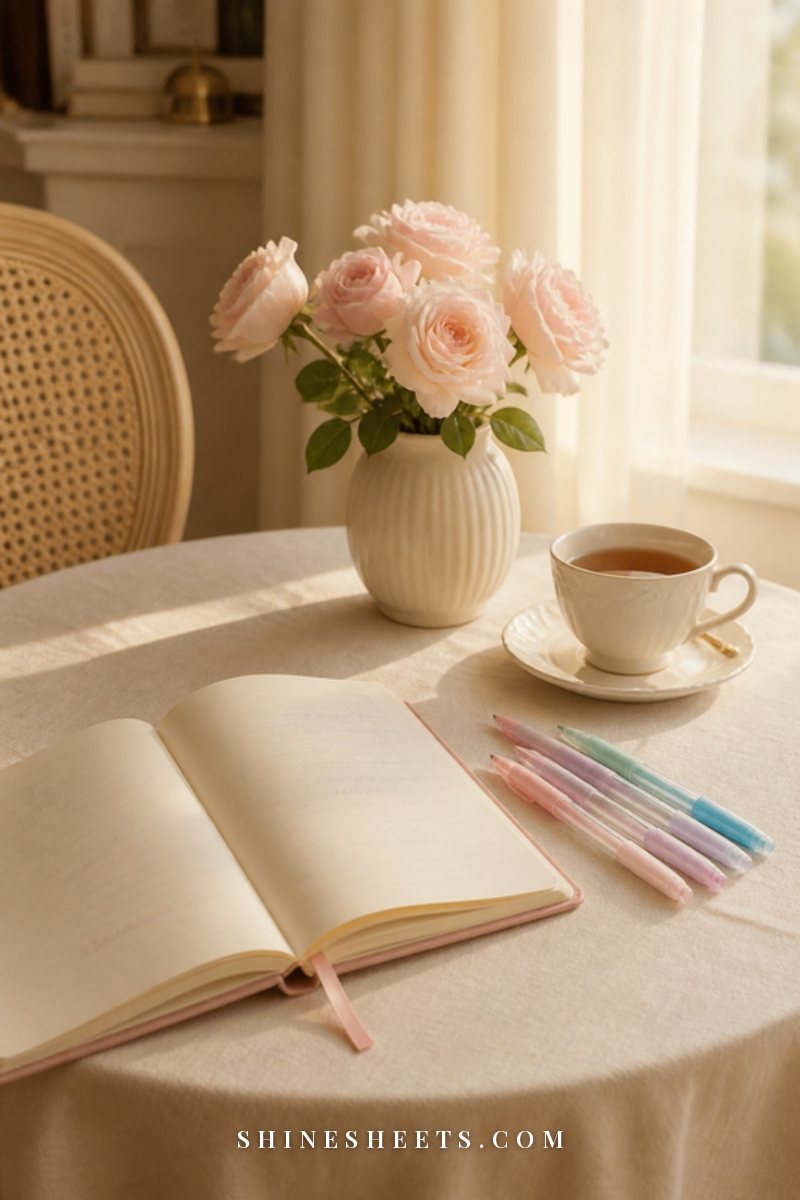
24. Do a weekly brain dump together. Each of you writes every task, worry and reminder on paper for ten minutes. Then you look at both lists together and decide what actually matters this week.
25. Swap one invisible task. If one of you always remembers birthdays, books appointments or tracks groceries, the other takes one of those jobs for a month. My guide on the mental load explains why this invisible work is so tiring.
26. Tackle one dreaded task side by side. The pile of paperwork, the overflowing closet, the email you've both been avoiding. Thirty minutes together, then reward yourselves with something lovely.
27. Have a ten-minute evening reset. Set a timer, tidy one room together, then sit down. Shared tidying feels lighter and the evening feels calmer afterward.
Alone-Together Time
28. Do separate hobbies in the same room. You knit, they read, or you journal while they sketch. Being near each other without needing to interact is deeply restful, especially for introverts.
29. Give each other a solo hour. One person gets a full hour alone while the other handles everything at home, then you swap. Respecting each other's need for space is a form of love.
30. Sit outside in silence. A balcony, a garden, a park bench. Ten minutes of watching the sky together, without trying to fill the quiet. Comfortable silence is one of the clearest signs of a relationship that feels safe, and it gets easier the more you practice it.
Respecting Different Recharge Styles
Here's the honest truth about couple self-care: you probably don't recharge the same way. One of you may feel restored after a dinner with friends, while the other needs a quiet evening to recover from that same dinner. Neither is wrong.
A few ways to make room for both:
- Name your style out loud. Try: "I recharge best when it's quiet and I don't have to talk much." Or: "I feel better after doing something together, even something small."
- Alternate whose idea comes first. One weekend the introvert picks (a quiet night in), the next weekend the extrovert picks (a walk to a busy market).
- Build in a buffer. After a social plan, schedule a quiet morning the next day. After a quiet weekend, plan a small outing.
- Use "alone-together" as a compromise. Ideas 28 to 30 work for nearly everyone because they offer company without pressure.
- Check in without blame. "I'm feeling a bit drained, can we stay in tonight?" is kind, clear and easy to say yes to.
It's also completely okay to recharge apart sometimes. A strong couple isn't one that does everything together. It's one where both people feel free to take what they need.
A Weekly Self-Care Date Ritual
The ideas above work best when they become a rhythm rather than a once-in-a-while treat. I'd suggest one fixed "self-care date" a week, on the same evening, for about 90 minutes. Treat it as seriously as you would a dinner reservation.
Some simple rules to keep it gentle:
- Choose the evening together. Sunday and Wednesday are lovely options: one sets up the week, the other breaks it in half.
- Protect it. Only move it if something truly can't wait, and reschedule rather than skip.
- Keep it low-effort. If it takes an hour to set up, it won't last. A candle, tea and one activity is enough.
- Take turns planning. One week is yours, the next is theirs, and nobody criticizes the other person's plan.
- End with a short check-in. One question each: "What do you need more of this week?"
If you'd like more inspiration for solo nights too, my self-care night ideas can easily be adapted for two.
Self-Care Night for Two
Here is a 90-minute plan you can copy exactly or adjust to your taste. Screenshot it and keep it on your phone for the next quiet evening.
| Time | What to do | Why it helps |
|---|---|---|
| 0–10 min | Phones in a basket, lights dimmed, candles lit, kettle on | Signals the end of the workday for both of you |
| 10–25 min | Showers, then robes and warm socks | Warm water and soft fabric help the body relax |
| 25–45 min | Sheet masks and herbal tea on the sofa | Shared, quiet, a little silly in the best way |
| 45–60 min | Hand or foot massage, ten minutes each | Gentle touch eases tension and builds closeness |
| 60–80 min | Read, puzzle or play a quiet game | Low-pressure connection without screens |
| 80–90 min | Check-in question, then bed with fresh pillows | Ends the evening feeling heard and rested |
Leave out anything that doesn't feel good to one of you. The point isn't to follow a schedule perfectly. It's to give both of you an evening that feels like exhaling.
How To Start When You're Both Exhausted
The irony of couple self-care is that you need it most when you have the least energy to plan it. If you're both running on fumes, skip the elaborate version and start here:
- Lower the bar on purpose. Tonight's self-care can be ten minutes of tea on the sofa without phones. That still counts.
- Decide in advance, not in the moment. Tired brains always vote for the easiest screen. Choose your idea in the morning so the evening decision is already made.
- Use a default ritual. Pick one fallback, like a walk around the block plus herbal tea, for the evenings when nobody can think.
- Let one person lead. If your partner is more depleted, offer to set everything up: "You just show up, I'll do the rest." Next time, they return the favor.
- Say what you need clearly. "I need a quiet evening and a bit of a hug" is far easier to meet than a vague "I'm tired."
And remember: if one of you has been carrying stress for weeks, couple self-care is a lovely support, but it isn't a fix for everything. Talking to a counselor, together or alone, is a caring step too, not a sign that something is wrong.
Common Couple Self-Care Mistakes
A few gentle pitfalls to watch for, because good intentions can still go sideways:
- Turning rest into a project. If the spa night needs three shopping trips and an hour of setup, it becomes another chore. Keep it simple.
- Expecting the same thing to work for both of you. Your partner may find face masks awkward and walks heavenly. Let each of you choose freely.
- Using the time to solve problems. Self-care evenings are not the moment for big conversations about money or chores. Schedule those separately.
- Keeping score. "I planned the last three nights" sounds fair but feels cold. Take turns lightly and with generosity.
- Giving up after one awkward try. New rituals feel strange at first. Give any idea at least three tries before you decide it isn't for you.
- Forgetting solo self-care. Shared rest is wonderful, but each of you still needs time that belongs only to you.
Final Thoughts
Taking care of yourselves together is one of the kindest things you can do for your relationship. It doesn't have to be grand or expensive. A candle, a cup of tea, a quiet walk and two people who agree to slow down for a while is more than enough.
Start with one idea this week. Let it be imperfect, let it be small, and let it become yours. Rest you share has a way of making everything else feel a little lighter.