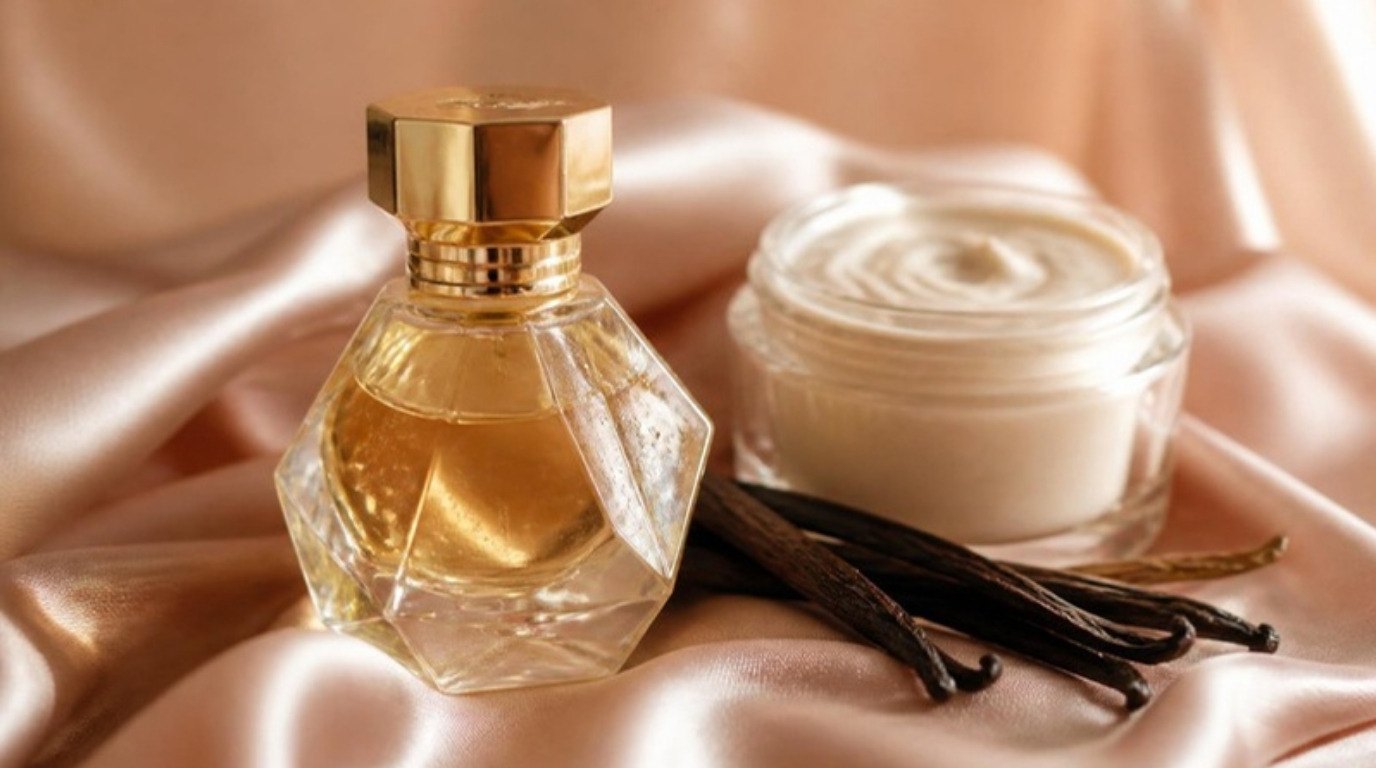
Perfume that disappears by lunchtime usually isn't a "bad" perfume. Most of the time, it's a skin, storage or application problem, and every one of those can be fixed with small habits that cost almost nothing.
Fragrance is chemistry. Scent molecules need something to hold on to, a little warmth to rise from and a cool, dark home between wears. Give a perfume those three things and even a light, fresh scent can stay with you far longer than it does now.
This guide covers how to make perfume last longer from every angle: why scent fades in the first place, a "how long does it last" table for every concentration, 12 tricks that actually work, the mistakes that quietly shorten wear time and why you may stop smelling your perfume long before everyone else does.
It took me a while to accept that my favorite bottles weren't the problem. My routine was. The good news is that the fixes are gentle and quick.
Why Perfume Fades So Fast
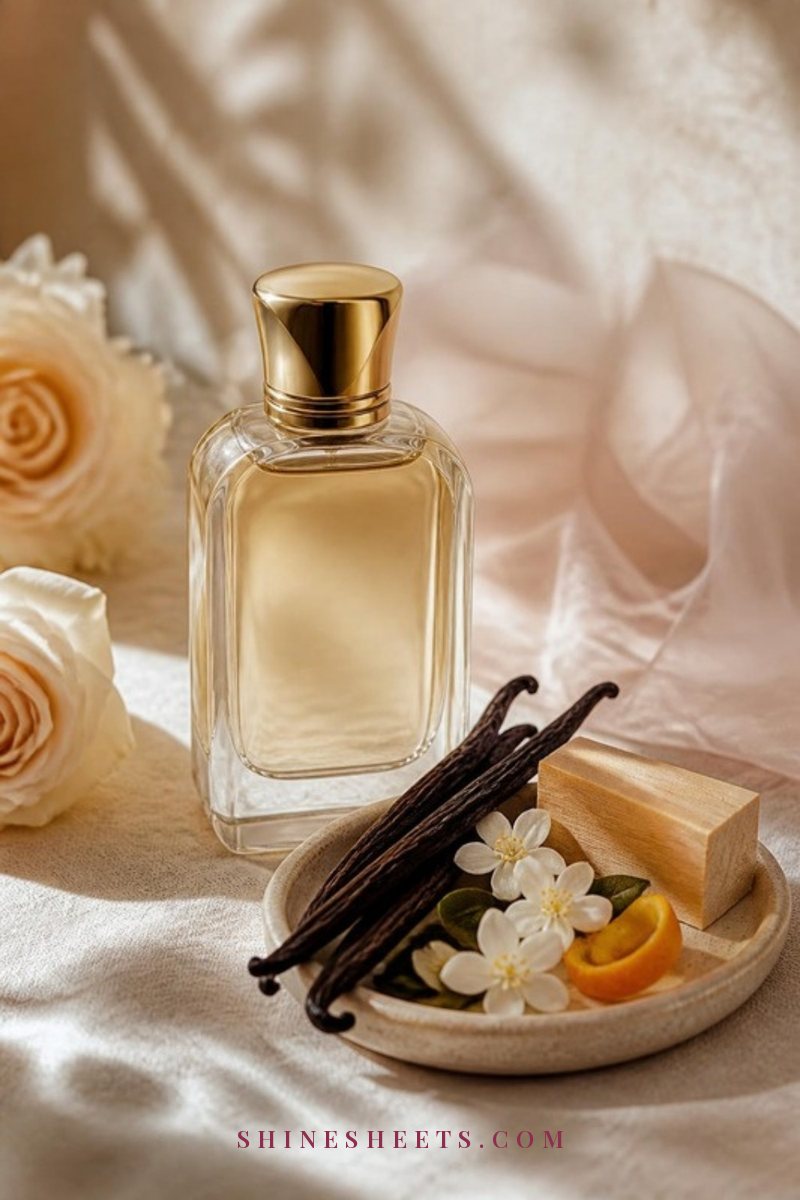
Before the tricks, it helps to know what you're working with. Four things decide how long a fragrance stays on you.
Your Skin Type
Dry skin is the number one reason perfume vanishes. Scent oils evaporate faster when there's nothing on the skin to grip them. Oilier skin tends to hold fragrance longer, which is why my shiny T-zone is, funnily enough, the one place where scent lingers on me. If your skin feels tight after a shower, your perfume is probably evaporating faster than it should.
The Concentration
The amount of perfume oil in the bottle matters a lot. A parfum or extrait has the most, an eau de parfum (EDP) sits in the middle, an eau de toilette (EDT) is lighter and a body mist is mostly water and alcohol. Same scent name, very different wear time.
The Notes Pyramid
Every perfume is built in three layers. Top notes (citrus, fresh herbs, light fruits) are what you smell in the first 15 to 30 minutes, and they fade first. Heart notes (florals like rose and jasmine, soft spices) show up next and stay a few hours. Base notes (vanilla, amber, musk, sandalwood, patchouli) are the heaviest molecules and can last all day. A perfume that is mostly top notes will never be a ten-hour scent, no matter what you do.
Heat, Light and Air
Fragrance breaks down when it's exposed to warmth, sunlight and oxygen. A bottle that lives on a sunny windowsill or in a steamy room can lose its strength and even change its smell over a few months.
How Long Does Perfume Last? A Quick Table
Use this as a rough guide. Real wear time depends on your skin, the notes and the weather, so treat these numbers as a starting point (screenshot it if you like having it handy when you shop).
| Concentration | Perfume oil | Typical wear | Best for |
|---|---|---|---|
| Parfum / extrait | 20–30% | 8–12+ hours | Evenings, cold weather, a scent you want close to the skin |
| Eau de parfum (EDP) | 15–20% | 6–8 hours | Everyday signature scent, workdays, dates |
| Eau de toilette (EDT) | 5–15% | 3–5 hours | Warm days, daytime errands, lighter fresh scents |
| Eau de cologne | 2–4% | 2–3 hours | A quick refresh after the gym or on hot afternoons |
| Body mist / fragrance mist | 1–3% | 1–2 hours | Layering, hair, top-ups, a soft scent bubble |
| Perfume oil | 15–30% (in oil) | 5–10 hours, close to skin | Sensitive noses, quiet offices, pulse points |
One small note: wear time and projection aren't the same thing. A perfume oil can last all day while staying so close to your skin that only someone hugging you notices it. That's not a failure, it's just a different style.
How To Make Perfume Last Longer: 12 Tricks That Actually Work
You don't need all twelve. Pick the three or four that fit your routine and you'll notice a difference within a week.
1. Apply Right After Your Shower
Warm, slightly damp skin with open pores is the best canvas you'll ever get. Pat yourself dry with a towel, leave the skin just barely damp and apply your perfume within five minutes. The moisture helps the fragrance cling instead of flashing off. If you like a proper shower ritual, my body care routine walks through the full order of steps, and perfume slots in neatly at the end.
2. Moisturize First
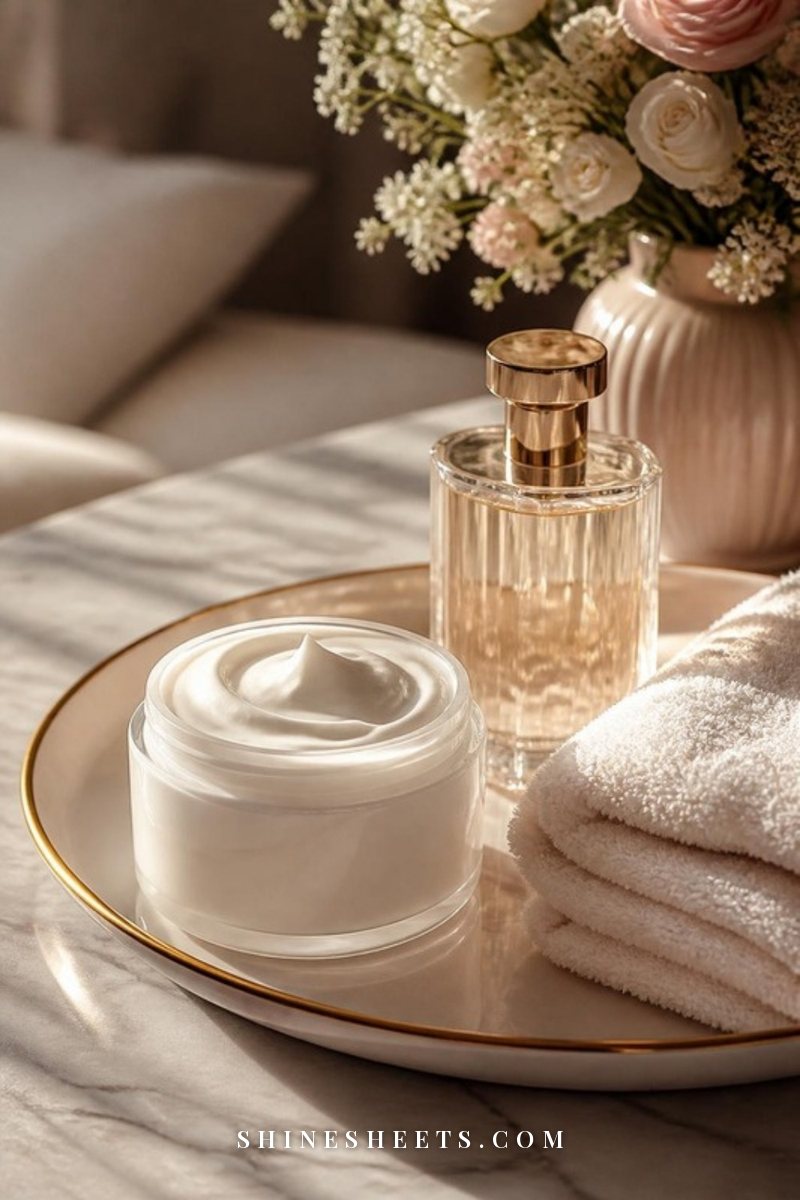
This is the trick that changes the most for the least effort. Fragrance holds onto hydrated skin far better than dry skin. Smooth a thin layer of lotion over the spots where you'll spray, wait about a minute until it feels soft rather than slippery, then apply your perfume.
The safest option is a gentle unscented body lotion, because it won't fight with your perfume. Look for one with glycerin, shea butter or ceramides and no added fragrance. If you love a scent enough to own the matching lotion, even better, which brings us to the next trick.
3. Layer With Matching or Complementary Body Products
Layering means building the same scent family in two or three steps: body wash, lotion or oil, then perfume. Each layer gives the next one something to hold on to. You don't need the exact matching line. A warm vanilla underneath a floral, or a soft musk under something citrusy, makes almost any perfume feel richer and longer-lasting.
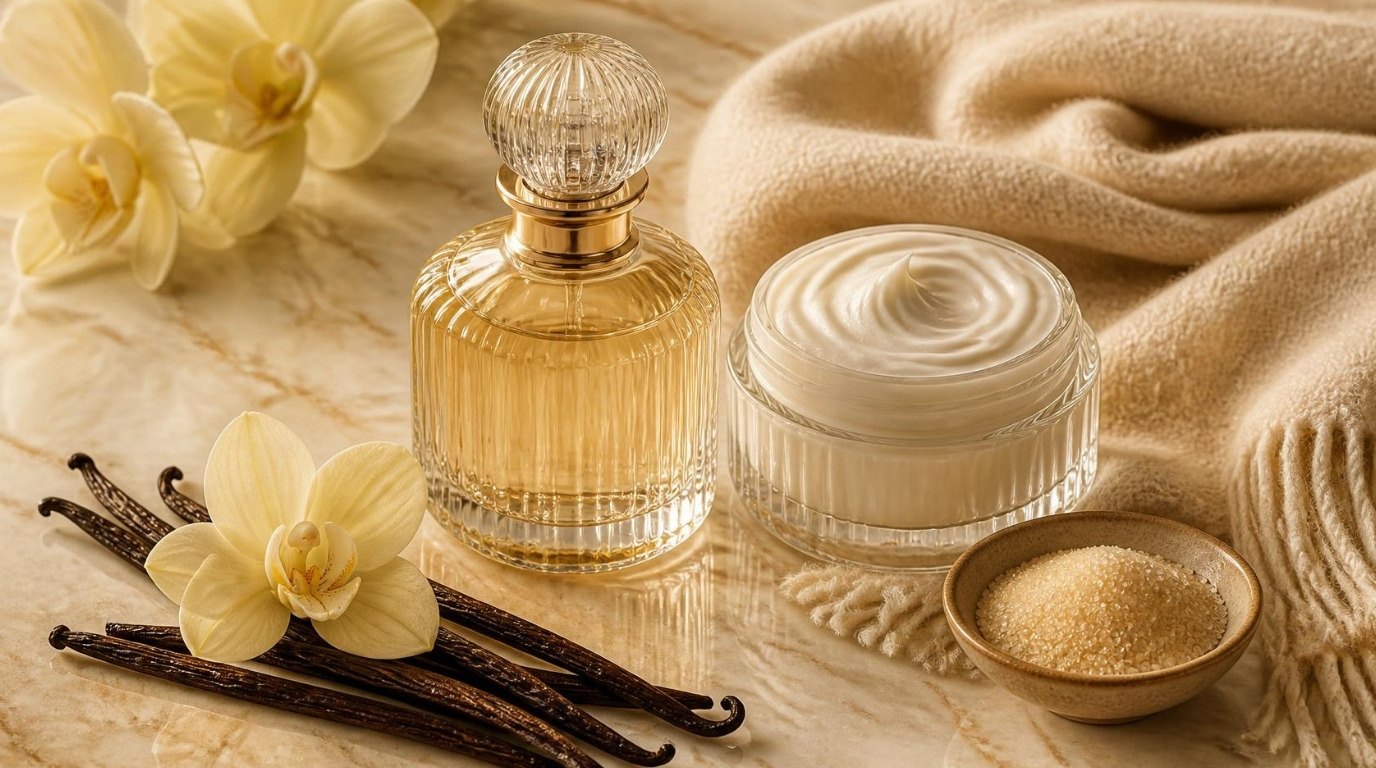
I'd choose a light vanilla body oil as an easy base, since vanilla sits well under florals, woods and fruity scents alike. A few drops pressed into slightly damp skin is plenty. For combinations that smell expensive, my guide to perfume layering for beginners has fifteen stacks to try, and if vanilla is your thing, here's how to smell like vanilla all day.
4. Use a Thin Layer of Balm on Pulse Points
If your skin is very dry, a tiny dab of an unscented balm or plain petroleum jelly on your wrists and behind your ears before spraying acts like a primer. Use a rice-sized amount, rub it in until it's almost invisible, then spray directly over it. It won't make a light EDT last like an extrait, but it can easily add an hour or two.
5. Spray on Pulse Points (and Stop Rubbing)
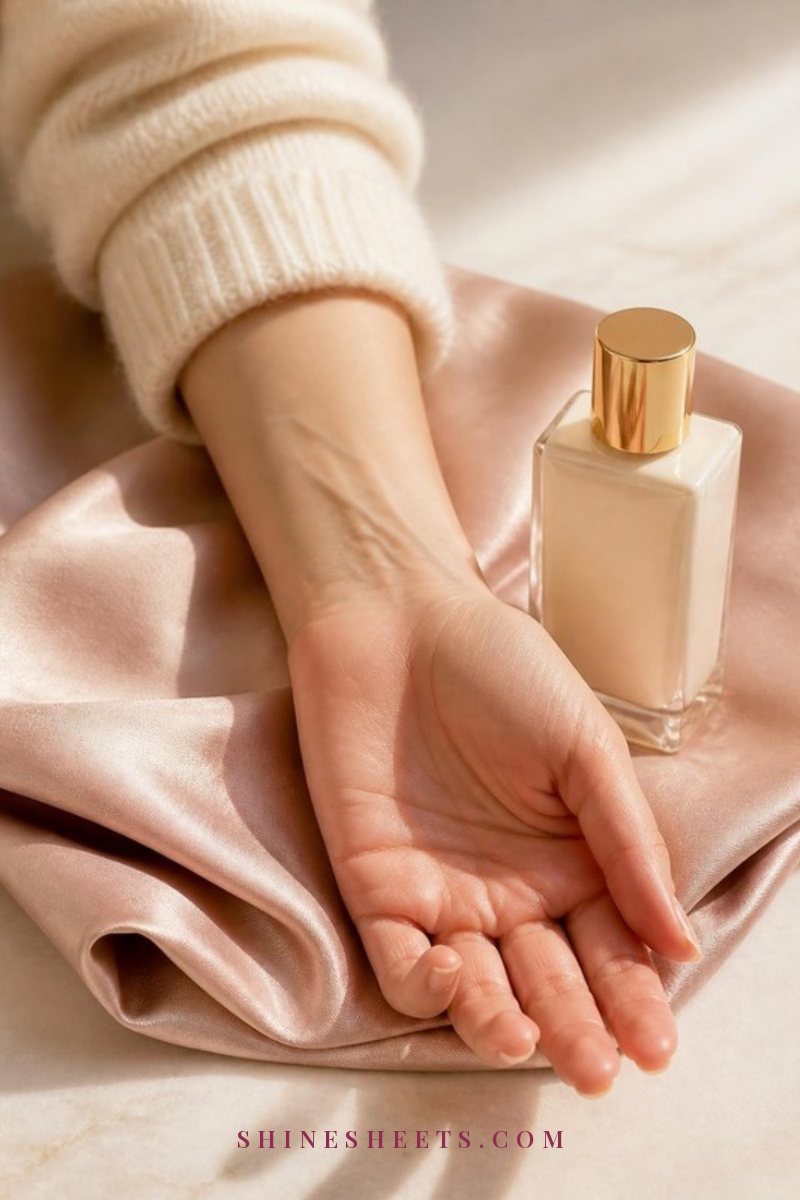
Pulse points are places where blood vessels sit close to the skin, so they're a little warmer, and warmth helps fragrance rise gently through the day. The classics are:
- Inner wrists
- The sides of your neck, just below the ears
- Behind the ears
- The inside of your elbows
- Behind your knees (lovely with skirts and dresses, since scent rises)
- Your décolletage
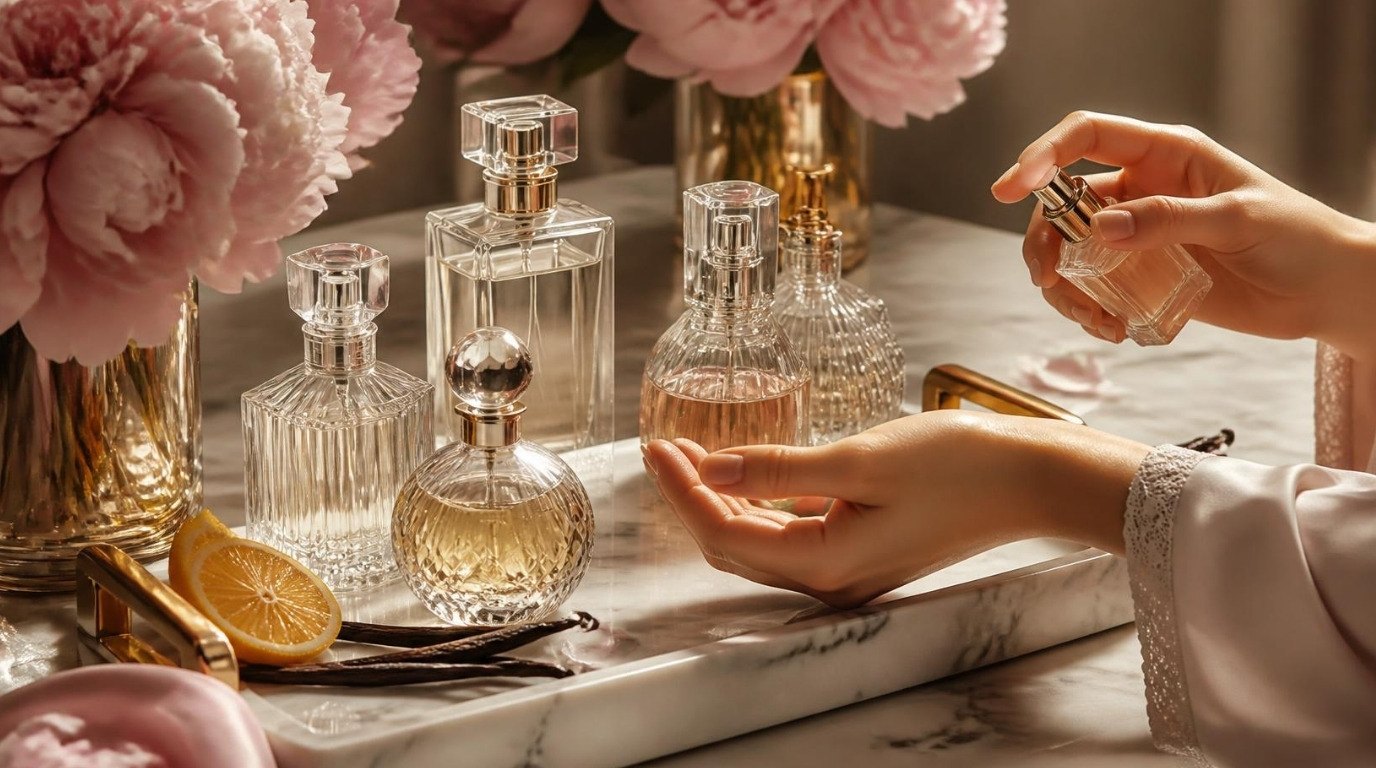
And now the important part: don't rub your wrists together. Rubbing creates friction and heat that speed up evaporation and crush the delicate top notes, so the opening of the perfume disappears almost immediately. Spray, then let it air-dry for 30 seconds. If you must, dab your wrists together once, softly.
6. Spray Your Hair, Carefully
Hair is porous and holds scent for hours, and every time you move your head you leave a soft trail. The catch is that most perfumes contain alcohol, which can dry out your strands if you spray them directly and often.
The gentle way: spray once onto your hairbrush, then brush through the lengths, or mist the air and walk through it. Keep fragrance away from your scalp and roots. A hair mist made for the purpose is kinder still, and a soft fragrance body mist that's labeled safe for hair works beautifully here, too.
7. Scent Your Clothes and Scarves
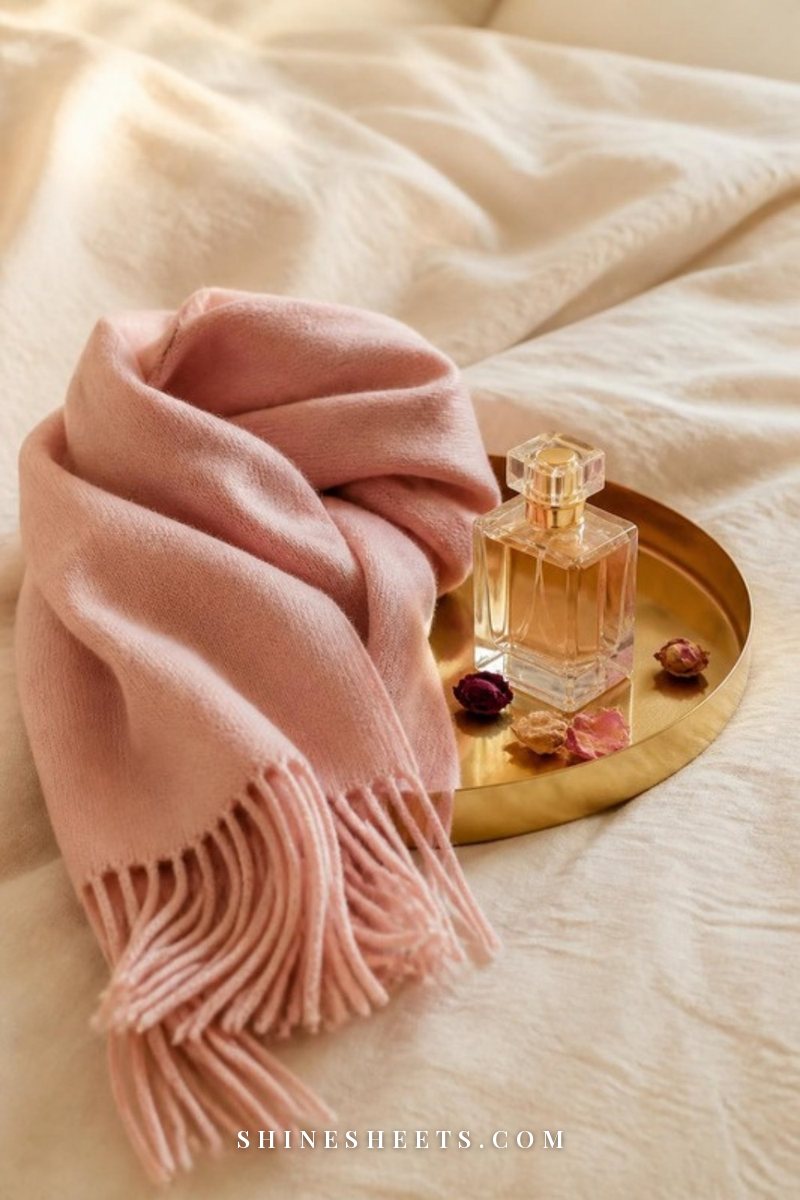
Fabric holds fragrance for a surprisingly long time, often longer than skin. Natural fibers like wool, cashmere and cotton are especially good at it. A light spritz on a scarf, the inside of a coat collar or the lining of a jacket can keep your scent around for a whole day, sometimes several.
Two small cautions. Perfume can stain silk, satin and very light colors, so test on a hidden seam first or spray from a little further away (about 8 to 10 inches). And skip spraying anything right before you put on fine jewelry, since alcohol and oils can dull pearls and some metals. Perfume goes on first, jewelry last.
8. Know How Many Sprays You Actually Need
More sprays won't make a perfume last longer, they just make it louder for the first hour. A good starting formula:
- Body mist: 4 to 6 sprays, refreshed during the day
- Eau de toilette: 3 to 5 sprays
- Eau de parfum: 2 to 4 sprays
- Parfum or extrait: 1 to 2 sprays or a few dabs
Go lighter in small offices, warm weather and anywhere people sit close to you. Strong fragrance can trigger headaches for some people, so a soft trail is kinder than a cloud.
9. Choose Notes That Naturally Last
If longevity matters most to you, choose your perfume with that in mind. Fragrances built around base notes simply stay longer. Look for these on the ingredient description or the brand's note list:
- Vanilla and tonka bean: warm, sweet and very long-wearing
- Amber and resins: rich, cozy and slow to fade
- Woods: sandalwood, cedar and vetiver hold on for hours
- Musk: soft and skin-like, often the last thing you smell at night
- Patchouli and oud: deep and powerful, a little goes a long way
Fresh citrus, green and aquatic scents are wonderful, but they're naturally fleeting. If you love them, wear them as an EDP rather than an EDT, or layer them over a musky base. If you're still searching for "your" scent, my guide on how to find your signature scent can help you test with longevity in mind.
10. Refresh With a Rollerball or Travel Atomizer
Even the best perfume softens by the afternoon. Instead of carrying a heavy glass bottle in your bag, decant a little into something small. A refillable travel perfume atomizer fills straight from your spray bottle in seconds and slips into any purse.
If you prefer a quieter touch-up, small glass rollerball bottles are lovely if you own a perfume oil, and they never leak the way a loose spray cap can. Roll onto wrists and neck around midday, and you're back to smelling like yourself.
11. Store Your Perfume Somewhere Cool and Dark
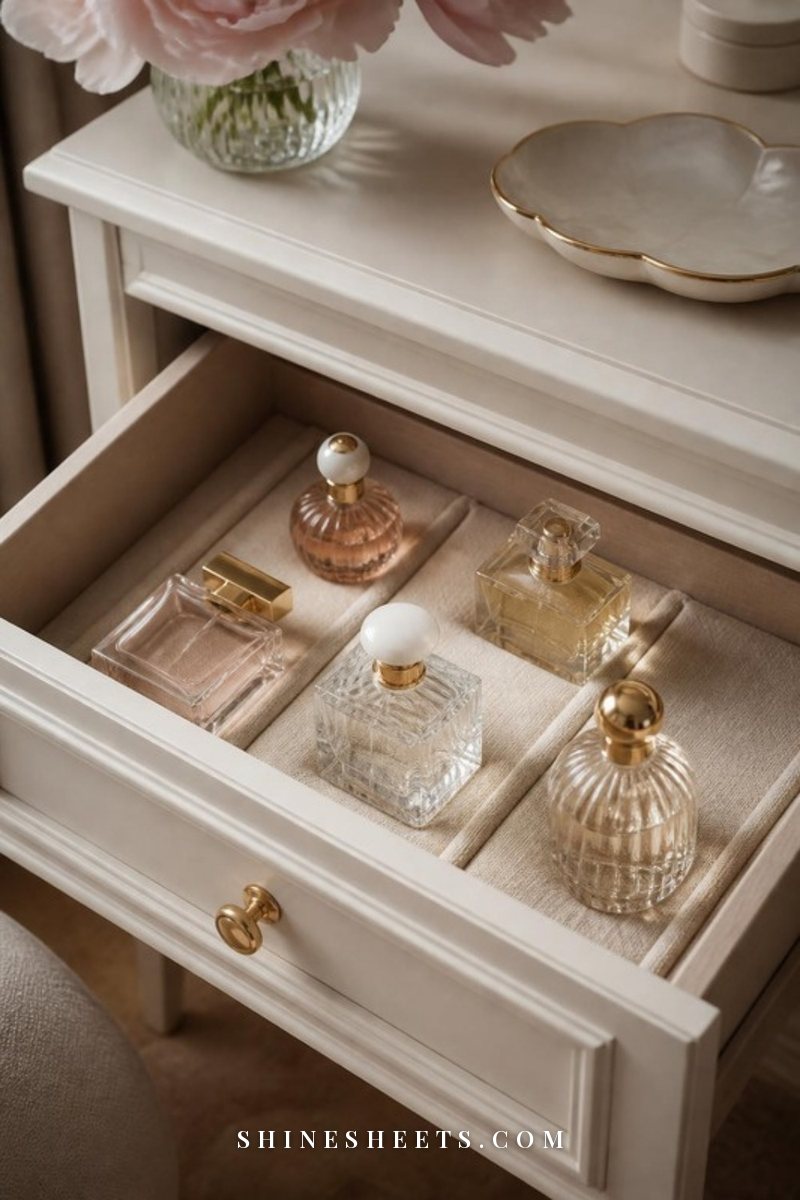
This is the trick most people skip, and it decides whether a bottle lasts one year or five. Heat, sunlight and humidity break down fragrance molecules, so the top notes fade and the whole scent can turn flat or sour.
- Not the bathroom. Hot showers mean constant temperature swings and steam, the worst possible home for perfume.
- Not a sunny windowsill or dresser. Clear glass bottles look pretty in the light, but the light is slowly breaking them down.
- Yes to a drawer, a closet shelf or the original box. A bedroom dresser drawer at steady room temperature is ideal.
- Keep the cap on. Air exposure speeds up oxidation, so close the bottle every time.
If you like seeing your bottles, a cream perfume organizer tray inside a closet or deep drawer gives you that pretty display without the sun damage. For more ideas on displaying and caring for a growing collection, my post on perfume collection ideas goes deeper.
12. Understand Nose Blindness Before You Reapply
Here's the trick that's really a mindset shift. After about 20 to 30 minutes, your brain starts filtering out a smell it decides is "background", including your own perfume. This is called olfactory fatigue, or nose blindness, and it's completely normal. It's the same reason you stop noticing your home's scent but guests notice it the second they walk in.
That means your perfume may be lasting much longer than you think. Before you add more, ask a trusted friend or family member if they can still smell it, or sniff a spot you didn't spray recently (like the inside of a scarf). Wearing a perfume you don't wear every day also helps, since your nose hasn't learned to tune it out. Rotating between two scents during the week is a simple way to keep enjoying both.
How To Adjust for Hot and Cold Weather
The same perfume can behave like two different scents depending on the season, so a few small tweaks keep it lasting without becoming overwhelming.
In Warm Weather
Heat makes fragrance project more strongly, but it also makes it evaporate faster. Go one spray lighter than usual, lean on fabric and hair (which stay cooler than skin) and let a body mist do the refreshing in the afternoon. Fresh scents with a musky or woody base tend to hold up best when it's hot. Keep your travel atomizer in an inner bag pocket, not an outside one that sits in the sun.
In Cold Weather
Cold air dulls scent, and winter skin is usually drier, so this is the season when moisturizing first matters most. Warmer, richer perfumes with vanilla, amber or woods feel especially lovely now. A spritz on the inside of your coat collar or a knit scarf works double duty, since wool holds fragrance beautifully and you'll catch the scent every time you pull it closer.
Mistakes That Make Perfume Fade Faster
Sometimes it's less about adding a trick and more about quietly stopping a habit. These are the most common ones:
- Spraying onto dry, freshly exfoliated skin. Scrubbing removes oils that help fragrance hold. Moisturize before spraying on exfoliating days.
- Spraying over a strongly scented lotion or deodorant. Competing scents cancel each other out, and the perfume often loses.
- Rubbing your wrists together. Covered above, but it's the single most common habit.
- Applying and immediately getting dressed. Give your perfume 30 to 60 seconds to settle so it doesn't transfer to fabric in a smear.
- Keeping a bottle in your car. Summer heat inside a parked car can ruin a perfume in a single season.
- Testing a perfume only on paper. Blotter strips don't tell you how a scent wears on your skin. Always try a sample on your wrist for a full day before you decide it "doesn't last".
A small safety note, too: fragrance can irritate sensitive or broken skin. If you have sensitive skin (I do, so I'm careful here), spray onto clothing or over moisturizer rather than bare skin, avoid freshly shaved areas and stop using anything that causes redness or itching. Always keep perfume away from your eyes and lips.
A Simple Long-Lasting Perfume Routine
If you'd like everything pulled together into one easy routine, here's the order I'd follow on a day when I really want my scent to stay:
- Shower with a gentle or lightly matching body wash.
- Pat dry, leaving skin very slightly damp.
- Apply unscented lotion or a few drops of body oil to your pulse points.
- Wait about a minute.
- Spray two to four times on pulse points, without rubbing.
- Mist your hairbrush once and brush through the lengths.
- Get dressed, then add one light spritz to a scarf or coat collar.
- Put your jewelry on last.
- Tuck a small atomizer or rollerball in your bag for a midday touch-up.
It sounds like a lot written down, but it takes less than five minutes once it's a habit. And if staying fresh is the bigger goal, not only your perfume, my guide on how to smell good all day covers the rest.
Final Thoughts
A perfume that fades isn't a perfume you have to give up on. Most of the time it simply needs softer skin, a cooler home and a lighter hand, and once you give it those, it rewards you for hours.
Start with the easiest two: moisturize before you spray and move your bottles out of the bathroom. Your favorite scent will feel new again, and there's something quietly glamorous about catching a soft trace of it on your scarf at the end of a long day.